

A change in the ownership of the South African Reserve Bank from private shareholders to government shouldn’t impact the constitutional mandate of the central bank in any way.
Articles on South African Reserve Bank
Displaying 21 - 38 of 38 articles
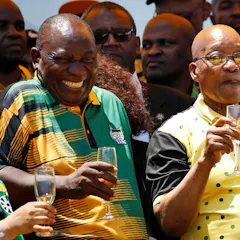
Cyril Ramaphosa seems to be on the way to uniting a fractious ANC. But he’s got a rough road to travel before he can claim any victories.
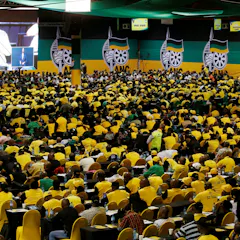
A closer look at the resolution of South Africa’s ruling party, the ANC, show that it won’t undertake a radical economic transformation agenda as suggested by media reports.
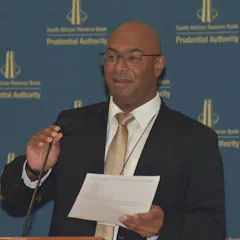
South Africa’s Reserve Bank is facing a growing challenge of illicit financial flows and money laundering from gangs and errant businesses hell-bent on tricking regulators.

South Africa’s Public Protector, has been exposed as incompetent after trying to meddle with the constitutional mandate of the country’s central bank.
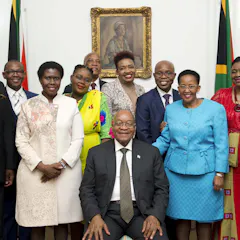
Democracy and good governance require politicians to engage in reasoned debate, informed decision making and measured judgements. This presupposes rationality. Is this always true?
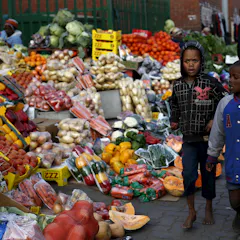
There’s a raging debate in South Africa about the role of its central bank. This is inevitable given that so much is changing in the world of central banking and in economic life.

The prevailing mandate of the South African Reserve Bank is informed by sound economics and the need to protect the institution from the whims of politicians.
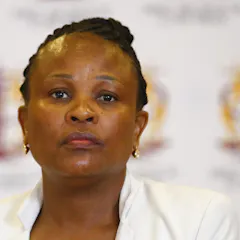
The public protector’s proposal to change the mandate of South Africa’s Reserve Bank goes well beyond changing individual rules to overturning their very foundation, anchored in the Constitution.

A financial system that is sure to collapse if the central bank cares about people’s well-being goes against democratic principle.

South Africa’s Public Protector, Busisiwe Mkhwebane has touched on two highly contentious issues: the unresolved bailout for a local bank three decades ago. And the role of the country’s Reserve Bank.
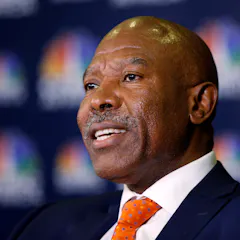
The South African Reserve Bank has come under spotlight due to the critical role it must play in enabling the country to navigate rough waters. Governor Lesetja Kganyago shares his views.
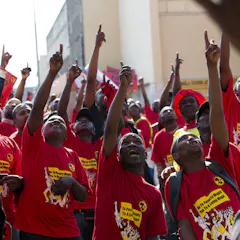
A change of attitude which comes with some deep introspection by South African business leaders can help address some of the country’s key socioeconomic challenges.

The 2008 financial crisis exposed major gaps in central banks’ operations. New features like quantitative easing have since emerged.

A radical tightening of exchange controls against corporations and wealthy individuals offers a short-term solution to South Africa’s balance of payments crisis.
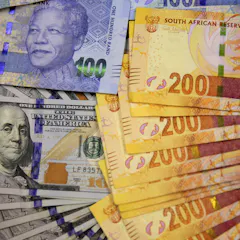
How is it possible that an African country whose currency is one of the top 20 most traded in the world only has the 33rd biggest economy?
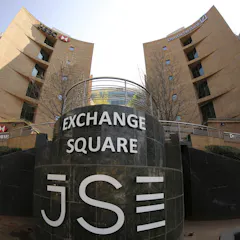
The next step in South African students’ fight against high university fees could be taken beyond campuses. The final battle will be fought at the country’s National Treasury and Reserve Bank.
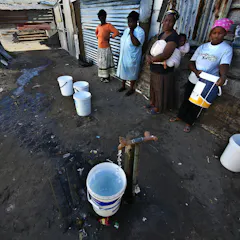
Thomas Piketty’s visit reminds us of the need to reconsider South African inequality-fibbery. His inequality critique is vital, but only if it can withstand the neoliberal embrace.
Top contributors
-

Visiting Professor at the Business School, University of the Witwatersrand
-
Professor/Senior Research Fellow, Centre for Advancement of Scholarship, University of Pretoria
-
Professor of Economics, University of the Western Cape
-
Professor of Political Studies, University of Johannesburg
-
Professor of Political Economy, University of the Witwatersrand
-
Senior Lecturer, Faculty of Law, University of Wollongong
-
Distinguished Professor and Derek Schrier and Cecily Cameron Chair in Development Economics, School of Economics and Business Sciences, University of the Witwatersrand
-
Senior Research Fellow New South Institute, Emeritus Professor at The Nelson Mandela School of Public Governance, University of Cape Town
-
Professor: International Business & Strategy, Wits Business School, University of the Witwatersrand
-
Visiting Professor and Professor Emeritus, University of the Witwatersrand
-
Associate Professor in Public Law, University of Cape Town
-
Associate Professor of Political Science, University of Johannesburg
-
Wits School of Governance's Chair in Public Governance, University of the Witwatersrand
-
Lecturer in Economics, Macroeconomics and Mathematical Economics, University of the Witwatersrand
-
Emeritus Associate Professor in Public Law, UCT. Visiting Adjunct Professor, WITS School of Governance; Director, Africa Programme, University of Cambridge Institute for Sustainability Leadership, University of Cambridge