
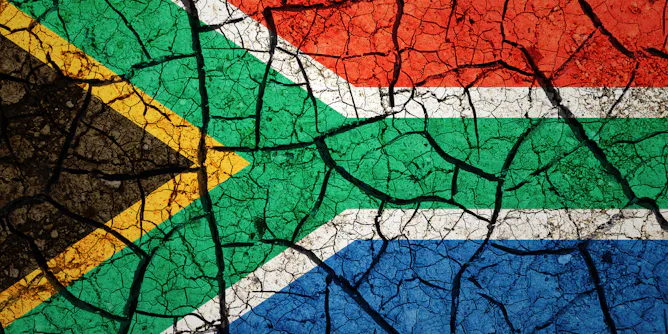
The South African Reserve Bank’s mandate is price and financial stability. It has the tools to identify, analyse and manage these risks, including those linked to climate change.
Articles on South African Reserve Bank
Displaying 1 - 20 of 38 articles

Confidence in banking is hard-earned and easily shocked. This makes individual banks and the banking sector susceptible to knock-on effects from other institutions.
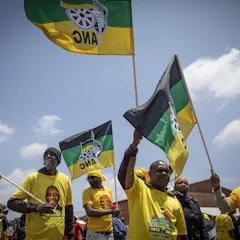
The deliberations were characterised by disingenuous, counter-factual policy pronouncements, and de facto denials of the ANC’s culpability in causing many of the current problems facing the country.
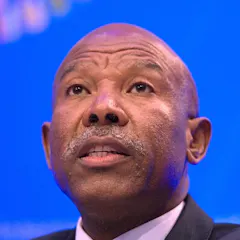
Central banking was given to technocrats whose job is to make the difficult decisions. But there are parameters. And within these, central bankers must act independently, without fear or favour.
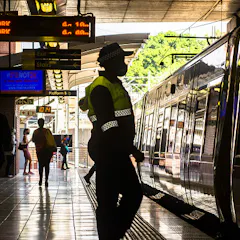
South Africa needs some serious structural reforms before its moribund economy can come to life.
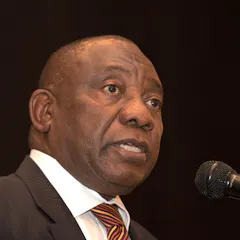
The challenge to deliver a persuasive speech comes firstly in the context of intense doubts as to whether President Ramaphosa is truly in charge of the ANC.

Ramaphosa’s detractors are unlikely to succeed in their rumoured bid. And, their failure will not be because they’ve suddenly become weak within the administration.
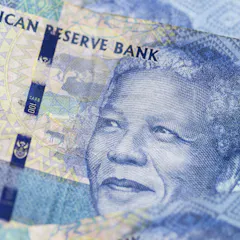
The debate about the mandate of the South African Reserve Bank must be located within a clearly articulated political vision and social compact on the kind of society South Africans aspire to.
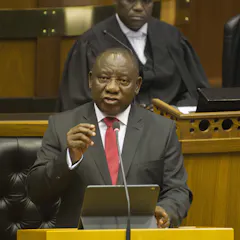
Ramaphosa offered five simple yet bold goals for the next ten years that cut across the social and economic structural constraints that inhibit South Africa’s potential.

Most South Africans think prices are rising much faster than is actually the case. This makes the central bank’s job of managing inflation expectations much harder.
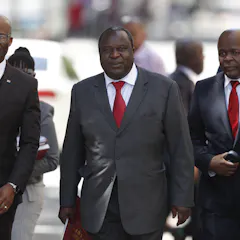
South Africa needs to urgently step up its efforts to drive economic growth by harnassing the power of the state, as well as the markets.
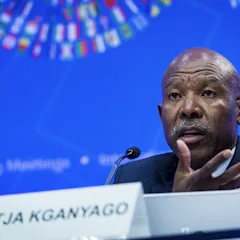
There’s an assumption that a change of ownership would automatically mean a change in the role the Bank plays
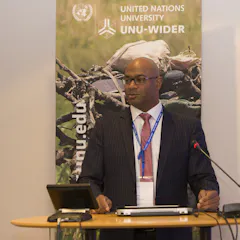
One of the main lessons from the VBS Bank collapse in South Africa is that audit reports need to be treated with a degree of circumspection. In some cases they will require independent verification.
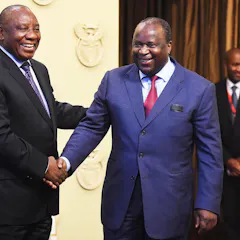
South Africa’s new finance minister comes with considerable skills and political finesse needed to steer the country out of its economic quagmire.
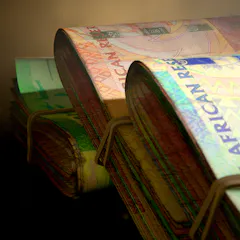
The push to nationalise South Africa’s Reserve Bank is informed by the mistaken view that private shareholders affect monetary policy.

South Africa is the eight country in the world to adopt the ‘Twin Peaks’ model of regulating its financial services sector.

Instead of having a separate regulator just for banks, the new system creates one to prevent financial crises, the other to ensure good market conduct and consumer protection.

The South African Reserve Bank needs to guide the market on how it is going to treat VAT increase in its inflation targeting approach.
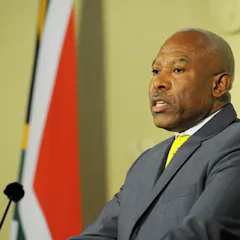
The South African Reserve Bank was justified in placing VBS Mutual Bank under curatorship.

The governor of South Africa’s Reserve Bank has been appointed to chair an important IMF committee. Countries in sub-Saharan Africa stand to benefit.
Top contributors
-

Visiting Professor at the Business School, University of the Witwatersrand
-
Professor/Senior Research Fellow, Centre for Advancement of Scholarship, University of Pretoria
-
Professor of Economics, University of the Western Cape
-
Professor of Political Studies, University of Johannesburg
-
Professor of Political Economy, University of the Witwatersrand
-
Senior Lecturer, Faculty of Law, University of Wollongong
-
Distinguished Professor and Derek Schrier and Cecily Cameron Chair in Development Economics, School of Economics and Business Sciences, University of the Witwatersrand
-
Senior Research Fellow New South Institute, Emeritus Professor at The Nelson Mandela School of Public Governance, University of Cape Town
-
Professor: International Business & Strategy, Wits Business School, University of the Witwatersrand
-
Visiting Professor and Professor Emeritus, University of the Witwatersrand
-
Associate Professor in Public Law, University of Cape Town
-
Associate Professor of Political Science, University of Johannesburg
-
Wits School of Governance's Chair in Public Governance, University of the Witwatersrand
-
Lecturer in Economics, Macroeconomics and Mathematical Economics, University of the Witwatersrand
-
Emeritus Associate Professor in Public Law, UCT. Visiting Adjunct Professor, WITS School of Governance; Director, Africa Programme, University of Cambridge Institute for Sustainability Leadership, University of Cambridge