

South African courts have been reluctant ‘to step into the shoes of the regulator’. But the confirmation by the Constitutional Court of the ruling by the Supreme Court of Appeal has changed all that.
Articles on CMF
Displaying 1 - 20 of 118 articles

South Africa’s policymakers see a greater role for liquefied natural gas in the country’s energy mix, reduce the country’s over-reliance on coal and drive re-industrialisation.
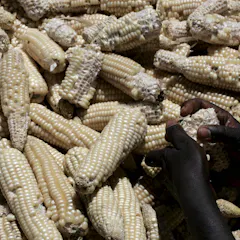
Understanding the political economy around maize production puts into context debates on key interventions in the value chain.

Though formed by the state, Eskom and Iscor enjoyed very little state support in their infancy. To survive, they had to cooperate with the private sector companies they were meant to compete with.
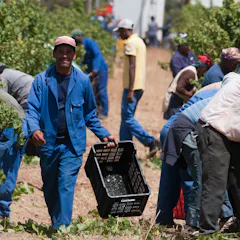
Agriculture appears to carry a stronger set of negative stigmas than other careers, but this is only half the story.

A human rights approach offers central banks a new tool for understanding the true costs and benefits of their operations.
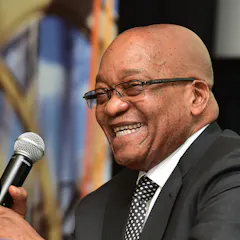
South Africans may well be seduced by the prospect of Zuma appearing at the Zondo commission, but he was not alone in driving the state capture project.

Politicians oppose toll roads on Johannesburg’s highways, yet they are textbook example of progressive taxation that favours the poor.
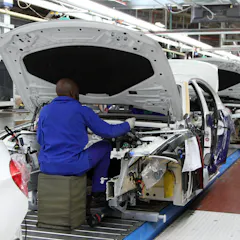
South Africa’s economic reforms of the 1990s were overdone, destroying some industries and thus impacting economic growth and job creation. A re-balancing of industrial policy is called for.

Women who survive violence in Kenya are building peace in their communities.
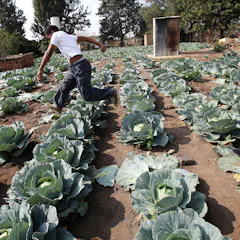
The abandonment of crop farming fields isn’t new. But some researchers say it’s accelerated in the last two decades.
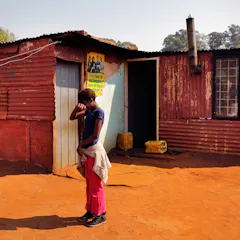
The child support grant, as a policy instrument, cannot work alone in ensuring that young people thrive and succeed.
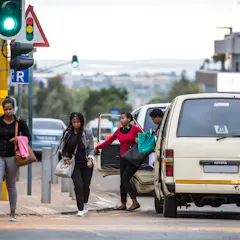
A fast growing economy that creates jobs will not automatically reduce youth unemployment due to systemic barriers faced by young people, including skills shortages and malfunctioning labour markets.

Arming young people with financial capabilities does improve their employment prospects, but how exactly is still not clear. One possibility is that financial literacy boosts their confidence

Most South Africans think prices are rising much faster than is actually the case. This makes the central bank’s job of managing inflation expectations much harder.
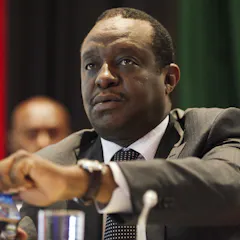
Some areas of concern remain. These include the mobilisation of local resources, reduction of the fiscal deficit and stabilisation of the national debt.

Inequality persists in post-apartheid South Africa, reflecting the distribution of power. Reversing this will require changing the social processes and relations that underpin it.
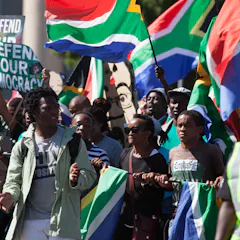
If the country is to survive its current crisis, government will need to undertake two difficult tasks simultaneously.
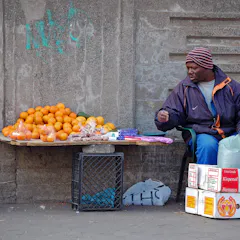
Paid employment is no longer a guarantee that workers will earn enough to cover their basic needs and become relatively secure financially. Hence the global phenomenon of the working poor.

It’s not enough to simply promote healthy eating and exercise without considering the very real environmental and structural constraints present in South Africa.
Top contributors
-

Visiting Professor at the Business School, University of the Witwatersrand
-
Professor of Political Studies, University of Johannesburg
-
Senior Research Associate, University of Johannesburg
-
Research Fellow, Tegemeo Institute, Egerton University
-
Professor of Social Development Studies, University of Johannesburg
-
DSTI/NRF Research Chair in Welfare and Social Development, University of Johannesburg
-
Senior Research Fellow New South Institute, Emeritus Professor at The Nelson Mandela School of Public Governance, University of Cape Town
-
Professor/Senior Research Fellow, Centre for Advancement of Scholarship, University of Pretoria
-
Professor, Economics, University of the Western Cape
-
Associate professor, University of Cape Town
-
Researcher, Centro Brasileiro de Análise e Planejamento (CEBRAP); University of Johannesburg
-
Distinguished Professor of Sustainable Development, Stellenbosch University
-
Associate Professor, Sociology, University of Fort Hare
-
Post Doctoral Researcher, Graduate School of Business (GSB), University of Cape Town
-
Professor of Sociology, University of the Witwatersrand