
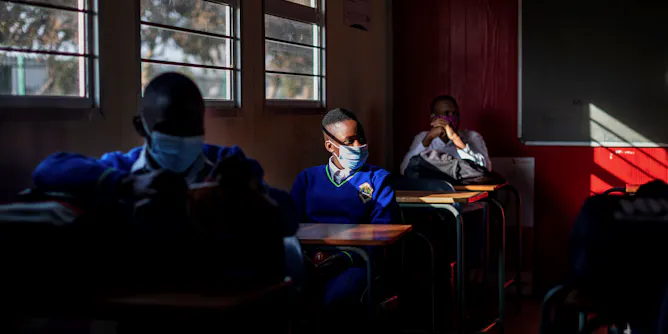
The country’s Constitution, as well as several court rulings, offer clear guidelines for how children’s best interests should be managed and prioritised.
Articles on South African law
Displaying 61 - 80 of 148 articles

His appearance on behalf of the families of mine workers shot by the police at the Marikana Commission of Inquiry was just one of his efforts to seek justice for the poor and marginalised.
Given their ability to accept correction, children have a better claim to rehabilitation, reorientation and reintegration.

To afford sufficient protection to marginalised people in society - such as women in minority religious communities - the state must recognise and regulate religious marriages in a nuanced way.
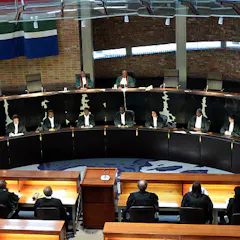
South Africa’s Constitutional Court verdict is possibly a defining moment for South Africa’s electoral system.

The judgment creates a new layer of uncertainty in an already highly fluid situation and heaps further unwelcome pressure onto government.
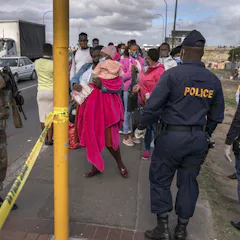
The court says people need to be able to trust the government to abide by the rule of law, make rational regulations, and not intrude on the rights of those subject to the law.
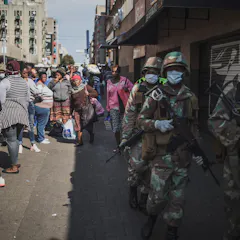
For the first time since the end of apartheid in 1994, citizens have had to accept stringent restrictions on their normal civil liberties.
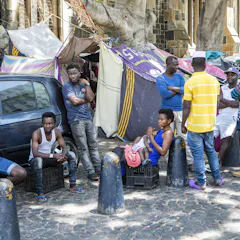
Refugee legislation introduced after the end of apartheid was lauded as being progressive. But implementation has fallen short of international standards.

The precedent-setting ruling may cause jitters in dysfunctional municipalities around the country.

Mining companies and some heritage consultants don’t understand the sacredness attached to ancestral remains, and the meaning of land in African communities.

Marking the end of the Cold War offers the chance to reflect on the changes and continuities in African politics and international relations since 1989.
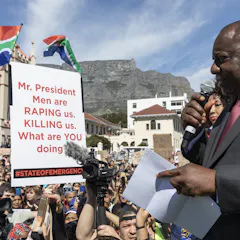
Research has a distinctive role to play because it gives pointers on what is needed to create long-term change.
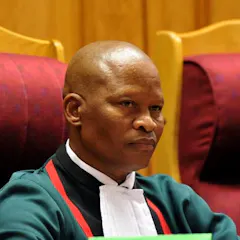
As a branch of government, the courts must naturally be accountable for the exercise of their power. The means of achieving their accountability must be balanced against their necessary independence.
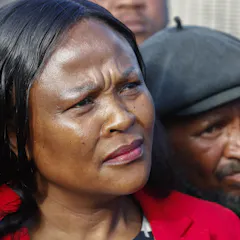
The Public Protector’s Office has become embroiled in political scandals under the current incumbent, Advocate Busisiwe Mkhwebane.

In this case, the appropriate conclusion about the Constitutional Court’s finding against the Public Protector is that there’s much to be comforted by.

The dilemma for Zuma and his legal team is this: by putting him on the witness stand, there is a risk that he would be found wanting, especially in terms of the detail of any matter.
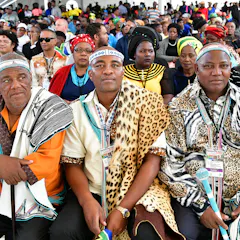
The contested law also defines the jurisdiction of traditional leaders in terms of territory. But traditional community boundaries are actually set by personal relationships.

By placing less emphasis on public opinion, and questioning public morality as the basis of its decision, the latest High Court decision shows that times have indeed changed.

South Africa’s law that regulates the Interception of communications is being challenged on the basis it can be abused by rogue elements in intelligence.
Top contributors
-

Emeritus Associate Professor in Public Law, UCT. Visiting Adjunct Professor, WITS School of Governance; Director, Africa Programme, University of Cambridge Institute for Sustainability Leadership, University of Cambridge
-
Associate Professor in Public Law, University of Cape Town
-
Professor Emeritus of Public Law, University of Cape Town
-
Professor of African legal pluralism, University of the Western Cape
-
Professor of Law, New York Law School
-
Executive Dean and Full Professor, Faculty of Management and Law, University of Limpopo
-
Professor of Sociology, University of the Witwatersrand
-
Professor of Digital Society, University of Glasgow
-
Associate Professor, Sociology, University of Fort Hare
-
Professor of Legal Pluralism, Religious Family Laws, and Human Rights, University of Cape Town
-
Senior researcher, University of Cape Town
-
Professor in Political Science, University of South Africa
-
Professor of Public Affairs, Tshwane University of Technology
-
Claude Leon Foundation Chair in Constitutional Governance, University of Cape Town
-
Associate Professor of Commercial Law, University of Cape Town