

Pik Botha defended apartheid and South Africa’s occupation of Namibia, but in the end helped end both.
Articles on South African history
Displaying 101 - 113 of 113 articles
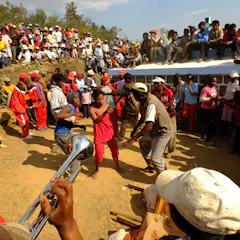
Africans have steadfastly responded to oppression through culture.
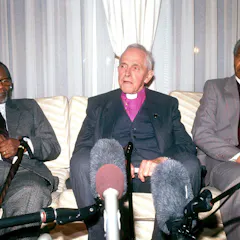
Bishop Huddleston’s criticism of Enoch Powell’s incendiary “Rivers of blood” speech was both a history lesson and a call to action against racism.
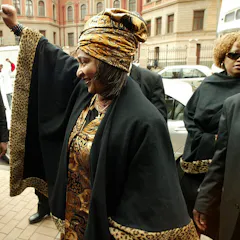
Reducing Madikizela’s entire life and legacy to her relationship with Mandela has more to do with patriarchal tropes about powerful women than reality.

In practice, land expropriation in South Africa will be a matter of deciding which descendants of the dispossessed are entitled to it.
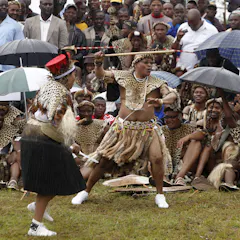
Both South Africa’s courts and its legislature have failed to do their bit in creating a culturally diverse society.
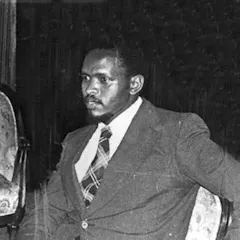
The ANC has worked hard to monopolise the history of the anti-apartheid struggle – meaning transformational figures are being left out.
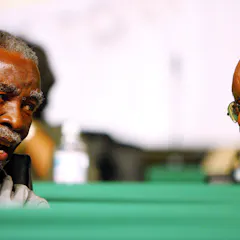
Today’s ANC is in terrible shape – but it wasn’t Jacob Zuma who put it on the wrong track.
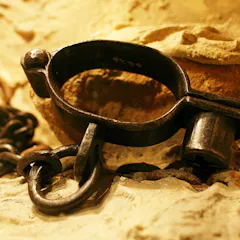
It is possible to trace the links between patriarchy, violence, gender roles, and the state further into the past. It’s also possible to trace the ongoing resistance to these by some women.
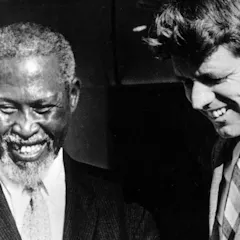
Fifty years ago US Senator Robert F Kennedy visited South Africa. A new documentary about RFK’s visit puts the spotlight on an important part of the country’s history.

The central thrust of Haffajee’s book is compelling. It argues that black South Africans, especially the new generation of young, black ‘born frees’ are obsessed with whiteness and white privilege.
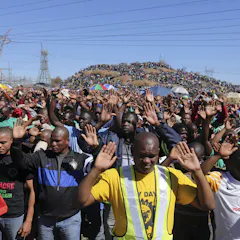
The reporting of the Marikana massacre was characterised by embedded journalism, sensationalism and polarisation of views. The media became a loudspeaker for powerful political and economic interests.

The Freedom Charter, adopted at a meeting in Soweto on June 25-26 1955, triggered a paradigm shift in thinking about the democratic rights of black South Africans and their protection under the law.
Top contributors
-

Political Scientist, University of the Western Cape
-
Associate Professor Sport History, Stellenbosch University
-
Associate of the Gordon Institute for Business Science, University of Pretoria
-
Lecturer, University of Cape Town
-
Professor of Political Studies, University of Johannesburg
-
Research Director: Developmental, Capable and Ethical State (DCES) research division, and Coordinator of the South African Social Attitudes Survey (SASAS), Human Sciences Research Council
-
Professor of Sociology, University of the Witwatersrand
-
Senior Lecturer, Applied Language and Literacy Studies, University of Cape Town
-
Professor and Head of Department of Political and Conflict Studies, Nelson Mandela University
-
Lecturer, Culture and Media department, Birkbeck, University of London
-
Professor of History, University of Botswana
-
Professor in Genetics, University of Pretoria
-
Chief Research Specialist., Human Sciences Research Council
-
Chief Research Manager, Human Sciences Research Council
-
Senior lecturer in African Studies, Yale University