

Research, development and innovation are essential for fulfilling state-owned enterprises’ mandates and driving economic growth.
Articles on South African economy
Displaying 1 - 20 of 72 articles

What are the prospects for young South Africans once they’ve left school?
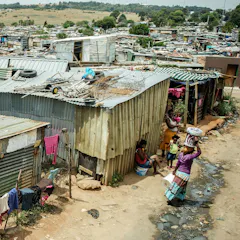
Rejecting precarious work signals dissatisfaction with a labour market where wage employment rarely offers security or social mobility.
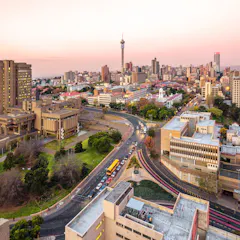
Good roads, a reliable supply of electricity and proper water management are necessary for economic growth and job creation.

Poor cybersecurity awareness and training of users is one reason for the high incidence of successful cyber-attacks in South Africa.

Problems limiting the growth of the sector aren’t self-inflicted. They’re firmly rooted in the country’s development agenda.
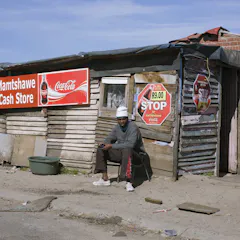
Many unemployed young people are engaged in a variety of economic activities. These may not necessarily be recognised as a form of self employment or informal employment.
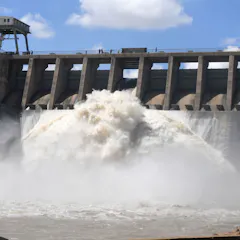
Gauteng citizens need to know the uncomfortable truth: for the next six years, their water supplies will increasingly have to be restricted.
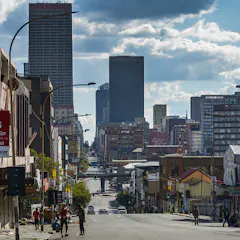
Labour migrants from other provinces into Gauteng and the Western Cape are more likely to be employed than the two provinces’ permanent residents.

A realignment is needed as the current systems have lost the competence to midwife a new nation out of the formative experiences of the last 25 years.

South Africa’s post-apartheid leaders have failed to properly prepare the military for secondary roles such as peacekeeping, let alone to a fight a virus.

There aren’t a lot of studies on South Africa’s cultural economy. A new one finds a cluster of creative firms in Cape Town with high levels of innovation.
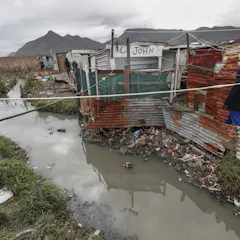
Book sheds new light on the evolution of the economic policy of the African National Congress, South Africa’s governing party.
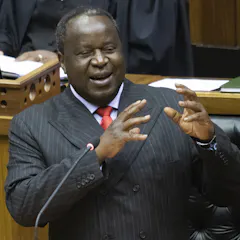
A major concern is that the government’s resolve is strongest on policies that are actually quite suspect.

During the apartheid period in South Africa – 1948 to 1994 – a lively intellectual culture of opposition emerged on some of the country’s university campuses and within the broader anti-apartheid movement…
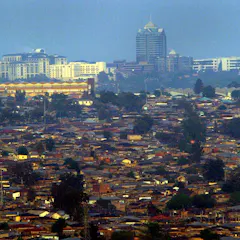
In matters of policy-making and governing, understanding the systemic complexity of interrelated forces is crucial to avoiding failure.

The black middle class are angry at their exclusion from mainstream economic activity.
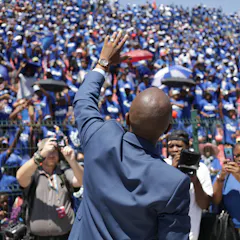
There is a huge divide between what is important right now and what the election is likely to be about.

A national minimum wage could benefit young people who have jobs and stimulate those who have given up trying to find work. But those without work need additional help.
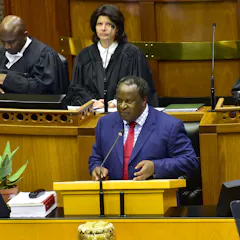
South Africa’s finance minister delivered a budget that tried to balance serving the public interest, while maintaining the stability of public finances.
Top contributors
-

Visiting Professor at the Business School, University of the Witwatersrand
-
Professor of Political Studies, University of Johannesburg
-
Head: Wits School of Governance, University of the Witwatersrand
-
Senior Research Associate, University of Johannesburg
-
Professor of Political Economy, University of the Witwatersrand
-
Professor of Urban Governance, University of the Witwatersrand
-
Professor of Social Development Studies, University of Johannesburg
-
Professor in Political Science, University of South Africa
-
Distinguished Reserach Professor, Southern Centre for Inequality Studies, University of the Witwatersrand
-
Emeritus Associate Professor in Public Law, UCT. Visiting Adjunct Professor, WITS School of Governance; Director, Africa Programme, University of Cambridge Institute for Sustainability Leadership, University of Cambridge
-
Professor of Economics, Finance & Strategy at the Gordon Institute of Business Science, University of Pretoria
-
Senior Research Fellow New South Institute, Emeritus Professor at The Nelson Mandela School of Public Governance, University of Cape Town
-
Chair of Policy Innovation, School for Data Science and Computational Thinking, Stellenbosch University
-
Associate professor, University of Cape Town
-
Associate professor, University of Johannesburg