
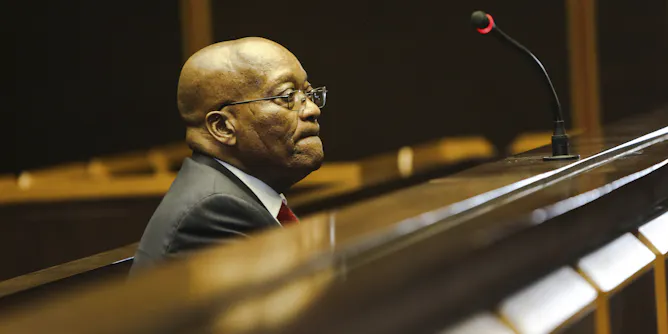
An effective, accountable National Prosecutions Authority needs at least two things: structural independence and competent personnel with expertise and integrity.
Articles on South African constitution
Displaying 81 - 100 of 101 articles
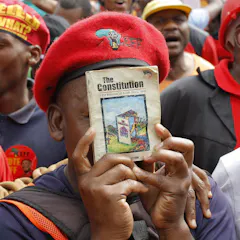
South Africa’s constitution has been amended 17 times already. But, the procedure for doing so is onerous.
Legislation to control the private funding of political parties in South Africa is long overdue.
Nearly a third of South Africa’s municipalities are not financially viable.
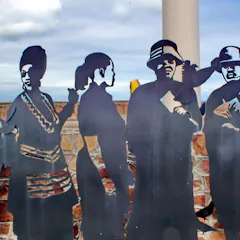
This years’ Freedom Day in South Africa can signify a difference: a renewal and return to the values of the 1994 social contract
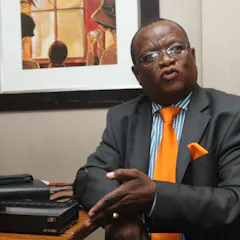
Some communities on South Africa’s Platinum Belt have received substantial mining revenues, but these are controlled by chiefs.
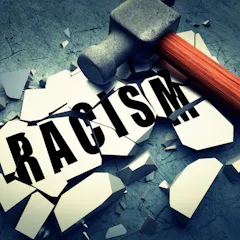
Past cases indicate that verbal crimen injuria is not that serious. But a landmark sentence in South Africa has changed that.

In practice, land expropriation in South Africa will be a matter of deciding which descendants of the dispossessed are entitled to it.
In a society like South Africa’s that is increasingly becoming polarised, simplified opinions should be approached with caution.
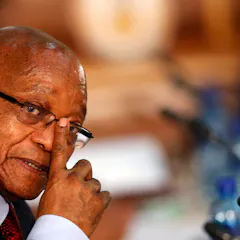
The politicians who removed Zuma are likely to be running the government for the next five years. Current events were their first test and offered a hint of how the country may be governed.
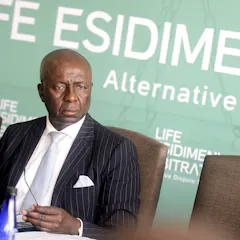
Arbitration hearings into the deaths of mentally ill patients has brought to light shocking cruelty and neglect on the part of South African officials.
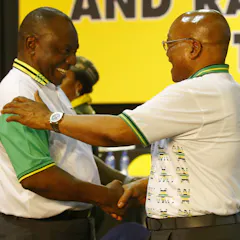
President Jacob Zuma’s camp is pushing to have him replaced by an interim leader as an excuse to prolong his disastrous rule for their own benefit.
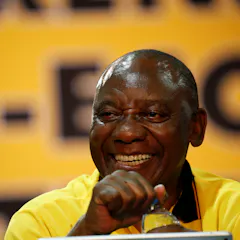
South Africa’s ruling ANC has a new leader - Cyril Ramaphosa. But this doesn’t mean that the country is out of the woods. Political instability remains a real possibility.

As South Africa marks Media Freedom Day, it’s clear that its battle isn’t over. Attacks on journalists continue –through physical intimidation and there’s also the threat of new laws.

The National Question cannot be resolved solely through South Africa’s constitution. There’s potential for a far more radical transformative project than traditional liberalism.

Medical mediation has become a buzzword in health departments across the world as an alternative to taking legal action to solve disputes.

After South Africa’s first democratic election in 1994, the previously oppressed and dispossessed black majority hoped for constitutional restitution of their land. This has largely failed.
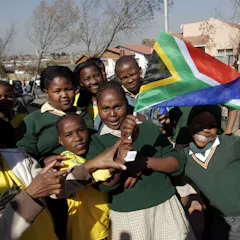
The judgment recognises that religion plays a large role in South African society. The right to follow a religion is embedded in the constitution. This means that South Africa isn’t a secular state.
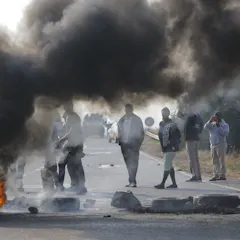
South Africa’s democracy is in trouble. But the challenge is less about who should control state institutions, and more about how they can be refashioned to deliver to the poor.
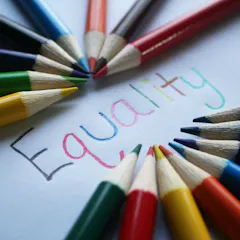
Sexual equality should not be mere letters and words in laws. Rather, people - in this case student teachers - must understand sexual equality as a lived reality.
Top contributors
-

Emeritus Associate Professor in Public Law, UCT. Visiting Adjunct Professor, WITS School of Governance; Director, Africa Programme, University of Cambridge Institute for Sustainability Leadership, University of Cambridge
-
Professor of Sociology, University of the Witwatersrand
-
Professor in Political Science, University of South Africa
-
Professor Emeritus of Public Law, University of Cape Town
-
Associate Professor, Sociology, University of Fort Hare
-
Associate Professor of Law, North-West University
-
Professor of African legal pluralism, University of the Western Cape
-
Lecturer, Culture and Media department, Birkbeck, University of London
-
Distinguished Professor and H F Oppenheimer Chair in Human Rights Law, Stellenbosch University
-
Director of the Mandela Institute, Professor of Law, University of the Witwatersrand
-
Professor of Political Studies, University of Johannesburg
-
Associate Professor in Public Law, University of Cape Town
-
Professor of Law, New York Law School
-
Associate researcher, University of the Witwatersrand
-
Professor of Law, UNSW