
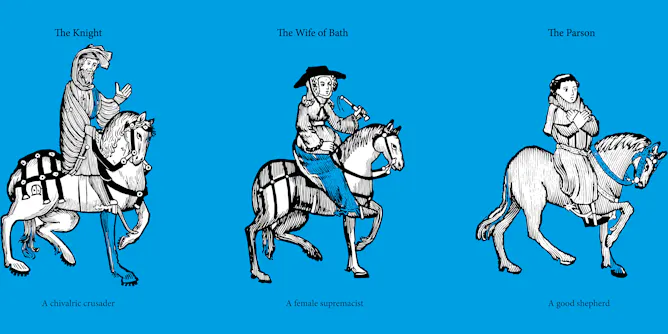
Poets and the wealthy were angered by those who saw their opportunity to rise above their station after the plague.
Articles on Social mobility
Displaying 21 - 40 of 91 articles

Students who struggled at school can flourish in further education colleges.

Examining current attitudes to accents in Britain, do the same biases hold true as they did 50 years ago and what does that mean when it comes to the interview process?

In his second “vision statement” Albanese says he wants to pursue his “productivity project”, and paints himself as a fiscal conservative well removed from Bill Shorten’s tax and spend approach.
Like students, academics from working-class backgrounds may also prefer not to work at elite universities.

Parental disability, family structure and unemployment are key factors in transmitting disadvantage between generations.
Over the past few decades secondary schools have become larger and fewer in number. For parents, this had made choices at once more limited, but also more complicated.

An in-depth study has shown that far from recruiting from the lower middle classes, the Nazi party attracted many people from high-status backgrounds.

A higher education scholar explains how he came to oversee a set of college rankings meant to take a different tact than the more popular rankings from US News & World Report.
Integrating private schools into the state system will offer little benefit to socially disadvantaged pupils. Addressing the inequalities between state schools should be the focus.

A former member of the Social Mobility Commission on Jeremy Corbyn’s plan to drop social mobility as a policy goal in favour of social justice.

In a victory for meritocracy, sandwich placements overwhelmingly go to the brightest students, irrespective of their background.

Policies to tackle social mobility have been largely misdirected. While rates of upward social mobility have fallen, downward mobility has risen.

Conventional wisdom across much of the Western world says there’s a strong link between education and upward social mobility. Really?

Moving up and down the social ladder has long been thought to be stressful, but a new study shows that it has no impact on general health.

Values – and capital – are clearly passed down from one generation to the next.

Social mobility is linked to geography in the UK – and local leaders should be tasked with boosting it.

Children growing up in the most disadvantaged suburbs also lack the social opportunities to develop skills and aspirations that would improve their prospects in life.

The presidents of the University of Michigan, the University of Oregon and The Ohio State University offer three ways to judge the value of a college education.

In many of the UK’s seaside towns and former coal mining communities, young people are caught up in cycles of deprivation.
Top contributors
-

Professor of Education, Jesus College, University of Cambridge
-
Reader in Public Policy, University of Bath
-
Professor of Epidemiology, University of York
-
Associate Professor, The University of Queensland
-
Professor of Economics, University of Bristol
-
PhD candidate at the LSE and Research Fellow at the Superpower Institute, The University of Melbourne
-
Lecturer in Organization Studies, Royal Holloway, University of London
-
Professor of Economic and Social Policy, University of Bath
-
Professor, College of Business, Government & Law, Flinders University
-
Professor of Economics, University of Westminster
-
Halford Mackinder Professor of Geography, University of Oxford
-
Lecturer in Economics and Social Statistics, UCL
-
Lecturer, Queen Mary University of London
-
Professor of Social Policy and Sociology, London School of Economics and Political Science
-
Professor of Education and Public Policy, Durham University