
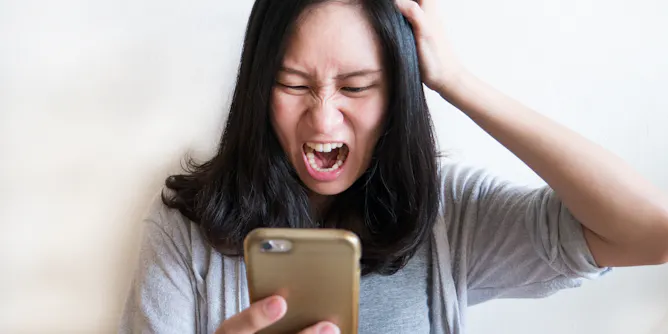
Social media is the refined sugar of human communication.
Articles on Social interaction
Displaying 21 - 40 of 45 articles

A new survey finds that Americans are willing to accept limits on visitors to public lands to reduce crowds, and want staff and visitors to wear masks.

We sorely miss our regular haunts during the coronavirus lockdown not only because we like them but also because a healthy society needs places where people can gather, mix and mingle.

Don’t want to shake hands, but don’t want to cause offence? Just smile, have a short sentence ready in advance, and make sure the other person knows you care about their feelings.

Every child develops at a different pace so it can be difficult to know what’s normal.

The music we choose to listen to not only allows us to retreat into a place of peace and privacy, but also helps frame our daily routines and interactions with others.
What adults with autism told us about their everyday experiences.

In the late 1970s, 52 percent of 12th-graders hung out with their friends almost every day. By 2017, only 28 percent were doing so.

It’s easy to scorn the gentrifying hipster stereotype, but many inner-city neighbourhoods benefit from the distinctive mix of businesses and activities they pursue. So why should the suburbs miss out?

Not giving offence is what Christmas is all about.

Many parents are told their babies’ smiles aren’t ‘real’. But there is research to suggest otherwise.

People kept diaries for two weeks recording how often things about them were forgotten. The results turned out to be surprising.
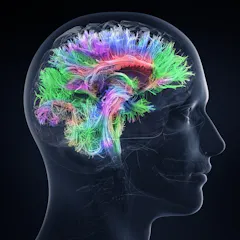
Researchers have identified which part of the brain helps us understand and respond to social interactions.

Research shows that context matters for understanding what a person’s words mean – especially when power dynamics are involved.

People want video games and interactive experiences that help them explore deep and meaningful themes, such as creating family, valuing diversity and living responsibly.

Bringing back the diminished tradition of eating lunch together may be the solution.

Realizing that others’ minds hold different thoughts, feelings and knowledge than your own was thought to be something only people could do. But evidence is accumulating that apes, too, have ‘theory of mind.’
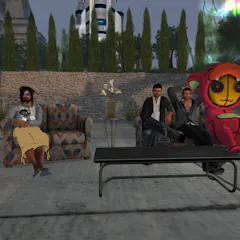
If game producers get better at targeting older gamers, many effects of aging - social, cognitive and physical - could be reduced.

Social isolation in old age is a significant social concern. It is linked to a range of health problems and, in extreme cases, it can lead to people growing old and dying alone.

Shakespeare didn’t ‘lol,’ but he did ‘ha, ha, he.’
Top contributors
-
 Skye McDonald is a Friend of The Conversation.
Professor of Clinical Neuropsychology, UNSW
-
Lecturer in Psychology, King's College London
-
Lecturer in Social Psychology, University of Essex
-
Global Journalism Fellow, Dalla Lana School of Public Health, University of Toronto
-
Associate Professor of Psychology, University of Bath
-
Lecturer in Social Psychology, Loughborough University
-
Professor of Cognitive Neuroscience, King's College London
-
Senior Lecturer, Department of Psychology, University of Portsmouth
-
Postdoctoral Research Associate, Cognitive Neuroscience, University of Cambridge
-
Director, Office of Scholarly Communication and Publishing, University of Pittsburgh
-
Professor in Ageing and Health, University of Sydney
-
Assistant Professor of Psychology, Johns Hopkins University
-
Associate Director of Instructional Design, University at Buffalo
-
Associate Professor, ARC Centre of Excellence in Cognition and its Disorders & School of Psychology, The University of Western Australia
-
Reader of Psychology, University of Dundee