
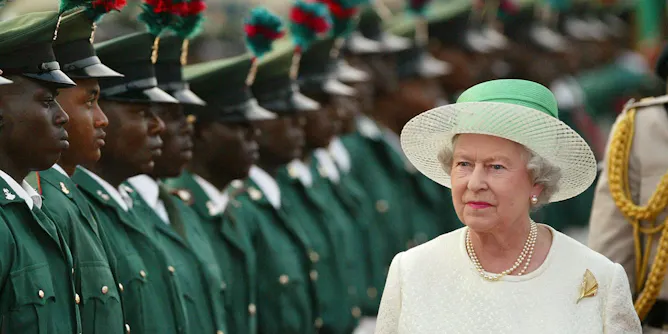
In the middle of the tremendous outpouring of love and grief for the Queen and the monarchy she represented, not everyone wants to take a moment of silence. And there are a lot of reasons why.
Articles on Slavery
Displaying 121 - 140 of 426 articles
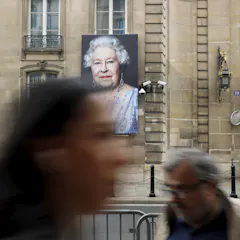
Is it possible to disentangle the personal attributes of a gentle and kindly woman, from her role as the crowned head of a declining global empire that waged numerous wars? Many don’t think so.

The women’s rights movement in the 1800s did not openly support legalizing abortion or birth control. But the reasons why are complex.
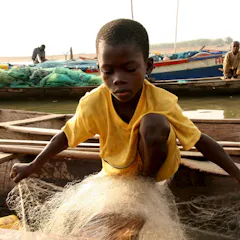
Community plays have become a way for the stories and experiences of slavery survivors to be told and understood in Jamestown, Accra.

Lawmakers are seeking to downplay the role that slavery played in the development of the United States, but history tells a different story.
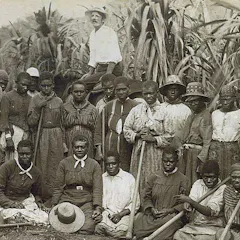
Forced labour in the cane fields of Queensland has had a lasting influence of the Australian nation.
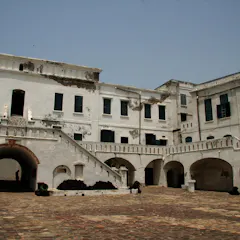
Studying local Africans’ contributions to the abolition of slavery provides a fuller understanding of its history.

As a political tool with a long history and dubious boundaries, whiteness – by its very fluidity – fosters violence.
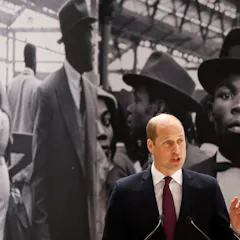
The legacy of racism in both the United States and the United Kingdom has impacted the ability of Blacks and other ethnic groups to accumulate wealth.

For relations with the DRC to truly improve, the Belgian state must acknowledge its historical responsibility more strongly.
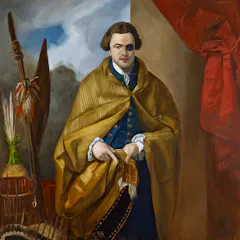
Daniel Boyd’s solo exhibition Treasure Island, now at the Art Gallery of New South Wales, is a deeply political and personal interrogation of Australia’s colonial history.
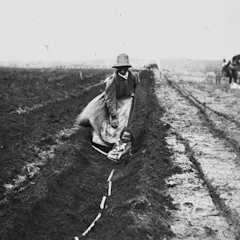
In 1881, a Pacific Islander woman brought here to work on a sugar cane plantation ran away. She was violently retrieved by her employer. Her story sheds moving light on a dark history of exploitation.
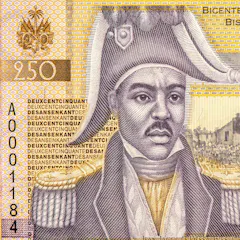
The Haitian revolution was the first by a former slave colony and was to inspire other emancipation movements across the New World.
If Texas Gov. Greg Abbott had his way, the state’s past of lynching Blacks would be taught as an exception rather than the rule. History tells a different story.
Peacekeeping missions grab the headlines when they’re associated with tragedy and death – but that isn’t their full story.

An anthropologist writes that despite best efforts, there is no guarantee that children may not have been exploited in the production process of chocolate.
An expert on the royal family’s finances explains how they still benefit from historical connections to slavery and empire.
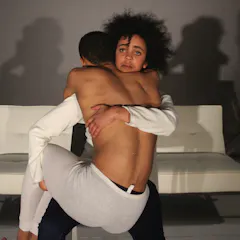
Winner of the Olive Schreiner Prize, What Happens was inspired by the discovery of a slave burial site.
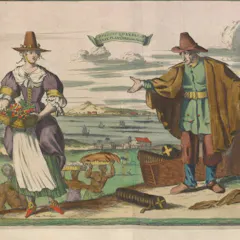
Eighteenth-century Quakers attempted to align their religious beliefs with what they purchased. These Quakers led some of the early campaigns against sugar being produced by enslaved people.
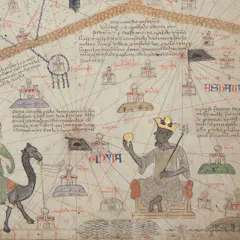
Born in Blackness by Howard W. French is a towering work. It argues that, because of gold and slavery, Africa is central to creating the modern world.
Top contributors
-

Canada Research Chair, Professor in Performance, Toronto Metropolitan University
-
Professor of History, Arizona State University
-
Professor of History, McGill University
-
Professor Emeritus, Department of Political Science, Wilfrid Laurier University
-
Professor of History, William & Mary
-
Professor of Critical Race and Ethnic Studies, Miami University
-
Associate Professor, Oxford School of Global and Area Studies/ History, University of Oxford
-
Professor of Practice in Education, Clark University
-
Chancellor's Fellow, University of Edinburgh
-
Professor and Chair of History Department, Colorado State University
-
PhD Candidate, Social Justice Education, Ontario Institute for Studies in Education, University of Toronto
-
Emeritus Professor of Social Justice, University of Hull
-
Professor of Religious Studies, College of the Holy Cross
-
Professor, Faculty of Law, University of Technology Sydney
-
Professor of History and Michael Douglas Dean of Humanities and Fine Arts, University of California, Santa Barbara