

Yoda’s word order mirrors the syntax of British Sign Language.
Articles on Sign language
Displaying 1 - 20 of 36 articles
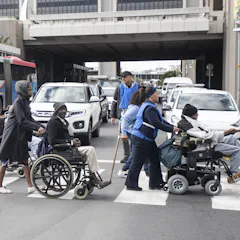
Structural barriers such as inaccessible infrastructure and lack of transport options affect South Africa’s reputation as a disability-friendly country.
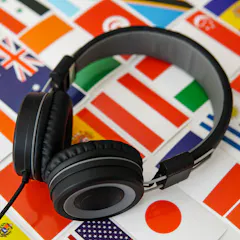
What happens when none of the mainstream climate information is published in your native tongue?

Most updates on trains are only delivered by audio announcements. Automatically translating them into Auslan makes Deaf people feel safer and more independent.

To create a more accessible society, we need to increase awareness about diverse perspectives and lived experiences communicating, and learn about what types of barriers exist.
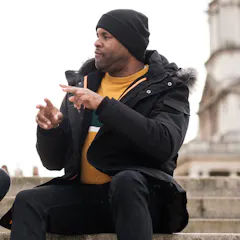
Some students with hearing difficulties feel lonely and excluded from daily campus life.

Although not a true sign language, the use of sign in Dune can still teach us a lesson about the value of sign language.

Dip hop artists move across the stage, hands flying through the air, as audiences pulse to the rhythm of a blasting bass beat.
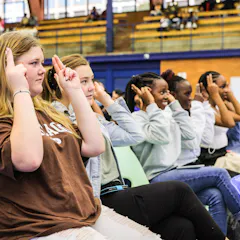
This is an opportunity for Deaf people to finally be properly educated in a language they understand.
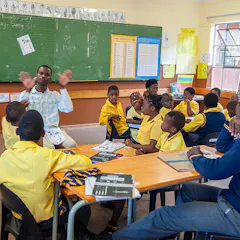
Making South African Sign Language official is more symbolic than useful in the lives of a very marginalised community.

People in the Gurindji community of Kalkaringi in northern Australia call their sign language ‘Takataka’.

Deaf people from different parts of the world can have different accents, whether they speak, sign or both.

Oscar winning film CODA has shone a light on what accessibility and representation for the deaf community means on film and TV.
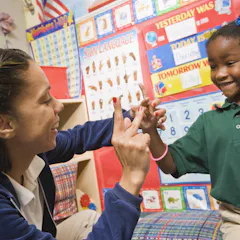
Schools and universities are embracing and promoting the use and teaching of South African Sign Language but more still needs to be done.
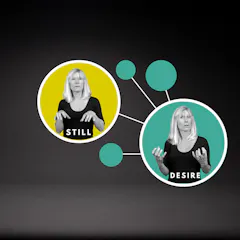
In American Sign Language, some words rhyme, some look like what they mean and some are used more often than others. A new database of these features paves a pathway for ASL research.

Gaelic speakers need opportunities to use their language in a wide variety of social and everyday settings to avoid its presence being eroded.

Teaching deaf babies sign language improves the success of cochlear implants – and also safeguards their long-term physical and mental health.

Many Deaf people worldwide face inequalities when it comes to accessing health services and information. Our study of Deaf people in Wales shows what improvements still need to be made.
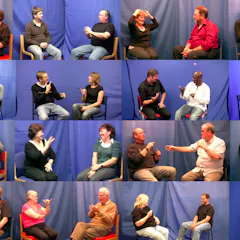
Limited contact between the first British Sign Language communities created dialects that are still in use today.

Diversity of world’s sign languages tells us much about how we communicate.
Top contributors
-

Professor of Linguistics, Department of Linguistics and Communication, University of Birmingham
-
Assistant Professor in English Linguistics, University of Graz
-
Professor and Chair of Intercultural Communication, Heriot-Watt University
-
PhD Student, Head of Disability Unit, Stellenbosch University
-
Lecturer South African Sign Language, University of the Witwatersrand
-
Postdoctoral Research Associate in Psychology, University of Wisconsin-Madison
-
Darlithydd mewn Polisi Cymdeithasol (Cyfrwng Cymraeg)/ Lecturer in Social Policy (Welsh medium), Bangor University
-
Heriot-Watt University
-
Senior Lecturer in the History of the British Empire, University of Sheffield
-
PhD Candidate in Computer Vision, University of Surrey
-
The Frank J. McLoraine Distinguished Service Professor of Linguistics and the College, University of Chicago
-
Senior lecturer, Linguistics, University of the Witwatersrand
-
Reader in Sign Linguistics, UCL Deafness Cognition and Language Research Centre, UCL
-
Senior Lecturer in Theatre Studies, University of Waikato
-
Director:Language Centre, Stellenbosch University