
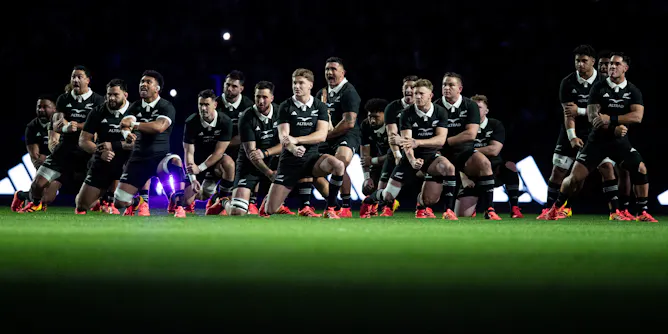
It’s 30 years since the All Blacks last played a test in South Africa – and only 56 years since Māori and Pacific players were first allowed to tour there.
Articles on Sharpeville massacre
Displaying all articles
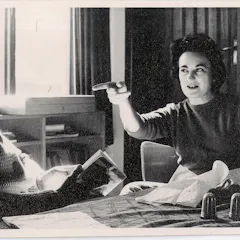
A new book revisits her life, work and ideas and shows how relevant they still are today.
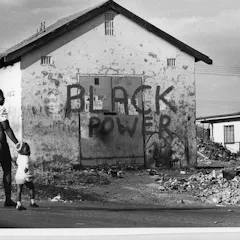
Magubane’s photographs testify to the hope that is at the heart of the struggle for a just world.
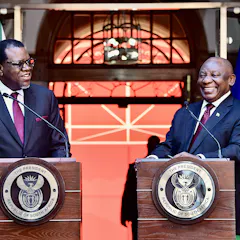
How Swapo and the ANC respond to any further decline in electoral support will define the future of democracy in both countries.
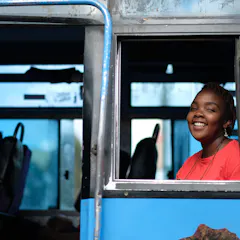
These vibrant writers embrace the open road and claim spaces that were denied them during apartheid.
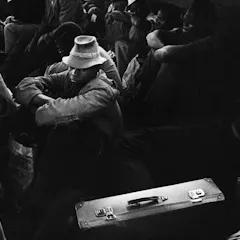
Cole was a master of portraying the violence of apartheid through scenes of everyday life.
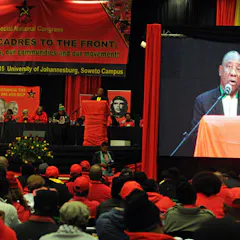
The resort to armed struggle brought the Communist Party and the African National Congress much closer together during their time in exile.
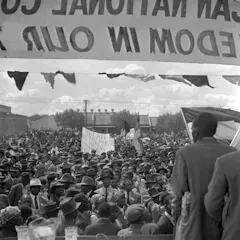
When the Truth and Reconciliation was mandated to investigate human rights violations from March 1960, that left twelve years of apartheid rule unexplored.
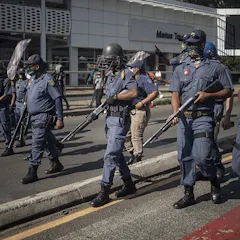
South Africans deserve a fuller picture of the extent of police brutality, and the level of accountability, especially when people die at the hands of police.

The gift of his images lies in their depiction of the social worlds that apartheid sought to destroy, but that live on through the photographs.
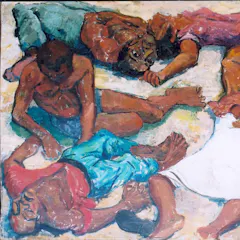
It’s been 60 years since the massacre of 69 unarmed civilians by the South African apartheid state. Here’s how the killings changed the way the world thinks about human rights.
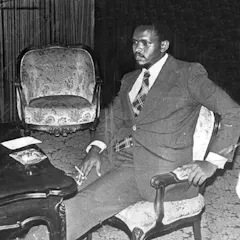
Black consciousness in South Africa changed blacks and whites.
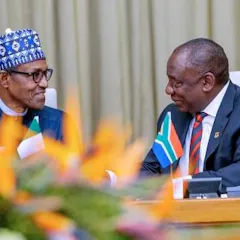
Although Nigeria and South Africa are often cast as rivals they have a strong bilateral relationship
In a society like South Africa’s that is increasingly becoming polarised, simplified opinions should be approached with caution.

Hugh Masekela’s itinerary-in-exile was loud and clear in his songs.

South African trumpeter Hugh Masekela made an impact across the world during his decades-long musical career.
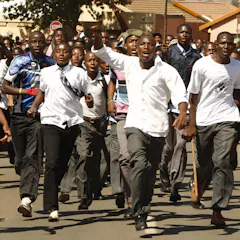
It is exactly forty years since the Soweto uprising in June 1976 where the South African police met the students with brutal force. How much has changed in terms of policing?
Top contributors
-

Senior Lecturer (Radical Humanities Laboratory, University College Cork), University College Cork
-
Associate of the Gordon Institute for Business Science, University of Pretoria
-
Associate Professor of Law, North-West University
-
Associate professor in Cultural Studies and English, Hebrew University of Jerusalem
-
Research Associate at UCT's Centre of Criminology, Consultant at the Institute for Security Studies (ISS), University of Cape Town
-
Honorary Research Associate, School of Education, University of Cape Town
-
Research Associate, Humanities Research Centre (and African Literature Department, University of the Witwatersrand), University of York
-
Professor in Political Science, University of South Africa
-
Professor of Sociology, University of the Witwatersrand
-
Extraordinary Professor, Department of Political Sciences, University of Pretoria
-
Senior Lecturer, Department of Historical and Heritage Studies, University of Pretoria
-
Associate professor in Politics and International Relations, Leeds Beckett University
-
Professor of International Human Rights Law, Centre for Human Rights, and acting SARChI Chair in International Constitutional Law, University of Pretoria
-
Professor of International Law, Lancaster University
-
Research Professor, UFS History Department, University of the Free State