

Underlying online harassment is the false idea that events that happen on internet aren’t real. But whenever people are interacting, it’s all real.
Articles on Sexual harassment
Displaying 301 - 320 of 341 articles
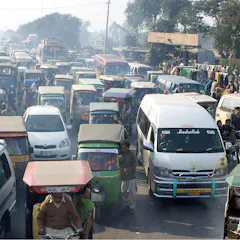
The ride-sharing app means different things in different countries. In Karachi and Lahore, it has highlighted economic inequalities.

Despite persistent myths that sexual violence and harassment are rare, two recent cases – and the subsequent online response – expose their commonality.

Some teachers are often dismissive in their handling of sexual abuse, labelling it as ‘a bit of fun’ or repeating the old adage ‘it’s because he likes you’.

To say a workplace problem is systemic means that its underlying causes are deeply embedded in the structures and everyday practices of an organisation.

A case in Sydney is the latest instance in which the powers-that-be contribute to the widespread victim-blaming and perpetrator-exonerating in relation to cyber violence against women and girls.

Its formidable chief executive may have resigned, but the US’s most-watched news network is in rude health all the same.

A South African novel, published in 1980 and dealing with the Soweto student uprising four years earlier, still provides lessons for students today.

Sexual harassment is a pernicious problem at universities. But not much is known in South Africa about students sexually harassing academics.

Researchers found over a third of female graduate students and a fifth of male graduate students on the campus of a large public university had experienced sexual harassment.

Most Australian women (87%) have experienced some form of street harassment, whether it’s whistles, stares, unwanted comments or being followed by strangers in the street – often before the age of 18.

North Carolina recently passed a law that prohibits individuals from using a bathroom based on the gender with which they identify. Why does this pose a risk for transgendered individuals?

Flashing in public is illegal, shouldn’t its online equivalent be treated the same way?

The public outing of a number of high profile scientists in sexual harassment cases shows the current system of protecting women isn’t working. But there is a solution.

Sexual harassment is a persistent and damaging problem in many Australian workplaces. But why does it appear to be an entrenched feature of some organisational settings more than others?

The world is generally not safe for women. But some projects in North Africa provide a glimpse of hope as the world marks the UN’s International Day for the Elimination of Violence against Women.

The reaction has been swift since a high-profile astronomer’s legacy of sexual harassment against his students was exposed.

The money might be a little better, but the lewd comments and unwanted advances may have a negative impact on the mental health of waitresses.

We must place the responsibility for preventing assault firmly on men’s shoulders.
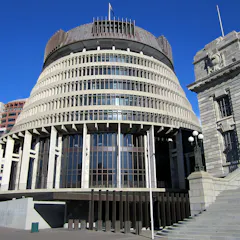
Only time will tell whether the nation’s anti-trolling toolbox will prove effective, but what matters is the way they went about it.
Top contributors
-

Professor of Law, University of Oregon
-
Associate Professor in Criminology, The University of Melbourne
-
Professor of Family and Sexual Violence, RMIT University
-
Professorial Fellow, University of Canberra
-
Director, XYX Lab, and Professor, Faculty of Art, Design and Architecture, Monash University
-
Lecturer in Journalism, City St George's, University of London
-
Associate Professor, Faculty of Law, University of Technology Sydney
-
Canada Research Chair in Inequality and Gender, Western University
-
University Diversity and Social Transformation Professor of Psychology, Women's & Gender Studies, and Management & Organizations, University of Michigan
-
Professor of Global & Language Studies, RMIT University
-
Professor in Criminal Law, Durham University
-
Albert E. Kent Professor of Psychiatry, Yale University
-
Honorary Research Fellow, The University of Melbourne
-
Lecturer in Criminology, University of Plymouth
-
Professor of Work and Organisation, Queensland University of Technology