
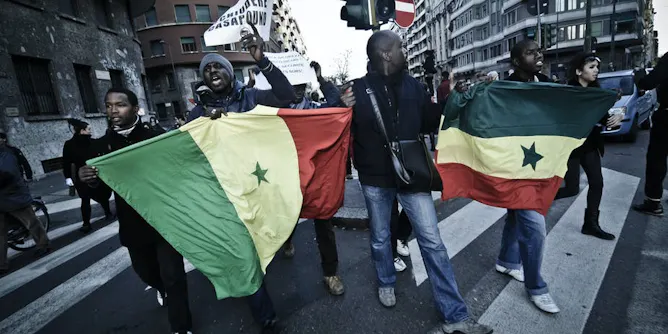
Un élément crucial qui favorise la migration est le fait d’avoir des liens personnels avec des migrants contemporains.
Articles on Senegal
Displaying 121 - 140 of 200 articles

Le roman de l'auteur franco-sénégalais, intitulé Frère d’âme (traduit en anglais par At Night All Blood is Black) est l'histoire poignante et marquante, sur le plan politique, d'un soldat sénégalais.
The Senegalese culture of discretion, called “sutura”, inhibits survivors of sexual violence from publicly denouncing perpetrators.
Around the world, fragile coastal ecosystems are under intense pressure, and understanding and managing their complex interactions requires an integrated and interdisciplinary approach.
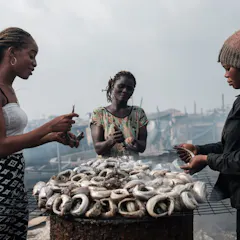
The contributions that women in West Africa’s fisheries make to the sector are widely un(der)paid, undervalued and largely invisible.

New evidence affirms that significant, long-standing inter-group cultural differences shaped the later stages of human evolution in Africa.
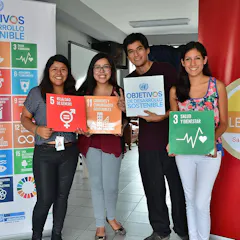
A new report from the GovLab and the French Development Agency (AFD) examines how development practitioners are experimenting with emerging forms of technology to advance development goals.
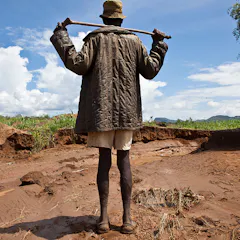
Regreening Africa works directly with 500,000 households to restore one million hectares of agricultural land.
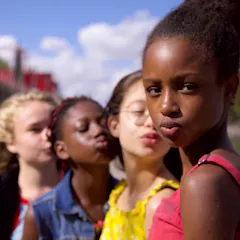
The outrage over the teen film ‘Cuties’ diverts attention from the social structures that enforce conflicting expectations on young women.
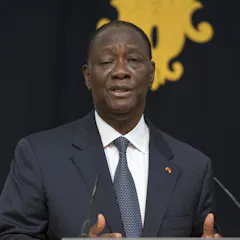
President Alassane Ouattara (78) has been blowing hot and cold on whether he’ll be seeking a third term.
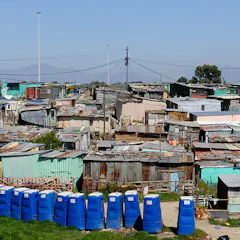
Glaring capacity gaps aside, the failure to curb COVID-19 is not so much due to a lack of technical know-how but to a particular view of the world.
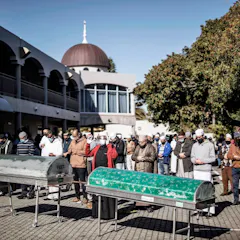
It is important that procedures surrounding funerals are developed by public health officials alongside traditional and religious authorities.
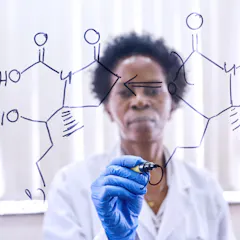
A number of programmes now exist that are helping to close the gender gap in African science, technology, engineering and maths.
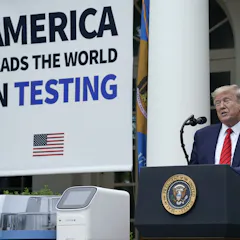
Some of the worst health performers in recent weeks have been ‘First World’.

To foreigners, he was a fellow traveler who recognized the plight of the oppressed.
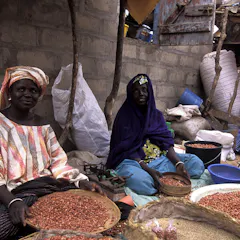
We need to understand colonial histories to understand climate risks.
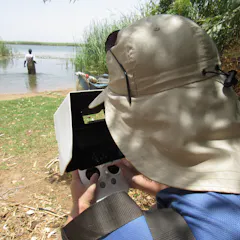
Schistosome worms infect hundreds of millions of people worldwide. Researchers have discovered how to use inexpensive drones to identify disease hotspots in remote African villages.
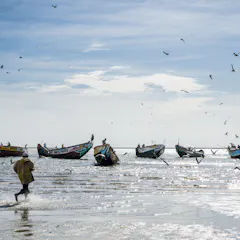
The EU continues to enter into fresh agreements with countries, despite evidence of serious population declines in the species of interest.
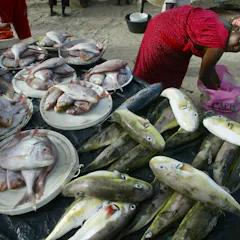
Small-scale fisheries buffer poverty and hunger in coastal countries.
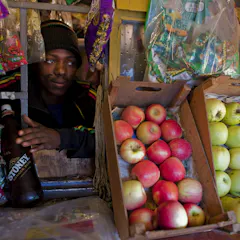
By better understanding the politics and governance of African cities and variations across cities, we can identify feasible opportunities to improve informal traders’ livelihoods.
Top contributors
-

Professor of French and Postcolonial Studies, University of Strathclyde
-
Lecturer in Sustainable Futures, University of St Andrews
-
Professor of Communications, Howard University
-
Assistant Professor, Emory University
-
Assistant Professor, American University of Paris (AUP)
-
Digital Research Fellow, Institute of Development Studies
-
Doctoral student in Anthropology, University of Amsterdam
-
Professor of International Studies, Cornell University
-
Professor and Chair of Allied Health Studies, Stephen F. Austin State University
-
Independent Group Leader, Max Planck Institute of Geoanthropology
-
Head of Research Programme, Council for the Development of Social Science Research in Africa
-
Steinberg Postdoctoral Fellow in International Migration Law, Centre for Human Rights and Legal Pluralism, Faculty of Law, McGill University
-
Associate Professor International Law, Roskilde University
-
Geologist, Institut de recherche pour le développement (IRD)
-
Extraordinary Professor, Department of Political Sciences, University of Pretoria