
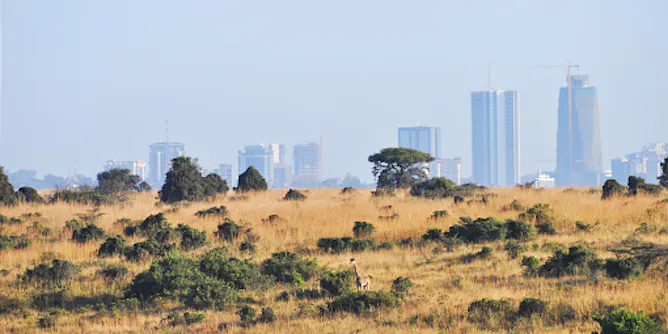
The winds passing over Kenya flow in waves and periodically bring hot weather, the kind that has prevailed recently across east Africa.
Articles on Seasons
Displaying 21 - 40 of 52 articles
Rising air temperatures mean shorter winters and earlier springs.

Humans have synced their calendars to the sun and moon for centuries, but every so often, these systems need a little correction.
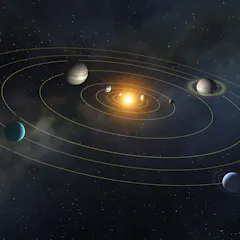
You might hate winter, but at least you know what to expect every year. Other planets have wobbly axes that lead to wild, unpredictable seasons.
Relative to the long-term average, this autumn has been even hotter than summer.
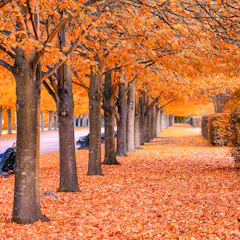
Autumn is arriving later in the year – climate change is probably to blame.
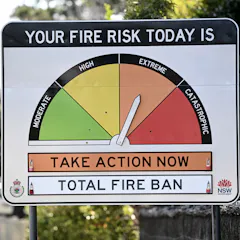
We’ve had an early start to the bushfire season and there’s more to come. No wonder spring isn’t always a celebration.
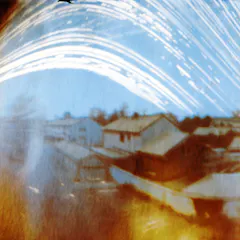
The longest and shortest days of the year are marked by the Sun’s position in the sky – but the seasons lag behind.
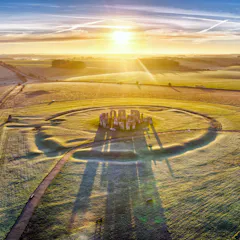
The dead of winter, when the longest night of the year takes place, has also traditionally been celebrated as a time of renewal and reverence.
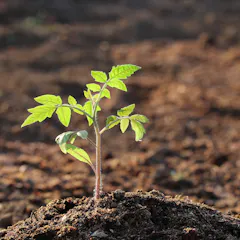
It can be hard to grasp the changes climate change is bringing. To see it in your own life, look at the shifting seasons.

A folklorist explains how Halloween continues an ancient Celtic tradition of the celebration of the dead.

Mosquitoes are commonplace in summer but where do they go once the weather cools? They don’t completely disappear but find fascinating ways to survive the winter.

Climate change is modifying the timing of recurrent life-cycle events with critical consequences on ecological and economic levels.

The Canadian Football League is struggling to stay alive. All options, including help from government, should be considered as part of a national conversation about its future.

This summer is likely to be hot and dry, but that’s more down to climate change than miserable spring.

Uncle Segar is an expert on many things including the land, sea and sky. This knowledge is then captured in his artworks.
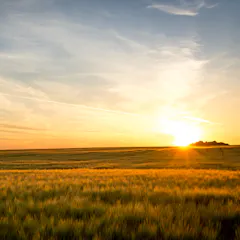
On the March equinox, everywhere in the world has more sunlight than darkness.
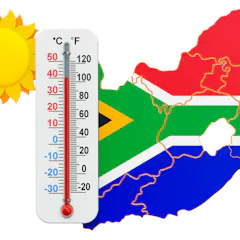
CC BY-NC-ND7.53 MB (download)
Understanding when there will be extreme heat and extreme cold can help people prepare.
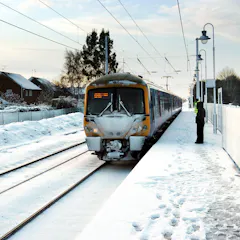
Since 1979, the average number of snow days has fallen by about five per decade.
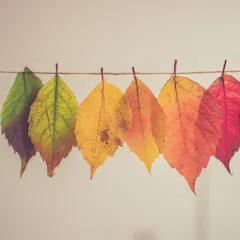
Warmer temperatures cannot increase the amount of carbon deciduous trees absorb in each growing season, a new study suggests.
Top contributors
-

Professor of Physical Geography, University of the Witwatersrand
-
Emeritus Professor of Ecology, University of Salford
-
Postdoctoral research associate, University of Oxford
-
Senior Lecturer in Media, Culture, Communication, Liverpool John Moores University
-
Research professor, Université du Québec à Chicoutimi (UQAC)
-
Senior Lecturer in Physics, Nottingham Trent University
-
Associate Professor, Global Ecology, University of Sydney
-
Professor, Département des Sciences Fondamentales, Université du Québec à Chicoutimi (UQAC)
-
Professor (Astrophysics), University of Southern Queensland
-
Chair of Veterinary Public Health and Food Safety, University of Sydney
-
Professor of Anthropology, USC Dornsife College of Letters, Arts and Sciences
-
Lecturer in Marine Population Ecology, Bangor University
-
PhD Candidate, Disease Ecology Lab and Global Ecology Lab, University of Sydney
-
Senior Research Associate in Physical Oceanography, University of Tasmania
-
Clinical Associate Professor, Faculty of Social Sciences, University of Nottingham