

Hay fever affects roughly one in four UK adults.
Articles on Seasonal allergies
Displaying all articles

Seasonal allergies may seem like a minor, passing inconvenience. But pollen seasons can take a real toll on mental health.

Climate change, pollution and an unusually warm and dry spring have all contributed to this year’s long, intense allergy season.

An allergic reaction happens when your immune system overreacts to something that should be harmless. Whether that happens can be thanks to your genes, your environment or a combination.

House dust mites feed off the skin cells we and animals shed. Symptoms of this allergy include an itchy nose, eyes and throat, sneezing and coughing.
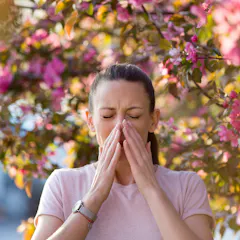
The trigeminal nerve is at the heart of the sneeze reflex. But stopping a sneeze once triggered can increase its force and redirect pressure in dangerous ways.

Hay fever symptoms will improve over time for most – but there are many things you can still do in the meantime to reduce hay fever severity.
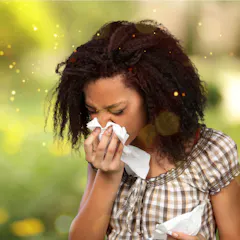
Allergic reactions to pollen may occur at different times of the year and for prolonged periods, and this will worsen with climate change.
Top contributors
-

Associate Pro Vice-Chancellor: Innovation and Knowledge Exchange, University of Nottingham
-
Honorary Associate Professor
-
Associate Professor of Medical Sciences, University of Wollongong
-
Research assistant, Simon Fraser University
-
Lecturer, Simon Fraser University
-
Lecturer in Nursing, Adelaide University
-
Professor of Immunology, Dublin City University
-
Allergy and Immunology Fellow-in-Training, School of Medicine, West Virginia University
-
Professor Emeritus, Faculty of Health Sciences, Simon Fraser University
-
Associate Professor of Economics, Wayne State University
-
Senior Lecturer in Medical Sciences (Neuroscience), University of Wollongong