
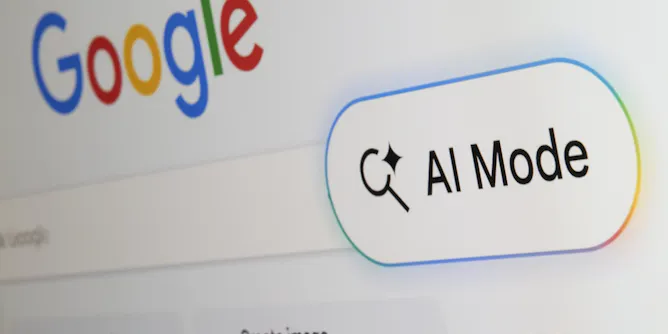
One Google response asked for my medical history. Another answered a personal health question without asking who I was. Both replies came across as authoritative advice.
Articles on Search engines
Displaying 1 - 20 of 50 articles

Search engines, social media and AI models can be made as safe and reliable as bridges and water supplies.

A new study shows stronger guardrails on search engines are needed to prevent the spread and legitimisation of conspiratorial beliefs.

AI has broken the economic bargain behind the web, and everybody is losing.

Before December search engines such as Google will need to implement several other measures aimed at protecting children online.

AI search summaries are reshaping the search engine ecosystem we’ve grown accustomed to over two decades.

Alternative cancer clinics spent over an US$15 million on Google ad spaces, generating millions of website visits from people searching for cancer information.

To make sure search engines serve us well, it’s helpful to imagine these tools having different roles – whether it’s a “librarian” or a “teacher”.

Google’s search engine fields 6.3 million queries every second. But the results it dishes up are far from perfect.

Google has a 90% market share of the market for general search engines.
The line between high-quality search results, advertisements and spam on Google is increasingly blurred.
The landmark ruling against the tech giant could change the way we all use the internet.

The government has revived the Fair Digital News Bargaining Bill, but the way AI may be skewing news results and visibility is off the table for now. My new research suggests it should be a priority.
Google’s use of artificial intelligence to power its searches is an alarming development, especially considering how search engines are driven by financial interests.

An information scientist explains that while Google’s AI Overviews and other AI search tools may look enticing, you shouldn’t rely on them to fill all your search needs.

Using AI to write search results is risky for Google, the internet, and the whole idea of ‘truth’
It’s the fourth most popular website in the world, but our new study shows toxic commentary can still thrive on Wikipedia. There’s a lot at stake if too many editors are driven away.

Search engines run by generative AI could fundamentally change the online ecosystem.

ChatGPT can be very useful – if you shift how you view it. The first step is to stop thinking of it as a chatty search engine.

Generative AIs may make up information they serve you, meaning they may potentially spread science misinformation. Here’s how to check the accuracy of what you read in an AI-enhanced media landscape.
Top contributors
-

Senior Lecturer, School of Computing Technologies, RMIT University
-
Professor of Information Science, University of Washington
-
Postdoctoral Research Fellow, ARC Centre of Excellence for Automated Decision-Making and Society, Queensland University of Technology
-
Professor specialising in Internet law, Bond University
-
Professor, Queensland University of Technology
-
Senior Lecturer and Co-Director of the Centre for Digital Business, University of Salford
-
Principal Lecturer, College of Business Law & Social Sciences, Nottingham Law School, Nottingham Trent University
-
Professor of Operations Research, Brock University
-
Ph.D. Student in Network Science, Northeastern University
-
Postdoctoral Researcher in Sociology, University of Arizona
-
Professor of Information Systems and Director of Centre for Business Analytics, Brock University
-
Associate Professor of Media, Culture, and Communication, New York University
-
Assistant Professor in Digital Media, University of Canberra
-
Professor in Research Methodology, University of Trento
-
Research Fellow, University of Reading