

A team of archaeologists strived to improve the reproducibility of their results, influencing their choices in the field, in the lab and during data analysis.
Articles on Science research
Displaying 21 - 37 of 37 articles
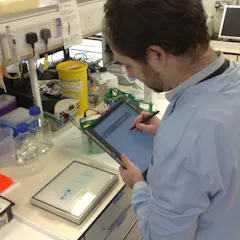
Any field that collects and analyzes data relies on statistical techniques to make sense of it all. Modern, more accurate methods should supplant the old ways… but in many cases, they haven’t yet.
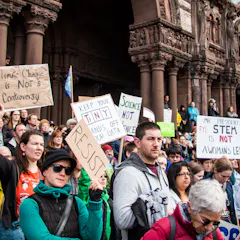
The research community tends to assume advocacy doesn’t mix with objectivity. One study suggests there’s room for scientists to make real-world recommendations without compromising their trusted status.

What are research dollars actually spent on? Rather than looking at artifacts like publications and patents, a new initiative directly tracks the people and businesses that receive research funding.
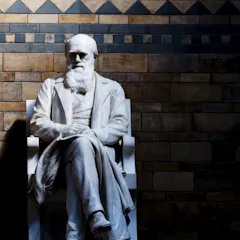
In science, the word ‘theory’ has a very specific meaning that’s easy for nonscientists to misunderstand or misconstrue. Here’s what a theory must withstand to be accepted by the scientific community.
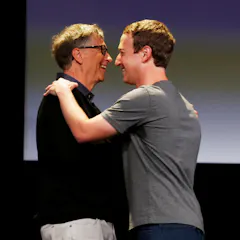
The priorities of science are being influenced less by government policy and academia, and more by the priorities of the philanthropic giver.

With federal support for on-campus R&D dwindling as a percentage of GDP, keeping basic research afloat is a challenge. Schools and researchers are left to try to fill in the funding gaps.

Scientists from the developing world perceive current visa rules as a major impediment to professional travel. They miss out on opportunities to collaborate globally.
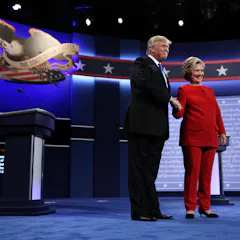
Neither major party has made science and engineering issues a big part of its platform. But research – and its funding – are crucial if the U.S. wants to maintain status as a global leader.

Embracing more rigorous scientific methods would mean getting science right more often than we currently do. But the way we value and reward scientists makes this a challenge.

This method of crowdsourcing science legwork is ready to expand into other disciplines – and maybe the amateurs themselves can start calling some of the shots.
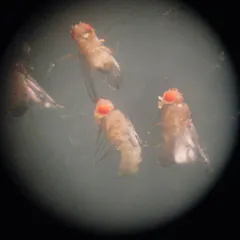
Fruit flies aren’t just a remarkable organism for research. They are also central to a project that aims to provide more at-home research opportunities for African scientists.

Virtually every researcher relies on computers to collect or analyze data. But when computers are opaque black boxes that manipulate data, it’s impossible to replicate studies – a core value for science.

Research institutions don’t have a monopoly on innovation. In fact, most innovation comes out of business, and it’s this sector that needs more attention in innovation policy.

With future funding for science and research by the federal government still unclear, can the states play a role?

In a referendum on 9 February, the Swiss population voted against mass immigration. That outcome will have far-reaching consequences on the position of Switzerland in European research cooperation. As…

You can be forgiven for assuming that gender is not an issue any more in higher education. There are more young women entering universities than ever before and they are graduating each year in their hundreds…
Top contributors
-

Professor of Archaeology, University of Washington
-
Professor of Public Affairs, The Ohio State University
-
Adjunct Senior Lecturer, Applied Ethics and CyberSecurity, Griffith University
-
Adjunct professor, UTS Business School, University of Technology Sydney
-
University of Minnesota
-
Professor of Statistics, USC Dornsife College of Letters, Arts and Sciences
-
Associate Professor of Environmental Studies and Science, Pace University
-
University of Waterloo
-
Professor in Lyman Briggs College, Fisheries & Wildlife, and Philosophy, Michigan State University
-
Professor of Economics, The Ohio State University
-
Vice President for Research and Professor of Physics, Washington State University
-
Department Chair and Professor of Biochemistry and Molecular Genetics, University of Illinois Chicago
-
Associate Professor of Higher Education, Georgia State University
-
Lecturer, The University of Queensland
-
Assistant Professor of Cognitive and Information Sciences, University of California, Merced