

School choice heavily influences immigrant students’ experiences in Charleston schools and can leave them in segregated academic environments, new findings show.
Articles on School segregation
Displaying 1 - 20 of 26 articles
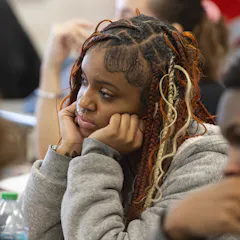
A sociologist explains how Black students in Philadelphia navigate racial prejudice and find affirmation in their schools.

Women often see their choice of school as a reflection of whether they are good moms, while parents of color feel pressure to find a racially inclusive school.
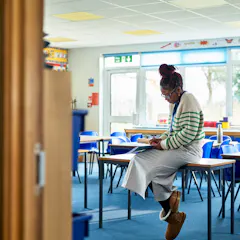
Experiences of racism affected Black teachers across the district but manifested in different ways depending on their school’s location.
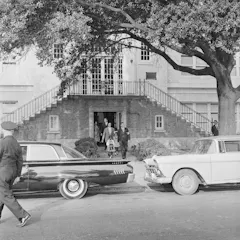
On Nov. 15, 1960, four Black first graders desegregated New Orleans schools. One of them was Tessie Prevost, who died in July 2024 with the promises of the post-Brown era still unfulfilled.
Romantic attraction is driven by a complex set of factors, including who people grow up around and what is familiar and comfortable to them. But discriminatory laws also play a role.

An analysis shows that Black students at more racially segregated schools have a greater tendency to turn to the bottle.

The effort to give every student equal access to an education has lasted decades and may need even more time before the goal is reached.

In middle school classes, students from lower-income families tended to be concentrated in just a few classrooms, new research from North Carolina has found.

Inspired by her own experience with the education system, a professor of sociology explores how race and racism influence school choice and education.
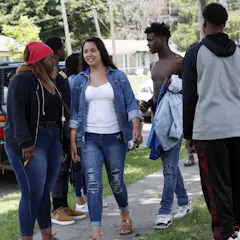
Though the 1954 Brown v. Board ruling required the integration of public education, US schools remain separated by race.
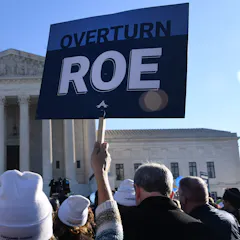
Brown v. Board didn’t overrule ‘separate-but-equal’ but it had that end. A law scholar explains how there is a lesson there for conservatives on today’s Court looking to end abortion in the US.

Americans tend to think of diversity in demographic terms, but it has a qualitative element to it that reflects a fundamental battle between segregation and integration.
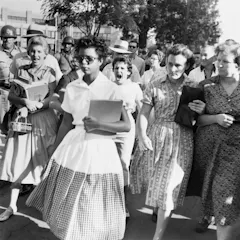
Americans’ collective memory of school desegregation involves crowds of screaming white protesters. But less well known are the whites who stood by quietly, and those who approved of the changes.
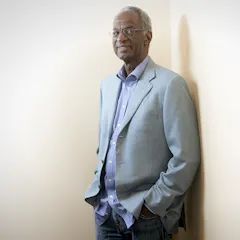
Howard Fuller’s support for school choice is connected to the Black Power movement and a pursuit to provide Black students a quality education by any means necessary.

One recommendation to fix inequity in Australia is for the government to fund non-government schools to the same degree as government schools, while banning them from charging fees.
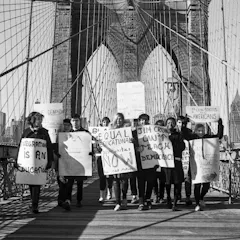
In the 1950s, Harlem mother Mae Mallory fought a school system that she saw as ‘just as Jim Crow’ as the one she had attended in the South.
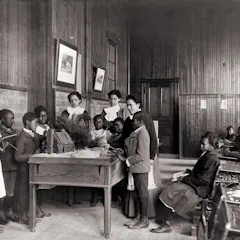
School integration is often thought of as something that took place in the 1960s. But the first Black student to desegregate a school by court order was an Iowa girl named Susan Clark in 1868.
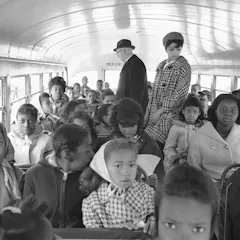
When the Supreme Court exempted suburbs in the North from the kind of desegregation orders imposed in the South, it enabled the ‘de facto’ segregation that continues in America’s schools to this day.

Public school funding aims for every student to have the same opportunities. But a new study shows parents contributions still perpetuate inequality in government schools.
Top contributors
-

Associate Professor of Ethnic Studies, University of Oregon
-
Associate Professor of Education, University of Illinois Urbana-Champaign
-
Dean, USC Rossier School of Education, University of Southern California
-
Ph.D. Candidate in Public Administration and Policy, American University School of Public Affairs
-
Researcher at the Consortium for Policy Research in Education, Teachers College, Columbia University
-
Professor of Leadership, Counselor Education, Human and Organizational Development; Executive director, Call Me MISTER, Clemson University
-
Associate Professor in Educational Leadership, Australian Catholic University
-
Postdoctoral Fellow, Rice University
-
Joseph Panzer Chair in Education and Research Professor of Law, University of Dayton
-
Professor Emeritus, Drake University Law School, Drake University
-
Professor of Social Impact, University of Technology Sydney
-
Professor of Education and Demography, Penn State
-
Associate Professor, Harvard University
-
PhD Student, Penn State
-
Assistant Professor of Sociology, The University of Texas at Austin