
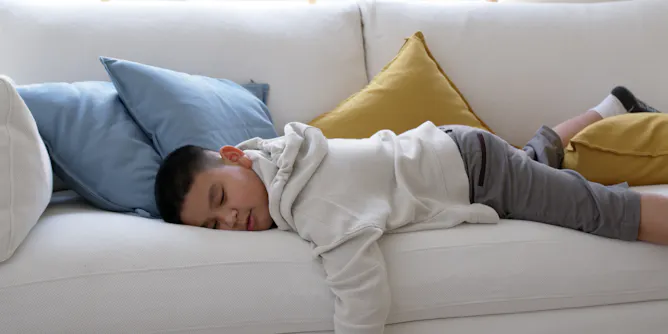
Kids always seem to be sick on the busiest work days. There are some clear symptoms that mean they should stay at home.
Articles on School refusal
Displaying all articles
If your child is spending lots of time in sick bay or has extreme difficulty getting ready for school, they could be signs of school refusal.

From keeping up routines, to making contact with new teachers, there are many things families can do to lay the groundwork for a more positive school year ahead.
Research suggests schools need to be empowered to listen to students who are disengaging with school and respond in flexible ways.

Today Australia’s education ministers are meeting and school attendance is high on the agenda. Federal Education Minister Jason Clare has repeatedly flagged this as one of his key concerns.

There is growing concern about school refusal rates in Australia. But experts caution against parents simply forcing kids back to the classroom.
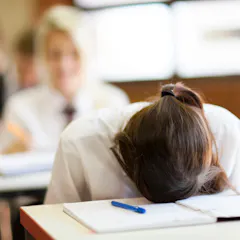
Many kids are nervous about starting a new school year. But some children will experience a level of anxiety about school that causes them significant problems.

A third of students say they don’t like school, and that dislike often begins around the time they enter high school. But the reasons they give point the way to solutions to this problem.

Many Australian children are returning to school after spending the best part of two years learning from home. Such a long break can understandably make many anxious. But there are ways to help.

School refusal is a serious difficulty for many students, but it is often ignored in policies for increasing school attendance.
Prime minister Tony Abbott has set a new goal of closing the gap for Indigenous school attendance within five years, saying a failure to properly educate children is “one of the worst forms of neglect…
Top contributors
-

Research associate, Adelaide University
-
Associate professor, RMIT University
-
Researcher into Educational Leadership and Policy, Flinders University
-
Sue Roffey is a Friend of The Conversation.
Honorary Associate Professor, Department of Clinical, Educational and Health Psychology, UCL
-
PhD Candidate, School of Educational Psychology and Counselling, Monash University
-
Professor of Educational Psychology, University of Wollongong
-
Professor of Belonging Science, School of Educational Psychology and Inclusion, Faculty of Education, Monash University
-
Postdoctoral Research Fellow, Centre for Inclusive Education, Queensland University of Technology
-
Professor and Director of the Centre for Inclusive Education, Queensland University of Technology
-
Professor of Clinical Psychology, The University of Queensland
-
Senior Lecturer in Education, CQUniversity Australia
-
Associate Professor in Education, Wellbeing and Children's Rights, Queensland University of Technology
-
Research fellow, Transforming Early Education and Child Health Research Centre, Western Sydney University
-
Associate Professor, Sport, Health and Physical Education, University of Southern Queensland
-
Lecturer in Curriculum and Pedagogy with a focus on Educational Psychology, University of Southern Queensland