
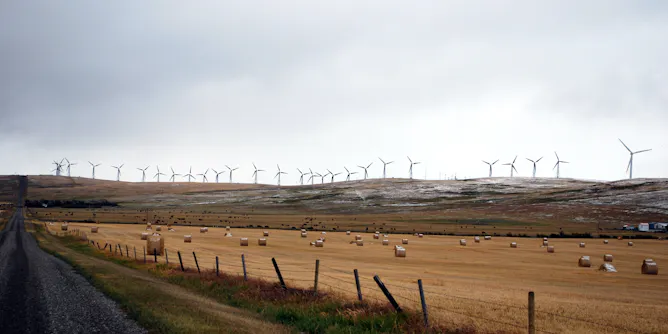
Rural communities are coming together to support their own resilience. The rest of Canada needs to follow suit.
Articles on Saskatchewan
Displaying 41 - 60 of 63 articles
More than 40 per cent of natural wetlands in the Canadian Prairies have been lost due to drainage, and the impacts associated with this are largely unmitigated.

How a veterinarian and a law professor joined a multidisciplinary team to help produce a made-in-Saskatchewan emergency-use ventilator during the COVID-19 pandemic.

More oil and gas wells risk becoming orphaned given the long-term downward trend in the industry.

The KKK appeared in Canada in 1921. Nowhere else in Canada did the Klan achieve the influence it attained in Saskatchewan, where it helped bring down a government.
As the world’s population grows, agriculture and related industries will grow in size and importance in Canada. Smart investors should bet on Canadian farmland.
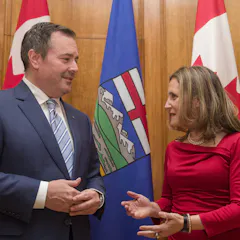
If successful, Chrystia Freeland could help bolster national unity and Canada’s relationships with the U.S. and Mexico. But relentless sexist attacks against her could derail progress.
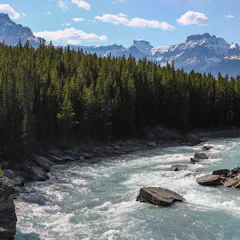
Imagining how to increase water managers’ empathy for others in a holistic way is critical for our human and planetary future.

Renewed helium exploration in Western Canada may provide new sources to address the global shortage.
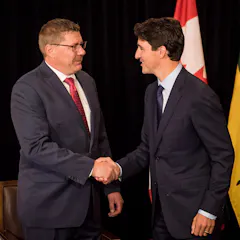
A ruling by the Saskatchewan Court of Appeal recognizes the threat of climate change, but its approach is too narrow.
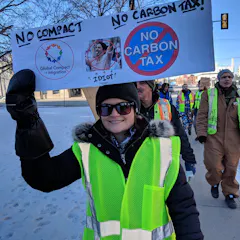
Far-right yellow vest extremists in Saskatchewan could jeopardize Saskatchewan’s efforts to grow and attract immigrants.

The bulk of Canada’s agricultural production is in the Prairie provinces.

Environmental taxes encourage consumers to conserve energy or switch to less carbon-intensive fuels.
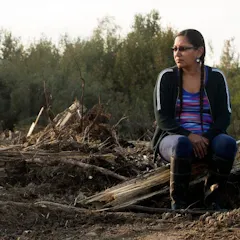
A co-founder of Idle No More was put on trial for ‘trespassing’ on her family’s ancestral lands. Canada has much to learn about institutionalizing respectful relationships with Indigenous peoples.

In Saskatchewan, nuclear research is being conducted with medical and energy applications. The public should be consulted when developing nuclear policy to apply and benefit from these discoveries.
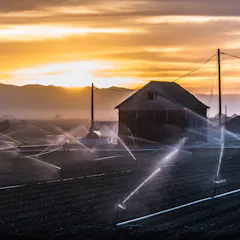
Groundwater supplies around the world are under threat as drilling companies bore deeper and deeper wells.
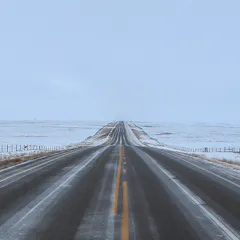
In the wake of Humboldt bus crash, the federal government must reassess its responsibility to protect road users.
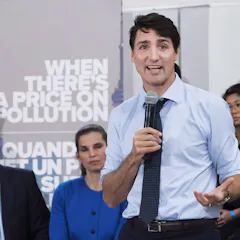
Canada’s top-down approach to designing its climate policy has failed. It needs to find ways to engage with individuals.
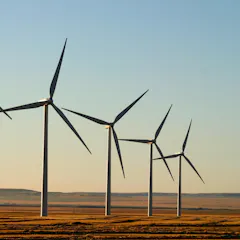
The idea of a renewable energy transition is exciting. It opens up space to think about enhancing democracy and decolonization.

It’s not all about eating leafy green vegetables and working out: Living and working conditions have a profound impact on our health. So why are politicians avoiding taking action?
Top contributors
-

Assistant Professor, Department of Political Studies, University of Saskatchewan
-
Professor, Department of Geography & Environmental Studies, University of Regina
-
Researcher, Institute for Water, Environment and Health, United Nations University; University of Calgary
-
Executive Co-Director, UNU Hub on Empowering Communities to Adapt to Environmental Change, United Nations University; University of Calgary
-
Assistant Professor, Johnson Shoyama Graduate School of Public Policy, University of Saskatchewan
-
Professional Research Associate, Canadian Centre for the Study of Co-operatives, University of Saskatchewan
-
Associate Professor, Faculty of Business Administration, University of Regina
-
University of Arizona
-
Assistant Teaching Professor, Faculty of Law, University of Alberta
-
Professor of Health Policy and Management, York University, Canada
-
Associate Professor, Faculty of Law, Queen's University, Ontario
-
Professor, Systems and Computer Engineering, Carleton University
-
Community research partner and theatre practitioner
-
Associate Professor, Department of Psychology & Faculty of Education, Mount Saint Vincent University
-
Program Director & Associate Professor Master of Psychology Health and Wellness & Master of Industrial-Organizational Psychology, Adler University