
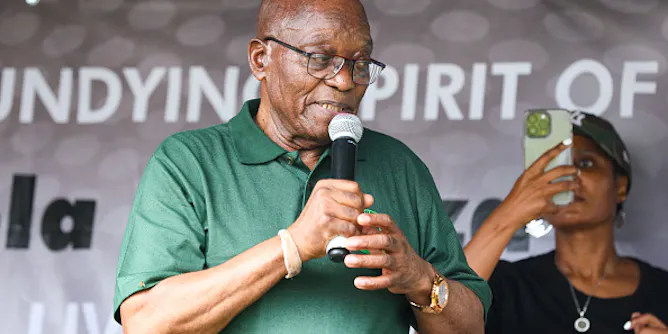
The ANC tied itself in knots defending Zuma’s destructive bad behaviour in the past. Acting against him now would require it to own up to its sins.
Articles on SACP
Displaying 1 - 20 of 22 articles
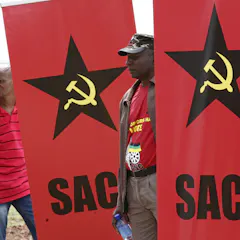
The Communist Party draws most of the members from South Africa’s mainly young, unemployed people, a group that keeps growing.
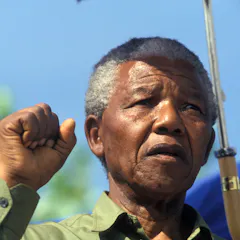
The suggestion that Mandela single-handedly achieved democracy is as intellectually threadbare as the charge that he was centrally responsible for the failure to transform South Africa.

His appearance on behalf of the families of mine workers shot by the police at the Marikana Commission of Inquiry was just one of his efforts to seek justice for the poor and marginalised.
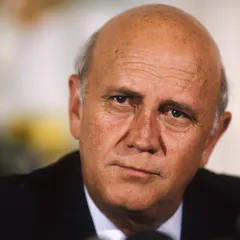
In his new capacity as President of South Africa, FW de Klerk directly experienced for the first time how the international community had abandoned its support for minority white rule.
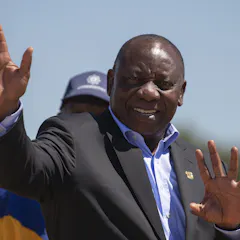
Indications are that even an ANC victory at the polls is unlikely to reverse the party’s decline in popular support.
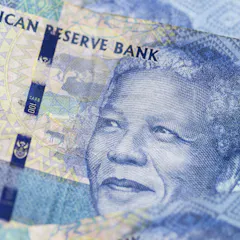
A change in the ownership of the South African Reserve Bank from private shareholders to government shouldn’t impact the constitutional mandate of the central bank in any way.
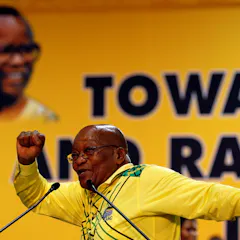
Zuma’s last address to South Africa’s governing party, the ANC, as its president, betrayed his strange way of dealing with issues. He came across as delusional and self-indulgent.
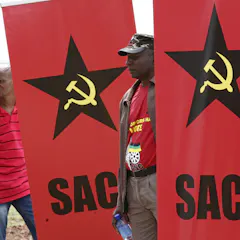
The South African Communist Party’s decision to compete in an election against its alliance partner the ANC is a watershed moment for them, with important implications for the country.
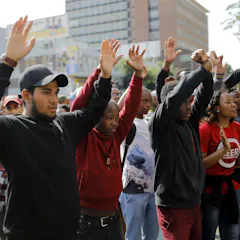
The South African oddity is that those who in other societies would be arguing against free passes for the affluent, argue for them.

South Africa’s five-year-old National Development Plan suffers from gross misinterpretation by different parties.
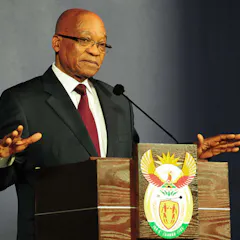
The twilight of Jacob Zuma’s ruinous presidency coincides with growing revulsion at his misrule of South Africa. But, it’s important that his erstwhile supporters acknowledge their complicity.
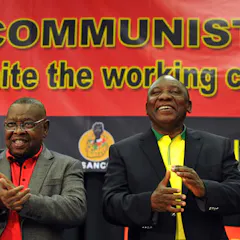
After tiptoeing around the idea of contesting state power South Africa’s Communist Party is looking to strengthen its position now that the ANC is no longer the dominant force it used to be.
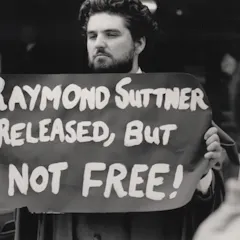
In the new introduction to his prison memoir South African anti-apartheid stalwart Raymond Suttner uses the word ‘betrayal’ to explain his break from the ANC.

Organisational psychopathy, generally known as toxic leadership, is common in the private sector. It’s emerging more often in the public space too.
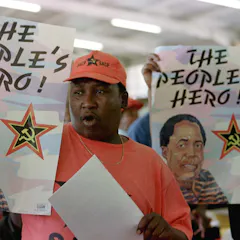
The name of ANC struggle hero Chris Hani, who was assassinated in 1993, is regularly invoked to win political arguments in South Africa.
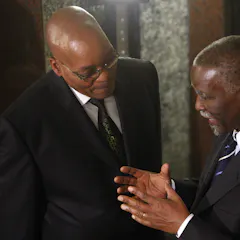
The fallout at the meeting of South Africa’s governing ANC clearly exposed how the party’s factionalism has spilled over into government. This is likely to paralyse governance even further.
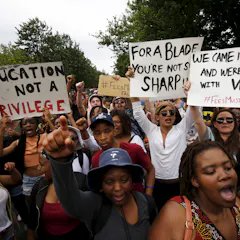
The leaderlessness of South Africa’s #FeesMustFall student movement has ultimately fed into divisions within the grouping.
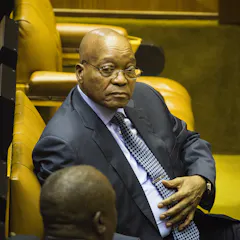
Defects in political governance, especially President Jacob Zuma’s failure to provide leadership, have induced a crisis of confidence in South Africa’s economy.
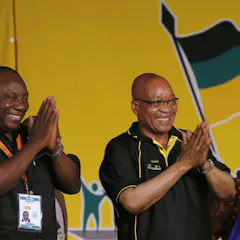
The stakes have not been higher since the heady days of the early 1990s when South Africa also looked over the brink. Now it is less about brink and more about who will blink
Top contributors
-

Professor in Political Science, University of South Africa
-
Professor of Political Studies, University of Johannesburg
-
Professor of Public Affairs, Tshwane University of Technology
-
Political Scientist, University of the Western Cape
-
Researcher at History Workshop, University of the Witwatersrand
-
Associate Professor, Department of International Relations, University of the Witwatersrand
-
Lecturer, Nelson Mandela University
-
Associate Professor, University of Cape Town
-
Emeritus Professor, University of South Africa and Visiting professor and strategic advisor in Faculty of Humanities., University of Johannesburg
-
Honorary Fellow of Green Templeton College, University of Oxford
-
Professor, University of Oxford
-
Associate professor, University of Cape Town
-
Head: Wits School of Governance, University of the Witwatersrand
-
Emeritus Professor of Peace and Conflict Studies, University of Limerick
-
Lecturer in Politics and International Relations, University of Leicester