
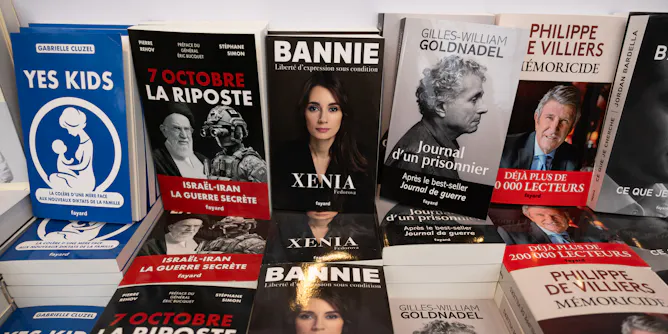
The Fedorova case is emblematic of a rhetorical method used by Russian propaganda: appealing to the targeted public’s critical thinking to convince them to disregard sources seen as “official” and “dominant.”
Articles on Russian propaganda
Displaying 1 - 20 of 31 articles

Ukrainian memes are a testament to Ukraine’s ongoing resistance to Russia and a powerful force in contemporary Ukrainian nationalism
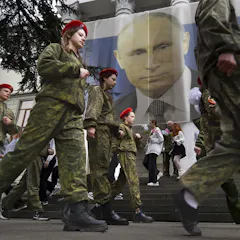
Russian President Vladimir Putin has increasingly turned to education and membership groups to promote patriotism and loyalty among the country’s youth.

Russia’s media often paint the west as hypocritical or imperialistic and Moscow as a defender of sovereignty. Chinese media emphasise Beijing’s role as a partner in Africa’s development.

Russian propaganda and talking points on Ukraine continue to be repeated, without being challenged, two years after the war began.

While Russian public opinion polls show continued support for the war, there are questions about the polls’ reliability and indications that public approval of Putin is declining.

Libraries play a crucial role in preserving texts, even controversial ones. They are responsible for teaching people how to evaluate the credibility and validity of information.

Russian government media are frequently criticized as being blatant propaganda. How do US government media measure up?
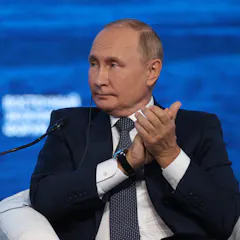
Some of the key articles from our coverage of the war in Ukraine over the past week.

New research shows that at least half of Canadians have encountered pro-Kremlin propaganda online and that those who hold left-leaning views are less susceptible to the Kremlin’s disinformation.
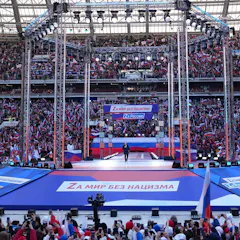
For hundreds of years, Russia has elevated its political leaders as figureheads. That’s part of what makes its propaganda so convincing.
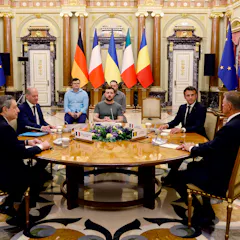
A digest of the week’s coverage of the war against Ukraine.

Atrocities are made easier when one country’s troops are taught to despise the people they are invading.

Ukraine’s savvy president is beating Putin at his own game.
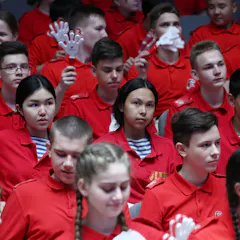
Russian schoolchildren are being mobilised in a patriotic movement which encourages military service.
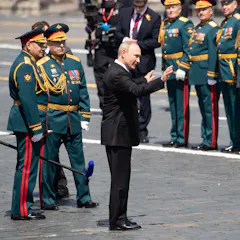
When it comes to Russia’s invasion and violence against Ukraine, language matters.

The Russian Embassy in Canada is active in spreading disinformation and promoting the Russian perspective on the events taking place in Ukraine.

Russia’s propaganda signalled a full-scale invasion of Ukraine a long time ago.
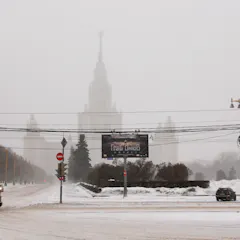
Academics and students are prominent among the Russians who are defying the Putin regime and opposing the invasion of Ukraine. They need to be supported, not cut off by the rest of the world.

As Election Day approaches, Americans would do well to remember they are targets of disinformation campaigns. Here’s what they could look like, and what’s being done about them.
Top contributors
-

Senior Lecturer in International Politics, Aberystwyth University
-
Associate Professor of Communications (Social Media), Syracuse University
-
Professor of Critical Cultural & International Studies, Colorado State University
-
Executive Director, Arizona State University
-
Professor of Anthropology, University of Northern British Columbia
-
Adjunct Instructor in Cybersecurity, Johns Hopkins University
-
Teaching Professor of Computer Science and Electrical Engineering, and Associate Director, UMBC Cybersecurity Institute, University of Maryland, Baltimore County
-
Senior Lecturer in National Security Affairs, Naval Postgraduate School
-
Associate Professor of Ukrainian Studies, University of Cambridge
-
Editor-in-Chief of the Forum for Ukrainian Studies, Contemporary Ukraine Studies Program, Canadian Institute of Ukrainian Studies, University of Alberta
-
Slavic Resources Coordinator, and Head, Petro Jacyk Resource Centre, University of Toronto Libraries, University of Toronto
-
Lecturer in Global Histories and International Relations, Bath Spa University
-
Research Fellow at Norman Paterson School of International Affairs, Carleton University, Carleton University
-
Senior Fellow, Wolfson College, University of Cambridge, University of Cambridge
-
Associate Professor, Criminology, Department of Social Science, York University, Canada