

In late 2021, REvil appeared to shut up shop. But it seems the group, or at least a close genetic descendant, is back in business.
Articles on Russian hacking
Displaying 1 - 20 of 58 articles

Russian government media are frequently criticized as being blatant propaganda. How do US government media measure up?
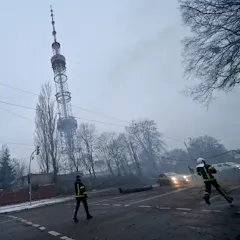
Russian hackers have been attacking Ukraine for years, but with help from US government agencies, businesses and universities, Ukraine’s cyber defenses have grown stronger.

Cyberattacks can be devastating, just not on the battlefield, according to researchers who looked at 10 years of armed conflicts around the world.
It’s illegal for Australians to answer Ukraine’s call to join its global cyber militia and defend against online Russian aggression. But the government could (carefully) legalise it if it wants to.
Russian information warriors have the capacity to damage critical US infrastructure systems.

Russia’s cyberattack capabilities can be applied to US targets, including regular Americans’ homes and businesses.
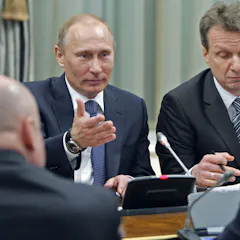
When announcing financial penalties on Russia earlier this year, Biden hinted at the prospect of ‘further’ sanctions. An energy scholar explains what Biden may have meant.
Fragmented authority for national cyber defense and the vulnerabilities of private companies that control software and infrastructure stack the deck against US cybersecurity.

Though many people are just paying attention to these problems now, they are not new – and they even date back to ancient Rome.
Fragmented authority for national cyber defense and global supply chains for building software stack the deck against US cybersecurity.
A scholar of cyber conflict sets out why retaliation doesn’t prevent future attacks, and explains what might have a better chance.

As Election Day approaches, Americans would do well to remember they are targets of disinformation campaigns. Here’s what they could look like, and what’s being done about them.
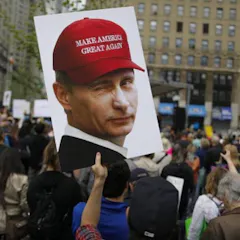
Russian interference deeply marked the 2016 American presidential election. Four years later, let’s analyze the form and impact of disinformation coming from Russia.

Russian agents reportedly placed malware in U.S. voter registration systems in 2016 and are actively interfering in the 2020 election. Here’s the state of election cybersecurity.
Russian-affiliated Twitter accounts changed what they posted about, and used both text and images in ways that shed light on how these information warriors work.
The Russian cyberthreat, now targeting coronavirus vaccine research, goes back over three decades, extends into the country’s educational systems and criminal worlds, and shows no signs of letting up.
A scholar who has reviewed the efforts of nations around the world to protect their citizens from foreign interference says there is no magic solution, but there’s plenty to learn and do.
Information warfare has gone global. Here are some recent campaigns, and a couple of ideas about how to fight back.

China and the United States are not at war, but cyberspace has created opportunities for intelligence gathering, influence and sabotage that are already taking place.
Top contributors
-

Professor of History, Penn State
-
Next Generation Leader, McCain Institute for International Leadership, Arizona State University
-
Adjunct Instructor in Cybersecurity, Johns Hopkins University
-
Senior Lecturer in National Security Affairs, Naval Postgraduate School
-
Teaching Professor of Computer Science and Electrical Engineering, and Associate Director, UMBC Cybersecurity Institute, University of Maryland, Baltimore County
-
Emeritus Distinguished Professor of Defense Analysis, Naval Postgraduate School
-
Associate Professor of Computer Science, University of Iowa
-
Professeur d'Histoire et civilisation US, Université Paris Cité
-
Postdoctoral Researcher, Max Planck Institute of Geoanthropology
-
Professor of Computer Science & Electrical Engineering, University of Maryland, Baltimore County
-
Ph.D. Candidate in Computer Science, University of Maryland, Baltimore County
-
Lecturer, Lund University
-
Professor of Management, University of Essex
-
Professor in department Law, Managment, and Social Sciences, EM Lyon Business School
-
Provost Associate Professor, American University School of International Service