
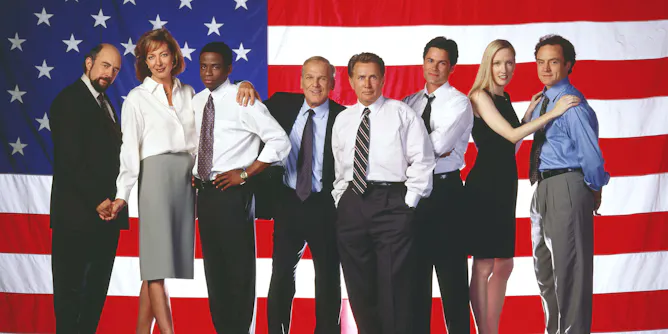
‘The West Wing’s’ transition from broadcast TV behemoth to ‘bittersweet comfort watch’ in today’s streaming era reveals how much media and political landscapes have changed in the past 25 years.
Articles on 2016 US elections
Displaying 1 - 20 of 35 articles
The vagaries of polling – and, most of all, the vagaries of the US electoral system – mean there is little point attempting to read the tea leaves beyond the broad public sentiment polling captures.

Trump’s reported indictment, and the frenzy it has already created, demonstrate just what a dangerous and unstable time this is for American democracy. The road is probably about to get even rockier.
Recent elections in Australia, the US and the UK have seen left-leaning parties lose votes among non-university educated whites. One way to win them back might be to disassociate from ‘elite’ opinion.

The 2020 US election is a battle of two masculinities – one authoritarian, the other paternalistic.
Will Facebook and Twitter be able to counter the tsunami of misinformation that could affect the election result? It’s unlikely.
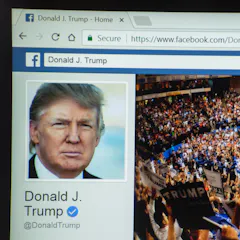
How Joe Biden’s Facebook campaign compares to Hillary Clinton’s at this point in 2016 – and how Donald Trump is doing on the social media platform.
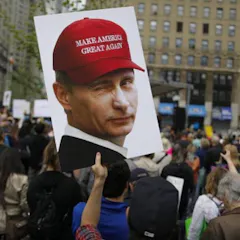
Russian interference deeply marked the 2016 American presidential election. Four years later, let’s analyze the form and impact of disinformation coming from Russia.
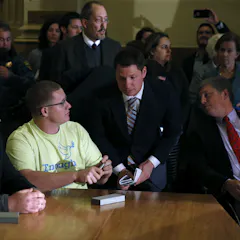
Electors may not vote their consciences, which means the Electoral College will continue to operate how most Americans think it does.
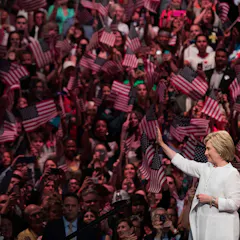
Predictions about how a woman presidential candidate might fare in 2020 are largely speculation, writes a political scientist, because there isn’t enough experience to base those predictions on.

Hillary Clinton got the most individual votes from US citizens in 2016, but Donald Trump won the most electoral votes.
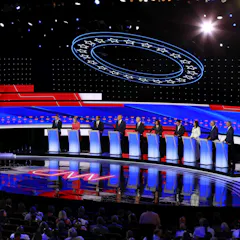
Hillary Clinton arguably lost in 2020 because she took workers for granted. Will Democrats make the same mistake again?
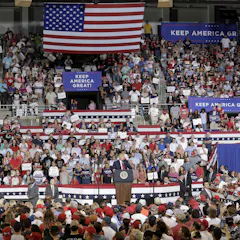
Two social scientists investigate why working-class white men are particularly receptive to President Trump’s racist and anti-immigrant messages.
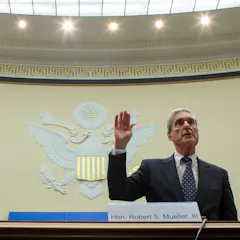
To one scholar of the post-truth era, tuning in to Robert Mueller’s testimony Wednesday was to hear a duel over the facts. Not what the facts imply – but what the facts are.
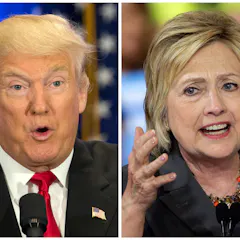
An analysis of social media troll activity during the 2016 election campaign shows that exposure to Russian propaganda may have helped change American minds in favor of Republican candidate Trump.
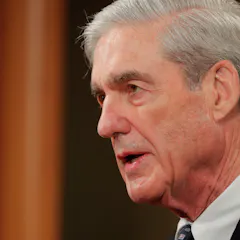
What’s the role of someone who, like
Robert Mueller, speaks only facts in a tornado of partisan bombast? Is it a breath of fresh air or an abdication of responsibility to protect America’s interests?
Russian hackers are coupling old propaganda strategies with new technologies to attack and exploit not just computers and stored data, but how people think.

Cybersecurity experts in the US knew about Russian intelligence agencies’ activities, but may not have had any idea how comprehensive and integrated they were – until now.

Third in the Oxford-style debate series, this article argues against the motion that “the impact reflected by Trump is here to stay” by focusing on the transitory nature of his presidency.

Many are wondering what Facebook, Twitter and even the government can do to stop the spread of fake news. Behavioral science has an answer: the Pro-Truth Pledge.
Top contributors
-

Research Fellow, Center for Philosophy and History of Science, Boston University
-
Associate Professor, Sociology, Athabasca University
-
Assistant Professor of History of Behavioral Science, The Ohio State University
-
Associate Professor of Sociology, Oregon State University
-
Professor of Political Science, University of California, San Diego
-
Professor of law and ethics, Georgia State University
-
Research Director of the Center for Employment Equity, UMass Amherst
-
Ph.D. Student in Management, University of Florida
-
Provost Associate Professor, American University School of International Service
-
Associate Professor of Family Medicine, University of Michigan
-
Managing Director of the McCourtney Institute of Democracy, Associate Research Professor, Political Science, Co-host of Democracy Works Podcast, Penn State
-
Associate Professor of Political Science, The Ohio State University
-
Professor in department Law, Managment, and Social Sciences, EM Lyon Business School
-
Director of UWA Centre for Software Practice, The University of Western Australia
-
Teaching Professor of Computer Science and Electrical Engineering, and Associate Director, UMBC Cybersecurity Institute, University of Maryland, Baltimore County