
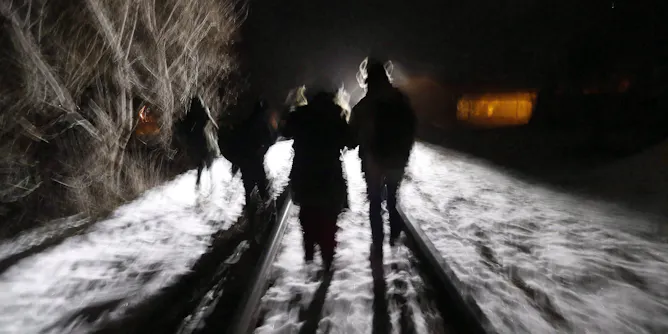
Focus on supposed ‘loopholes’ that allow migrants to claim asylum echoes Canada’s longstanding preoccupation with how people negotiate the border.
Articles on Roxham Road
Displaying all articles

The values of conservation and self-transcendence are used to express negative versus positive attitudes toward asylum seekers and may change in response to policy shifts.

We know how to reduce homelessness and uphold our responsibilities to those seeking asylum and protection. Now all we need is the political will.
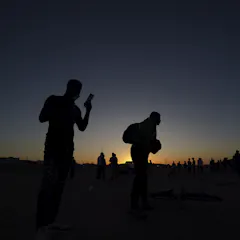
Here’s why the newly amended Safe Third Country Agreement will inevitably lead to more deaths for migrants in hazardous conditions in both official and non-official migration pathways.

The renegotiated Safe Third Country Agreement was politically expedient for Justin Trudeau’s government, but poses real policy and programming challenges.
Migration expert Christina Clark-Kazak explains the devastating consequences of the recent change to the Safe Third Country Agreement made by U.S. President Biden and Canadian Prime Minister Trudeau.
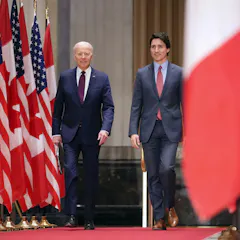
Canada and the U.S. have effectively decided to crack down on migrants crossing unofficial border points into Canada. Here’s why this approach misses the bigger picture.
Rather than demonize migrants, legislators everywhere should address the issues that force them to migrate.
Top contributors
-

Professor, Public and International Affairs, L’Université d’Ottawa/University of Ottawa
-
Associate Professor of History, Carleton University
-
Professor, Psychology; Director, Centre for Research on Migration and Ethnic Relations; Co-Chair, Pathways to Prosperity Partnership, Western University
-
Associate Professor, Department of Law and Legal Studies, Carleton University
-
Executive Director, Global College, University of Winnipeg
-
Post-doctoral Fellow, Psychology, Western University
-
Postdoctoral research fellow University of Barcelona, Universitat de Barcelona