
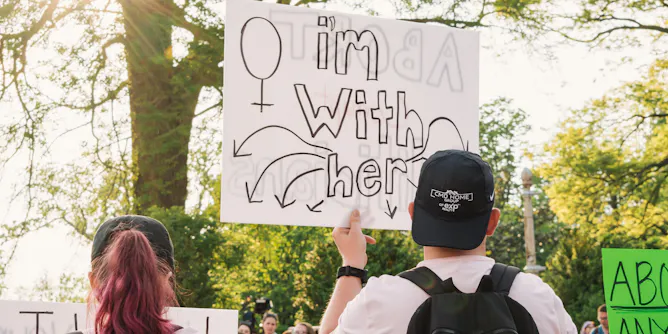
In the wake of the US Supreme Court’s decision on Roe v Wade, it’s worth remembering that a man can benefit from the right to abortion many more times over his lifespan than a woman might.
Articles on Roe v Wade
Displaying 121 - 140 of 202 articles
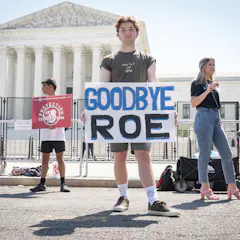
This is more than a huge political and legal decision. Almost half of US women and girls of reproductive age live in states where abortion is – or will become – illegal.
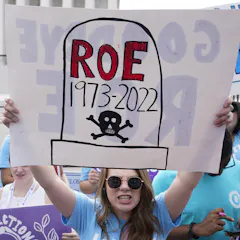
After the ruling by the U.S. Supreme Court to overturn Roe v Wade, will more Americans travel for abortions? Inequalities created by this controversial decision will be revealed at border points.
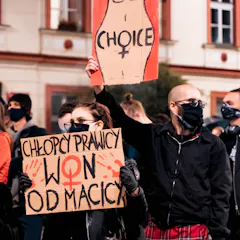
An expert explains how reproductive rights are changing globally.
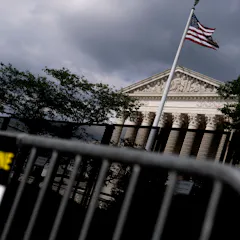
State supreme courts have a relatively low profile in the US. That’s going to change now that they will be under political pressure to decide whether abortion is protected in state constitutions.
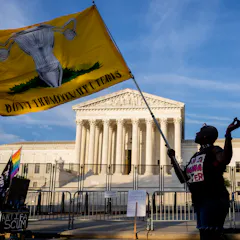
By a 6 to 3 majority, the Supreme Court decided to overrule the landmark Roe decision and end almost 50 years of access to abortion being a constitution right.
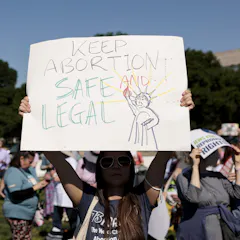
Scholars explain how the Supreme Court’s ruling on abortion is likely to affect women’s health.
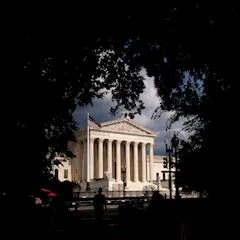
The Supreme Court on June 24, 2022, issued a ruling that overturned decades of constitutional abortion rights for women in the US. Scholars explain the significance of the decision.

The Supreme Court held off at least another day before announcing a ruling on abortion rights. High profile cases take more time to finalize, but there are also political and public relations factors.
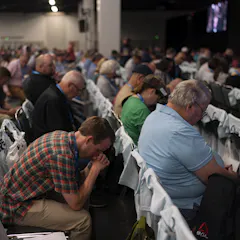
A scholar writes about how the Southern Baptist Convention’s views on abortion changed during the 1980s, when a more conservative wing seized control of the denomination.

The Supreme Court has found protections for people’s privacy in several constitutional amendments – and used it as a basis for some pretty fundamental protections.
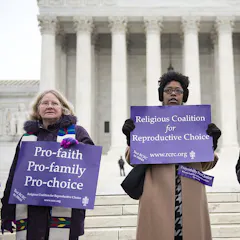
Views on abortion differ not only among major religious traditions, but within each one.
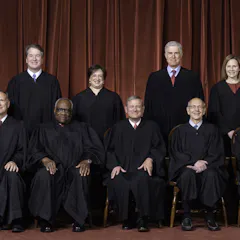
In a 6-3 conservative majority, the more important divisions may be among the six Republican-appointed justices.

There are 13 states with so-called ‘trigger laws’ that aim to ban abortion now that the Supreme Court has overturned Roe v. Wade. But what actually must happen for the laws to take effect?
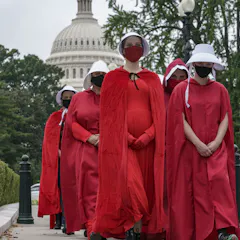
Before and after abortion was decriminalized in Canada in 1969, fiction has explored how abortion intersects with cultural imaginings about women’s bodies and humanity’s future.
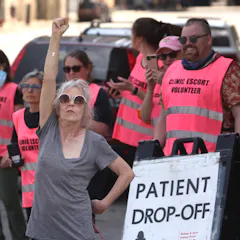
The Supreme Court potentially overturning Roe v. Wade this spring will be only the first part of a complicated legal saga that will play out at the state level.
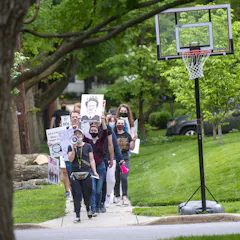
Americans have long said they generally support abortion rights, but understanding specific breakdowns of opinion across demographics, and the history of abortion beliefs, is also important.

Roe v. Wade demonstrates that reproductive rights are fragile, often insufficient and in need of protection everywhere.

Even a burner phone paid for with cash can reveal your identity and where you’ve been. A data privacy expert explains.
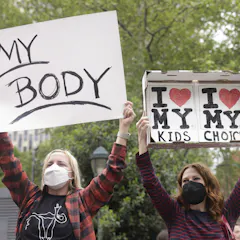
The potential reversal of Roe v. Wade should serve as a stark warning to the power the high courts hold to transform societal conditions.
Top contributors
-

Professor of Law, University of Virginia
-
Professor of Law, Boston University
-
Professor of Law, George Washington University
-
Senior Lecturer in US History, College of Human Sciences and Culture, Flinders University
-
Professor of American Civics, University of Tennessee
-
Assistant Professor of Sociology, University of Colorado Boulder
-
Professor of Health Law and Professor of Law, Boston University
-
Kalb Professor of Global Communications and Professor of Public Policy, Harvard Kennedy School
-
Assistant Professor of Political Science, Gettysburg College
-
Associate Professor of American History and Politics, University of East Anglia
-
Assistant Professor of Political Science, University of South Carolina
-
Professor of Social Welfare, Stony Brook University (The State University of New York)
-
Professor of Sociology, University of California, San Francisco
-
Assistant Professor of Obstetrics and Gynecology, UMass Chan Medical School
-
Professor of Sociology and Women's Studies, University of Florida