

Barbara Kruger’s ‘Untitled (Your body is a battleground)’ has seamlessly transitioned to social media, inspiring a new generation of media-savvy artists and activists.
Articles on Roe v Wade
Displaying 81 - 100 of 202 articles
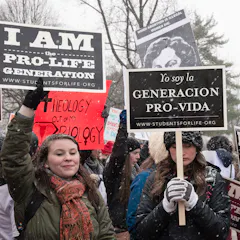
Some reasons people oppose abortion seem to be at odds with other positions they hold. Evolutionary social science points to a surprising motivation for anti-abortion attitudes.
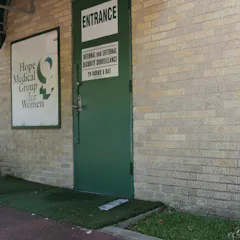
Abortion funds, which help people who cannot afford the procedure, are facing new kinds of pressures, including potential legal risks and a rising client demand that exceeds their capabilities.

The next prime minister has an opportunity to make abortion rights more or less secure in UK law.

As many as 80% of young people want abortion to be legal, and most disagree with the Supreme Court’s recent Dobbs v. Jackson ruling. This could lead to high youth voting rates in the 2022 midterms.
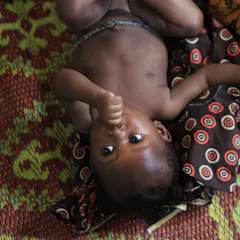
The fundamental issue at stake in abortion debates is personhood, which is viewed differently around the world, an anthropologist writes.

Only 24 countries today totally ban abortion. The Dobbs v. Jackson Women’s Health Organization decision in the US is unlikely to lead other countries to join that list.
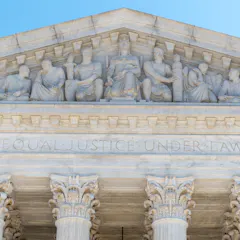
Same-sex marriage and contraception rights could be under threat, if the same legal principle is used as in the recent abortion case.

The judicial theory has been a major talking point during the Supreme Court’s last term. But what does it actually mean?

Several rap songs speak on the subject of abortion from the perspective of the unborn child.
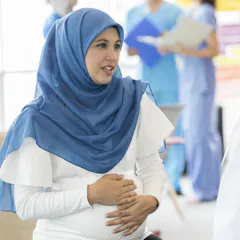
Islamic views on abortion are based on diverse interpretations of what’s right and wrong when it comes to the body.

It would take huge numbers of people submitting bad data to affect the algorithms behind period tracking apps, but even then it would be more harmful than helpful.
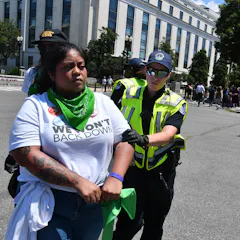
By overturning Roe v. Wade, the US Supreme Court has thrown the issue of abortion back to the states – and made it harder for Black and brown women to have access to reproductive health services.

The notwithstanding clause is both historically appropriate and democratically desirable. Excising it would make our Charter of Rights and Freedoms more American. Is that really where we want to go?

Digital traces are already being used as evidence to prosecute people accused of seeking abortions.

Decision-making in the Canadian Supreme Court appears to be more fundamentally rooted in the law, not politics, than it is in the United States. Here’s why.
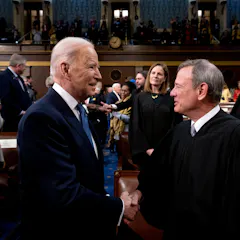
The court’s history shows it is often at the centre of political arguments.
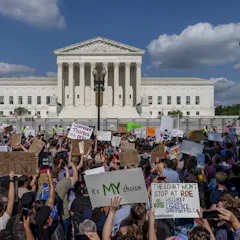
Unlike Australia, judicial appointments in the US are politicised. Democratic presidents will try to appoint left-wing judges and Republican presidents will try to appoint right-wing judges.
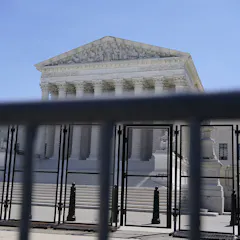
The combination of crumbling democratic norms in the U.S. Supreme Court appointments process and an ideological court out of step with mainstream America raises questions of how it could be reformed.

Differing U.S. and Canadian political and judicial systems offer Canada protections against outlawing abortion here. But there’s still a lot of work to be done to ensure reproductive justice.
Top contributors
-

Professor of Law, University of Virginia
-
Professor of Law, Boston University
-
Professor of Law, George Washington University
-
Senior Lecturer in US History, College of Human Sciences and Culture, Flinders University
-
Professor of American Civics, University of Tennessee
-
Assistant Professor of Sociology, University of Colorado Boulder
-
Professor of Health Law and Professor of Law, Boston University
-
Kalb Professor of Global Communications and Professor of Public Policy, Harvard Kennedy School
-
Assistant Professor of Political Science, Gettysburg College
-
Associate Professor of American History and Politics, University of East Anglia
-
Assistant Professor of Political Science, University of South Carolina
-
Professor of Social Welfare, Stony Brook University (The State University of New York)
-
Professor of Sociology, University of California, San Francisco
-
Assistant Professor of Obstetrics and Gynecology, UMass Chan Medical School
-
Professor of Sociology and Women's Studies, University of Florida