
LIBOR continues to evoke irritation, frustration and fear – for traders, central bankers and the public.
Articles on Risk
Displaying 181 - 200 of 274 articles

A new study shows that adding an energy drink to alcohol increases risk-taking among young people – but the effect is imagined rather than real.
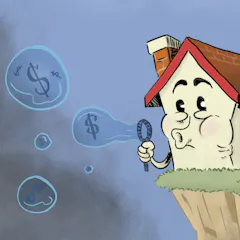
There’s been quite a bit of speculation over whether Australia has a property market bubble - where house prices are over-inflated compared to a benchmark - and when it might burst. According to housing…
The decisions we make in life often come down to Bayes’ Theorem, but most of us don’t even realise what it is. So how does it work?

New technologies are developing with exponential velocity, breadth and depth. Their systemic impact is likely to be profound.
We naturally overestimate the risk of rare events, like shark attacks or terrorism. But there are things you can do to think more rationally about the real risk.

Reporting science involves talking about risk, but it must be done carefully. There are also certain words and images that should be avoided whenever possible.

Older people in nursing homes or aged care facilities are often locked up “for their own safety”, which new research says isn’t usually needed.
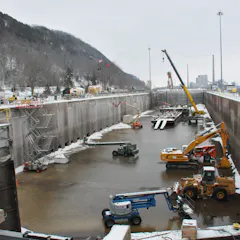
Old and degraded infrastructure costs the United States money and puts lives at risk. A civil engineer describes some innovative ways to measure risks and prioritize repairs.

The Republican House plan for health care has been decried for its effect on the poor, the aged and the sick. Ultimately, though, it could affect everyone, if healthy people don’t sign up.
Risk has to do with uncertainty; people struggle to conceptualise and manage that which they’re unsure about. This is true in the higher education sector, too.

The recent film Sully reveals just what pilots are facing in a disaster situation.
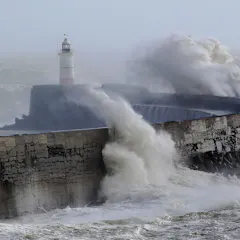
We’re more likely to remember a storm with a human face – and will prepare for it.

Genomes can reveal a lot about disease risk. But people need to think carefully about what they want to know.

Reassuring people “not to worry” about public health issues like vaccination or fluoridated water doesn’t work. Nor does telling people “don’t panic”. So, what does?
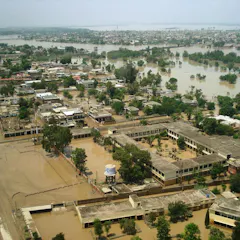
Wetlands management is vital but sweeping statements about their universal value may do more harm than good.

Research comes with risk and uncertainty so getting the right message across to the people who matter can be a challenge for scientists. A new plan out today hopes to change that.

What gets in the way of a productive conversation about risk communication? Being a normal human, that’s what.

Why are some people more comfortable than others with making risky financial decisions?
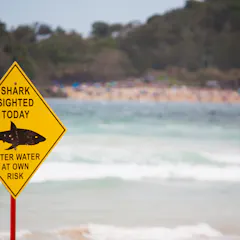
Often there is tendency to overreact to risk estimates, so it’s worth unpacking what these really mean.
Top contributors
-

Professor of Advanced Technology Transitions, Arizona State University
-
Associate Professor, Epidemiology, Deakin University
-
Professor of Risk Management, University of Bristol
-
Director, Columbia Center on Sustainable Investment, Columbia University
-
Professor - Risk governance, culture, remuneration, Macquarie University
-
Associate Professor of Economics, University of Miami
-
Associate Professor of Psychology, University of Oregon
-
Associate Professor of Geography, University of Alabama
-
Visiting Fellow, Macquarie University Applied Finance Centre, Macquarie University
-
Timothy J. Jorgensen is a Friend of The Conversation.
Director of the Health Physics and Radiation Protection Graduate Program and Professor of Radiation Medicine, Georgetown University
-
Professor, Finance, UTS Business School, University of Technology Sydney
-
Professor of Cognitive Psychology and Director of the Institute for Climate Risk and Response, UNSW
-
Associate Professor of Business, Boston University
-
Associate Professor of Economics, HEC Paris Business School
-
Professeur, philosophe et politologue, École normale supérieure (ENS) – PSL