
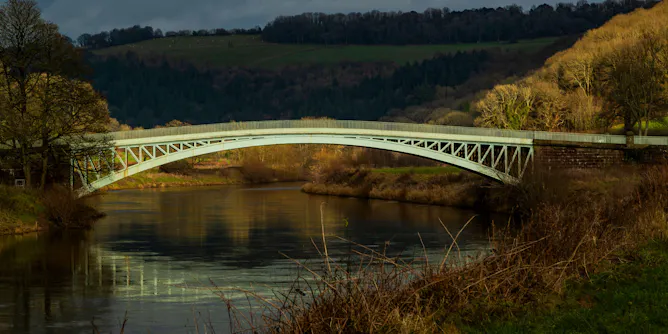
Shifting the law to treat rivers as legal ‘persons’ rather than economic assets could offer a radical new way to hold polluters to account.
Articles on Rights of nature
Displaying all articles

Approaches vary in terms of who is filing the lawsuit, against whom and whether it is based on protecting human rights or the rights of the environment itself.
Most rivers need some human help to stay clean and healthy and to flow freely. People have to fish out litter, block sewage, look out for invasive species and so on. This is obvious enough. But, as rivers…
Let’s train an army of nature protectors to speak for nature itself – not for what it can provide for humans.

The rights-of-nature movement emerged as a response to economic pressures on ecosystems. But the success of projects depends on how well legal liability is defined.
Some countries have managed to elevate nature and ecosystems to the status of legal entities. Do these innovations really help to protect the environment?

One way to protect our ecosystems is to confer legal rights on them. This idea is at the heart of the ‘rights of nature’ movement – but Australia has few examples of this principle in action.
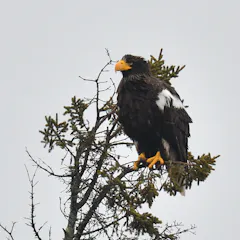
A Steller’s sea eagle, native to the Asian Arctic, has traveled across North America since 2021. A scholar questions whether the bird is lost – and how well humans really understand animals’ actions.
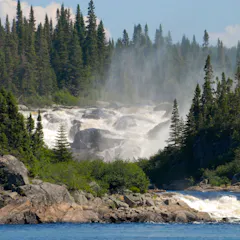
A recent declaration of a river as a legal person in Canada recognizes Indigenous laws and governance, and champions people as the guardians of nature.
Top contributors
-

Lecturer: Law, CQUniversity Australia
-
Senior Lecturer in Environmental Economics, University of Otago
-
Koala Ecologist, CQUniversity Australia
-
Senior Lecturer Geography, CQUniversity Australia
-
Professor of Law, Te Herenga Waka — Victoria University of Wellington
-
Emma MacLachlan Metcalf Chair of Humanities, Boston University; University of Cambridge
-
Postdoctoral Fellow, Institute for Resources, Environment and Sustainability, University of British Columbia
-
PhD Candidate in Law, University of Alberta
-
Co-Director, Bioneers Indigeneity Program and Consultant
-
Enseignant Chercheur en Economie, Directeur d'Origens Media Lab, Clermont School of Business
-
Lecturer in Law, Anglia Ruskin University
-
Professor of International Studies, University of San Francisco
-
Professor of International and Environmental Law, SOAS, University of London