
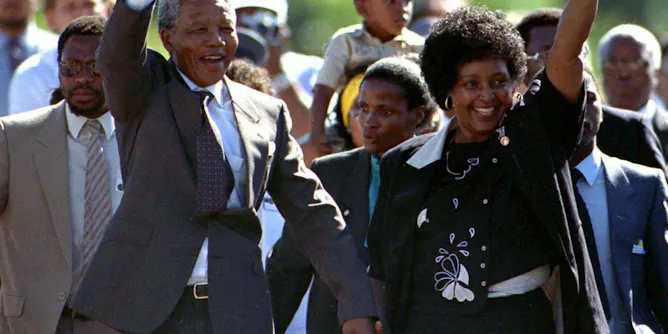
The foundation founded by Nelson Mandela in 1999 has done a major revision - it has written off most of his reign as comprising “grand symbolic gestures”.
Articles on #RhodesMustFall
Displaying 21 - 40 of 43 articles

Psychologists drew historically from theories of social Darwinism and eugenics to espouse the hierarchical categorisation of people into race groups.
Student activists are losing faith in the legacies of anti-apartheid heroes like Nelson Mandela. Perhaps all South Africans should do the same. It may just be what the country needs for its future.

People risk being physically harmed during violent protests. But there is also an emotional element at play.
South Africa’s universities have been told to set their own fee increases for 2017. That’s good news for institutions, but it hasn’t been well-received by many students.

The podcast has emerged as a promising medium for facilitating ongoing debate about issues that need more time than mainstream, profit-oriented media or the changing tides of hashtags might allow.

The decolonisation debate in South Africa’s universities raises critical issues about the relationship between power, knowledge and learning.
When celebrating Nelson Mandela Day, it would benefit South Africans to reflect on what the statesman’s legacy means for the nation and how they are living up to his dreams for the country.

Sections of South Africa’s student movements regard transformation as a complete failure. Responding to this perceived failure, some have adopted an anti-democratic stance.

South Africa needs to build a mental infrastructure that will allow people to individually and collectively engage in a bold, courageous and trutfhul dialogue.
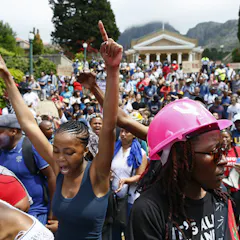
Women students have not been afraid to embrace the label of feminist, leading a wave of university protests in South Africa during 2015 and 2016.
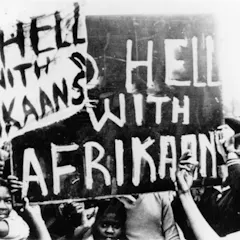
Forty years after the students uprisings of 1976, South Africa is again in the midst of a political movement led by students.They have changed the tenor and shape of political discussion around education.
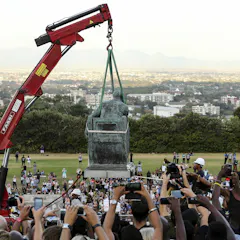
There is a risk that because of fatigue, frustration and silencing the important moment created by South Africa’s student movements will pass by with no proper, long-term structural change.

Curriculum transformation has to happen. But it has to go further than simply borrowing ideas and concepts.

If South Africans are to make the radical changes they must to become truly great, the new generation will have to find a way of understanding the country’s past in its profound complexity.
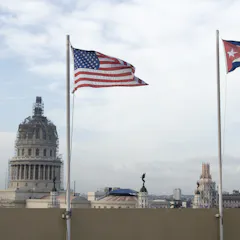
Cuba’s National Capitol Building has been reclaimed as the seat of the National Assembly 54 years after it was abandoned by the new revolutionary government. There are lessons in this for others.
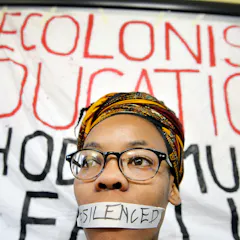
If it’s ok to use research carried out in unethical experiments – as long as we acknowledge they were wrong – is it ok to keep a statue of an infamous imperialist?
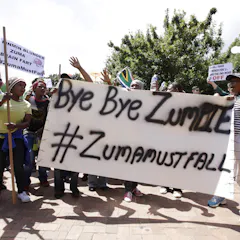
South Africa’s president is direly unpopular and his government on the ropes – but protests against him are just empty symbolism.
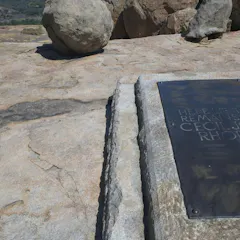
Why Oriel College Oxford was right not to agree to take down a statue of the British imperalist.
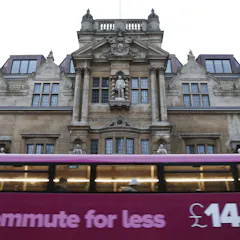
The book contains major flaws, the chief of which is the lack of solid, supporting evidence. Brown claims that ‘Rhodes documented everything’ – which was not actually the case in this regard.
Top contributors
-

Professor, University of Cape Town
-
Emeritus Professor, Rhodes University
-
Professor of Political Science and Chair of the South African Research Initiative in Gender Politics, Stellenbosch University
-
Director Internationalisation., Rhodes University
-
Professor of Public Theology in the Department of Beliefs and Practices, Faculty of Theology, at the Vrije Universiteit Amsterdam (Free University of Amsterdam), Vrije Universiteit Amsterdam
-
Researcher, University of the Witwatersrand
-
Professor of World Politics, SOAS, University of London
-
Research Fellow at the Nelson Mandela School of Public Governance, University of Cape Town
-
Full Professor of Sustainable Finance, Kedge Business School
-
Professor, Sociology, University of the Western Cape, Nelson Mandela University
-
Research Associate in Higher Education Policy and Planning, Ali Mazrui Centre for Higher Education Studies, University of Johannesburg
-
Lecturer and PhD Candidate UCT Graduate School of Business, University of Cape Town
-
South African Research Chair in Teacher Education; Director of Centre for International Teacher Education (CITE) & Professor of International Education and Development Policy (University of Sussex, UK), Cape Peninsula University of Technology
-
Professor of Law, New York Law School
-
Senior Scholar in Public Work Philosophy Emeritus, Augsburg University