
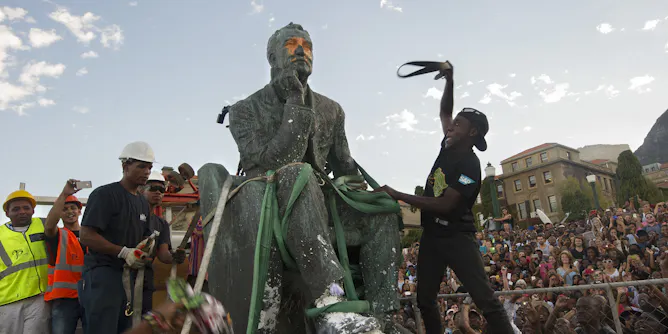
The fate of several colonial statues in Africa continues to be a subject of controversy.
Articles on Cecil Rhodes
Displaying all articles

Corruption has been a constant feature of South African political life for much of the past 350 years; solutions will also take time.
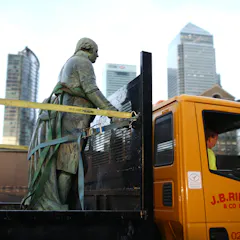
Britain’s heritage is steeped in the remnants and history of slavery, but you wouldn’t necessarily know it.
History is complex and multi-dimensional. Any response to what happened in the past should reflect this.
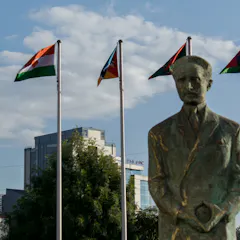
Leaders go in and out of fashion, making statues built in their memory a tricky issue.
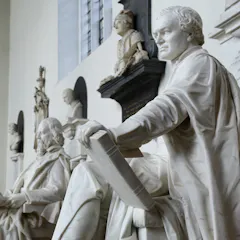
Student-led campaigns have been calling out racism in universities for years. After a shocking incident at Nottingham Trent University, perhaps we should start to listen.

Zuma will go down in history as South Africa’s most corrupt head of government since Cecil Rhodes was prime minister of the Cape Colony.

The National Question cannot be resolved solely through South Africa’s constitution. There’s potential for a far more radical transformative project than traditional liberalism.
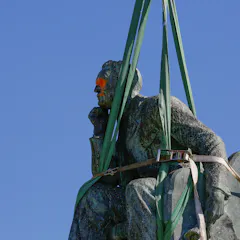
The process of decolonising research methodology is an ethical, ontological and political exercise rather than simply one of approach and ways of producing knowledge.
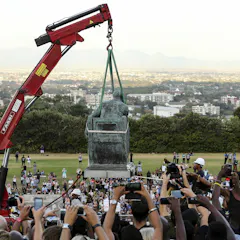
There is a risk that because of fatigue, frustration and silencing the important moment created by South Africa’s student movements will pass by with no proper, long-term structural change.
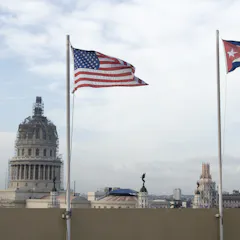
Cuba’s National Capitol Building has been reclaimed as the seat of the National Assembly 54 years after it was abandoned by the new revolutionary government. There are lessons in this for others.
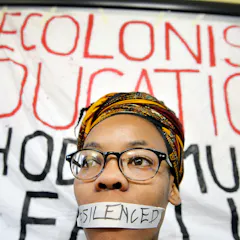
If it’s ok to use research carried out in unethical experiments – as long as we acknowledge they were wrong – is it ok to keep a statue of an infamous imperialist?
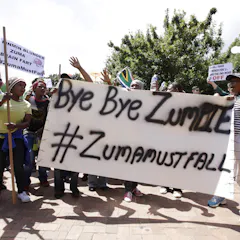
South Africa’s president is direly unpopular and his government on the ropes – but protests against him are just empty symbolism.
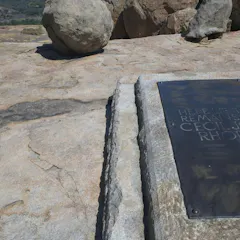
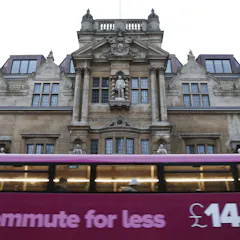
Why Oriel College Oxford was right not to agree to take down a statue of the British imperalist.
The book contains major flaws, the chief of which is the lack of solid, supporting evidence. Brown claims that ‘Rhodes documented everything’ – which was not actually the case in this regard.
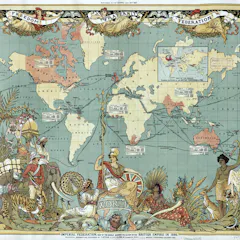
We teach children about the birth and end of Empire, but miss out the violence of what happened in between.
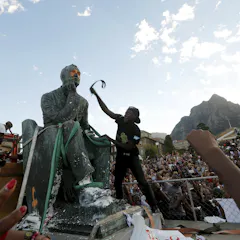
The Randlords left a big dilemma in their wake: contemporary South Africa is not sure whether to thank them for bringing civilisation, or to curse them for complicating future race relations.
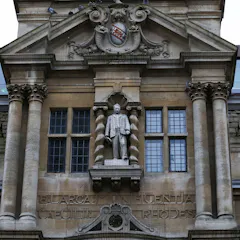
Rhodes was an ardent white supremacist who believed Africans to be inferior. He intended his scholarships to be for white males only. This has since fallen away.
Top contributors
-

Emeritus Professor, Rhodes University
-
Professor of World Politics, SOAS, University of London
-
Presidential Fellow in Ethnicity and Inequalities, University of Manchester
-
Senior Research Fellow, Centre for the Study of Governance Innovation, University of Pretoria
-
Political Scientist, University of the Western Cape
-
Professor and Chair of Epistemologies of the Global South, University of Bareuth, Germany, University of South Africa
-
University Teacher in American History, University of Liverpool
-
Professor, University of Cape Town
-
Professor of Indian and Colonial History, University of Liverpool; Independent Social Research Foundation
-
Distinguished Reserach Professor, Southern Centre for Inequality Studies, University of the Witwatersrand
-
PhD Candidate, University of Nottingham
-
Senior Research Fellow, Horn of Africa and Southern Africa, Institute of Commonwealth Studies, School of Advanced Study, University of London
-
Professor of Human Rights, University of Bristol
-
Professor of Political Studies, University of Johannesburg
-
Professor of Heritage, University of Kent