
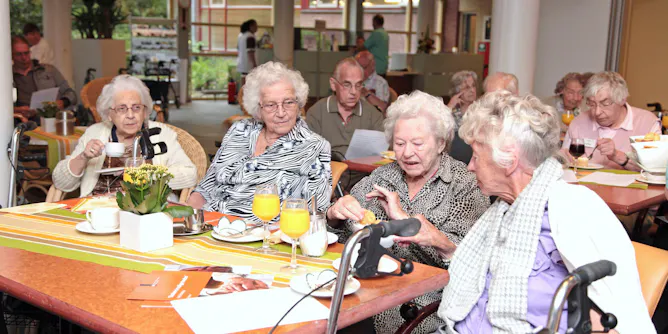
People living in sustainable dwellings may use less energy and water which leads to lower bills. But older people may suffer cognitive decline and struggle to use sustainable technology devices.
Articles on Retirement villages
Displaying all articles

Retirement villages tend to treat older people as a homogeneous group when the reality is they have a hugely diverse range of needs.

Manufactured home estates are popping up as a “cheaper” option for retirees. But they’ll end up costing more, and could be in hazard prone or affected areas.
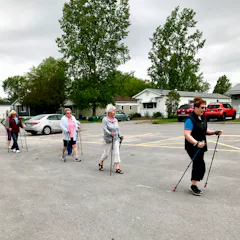
Naturally occurring retirement communities, or NORCs, are unplanned communities that have a high proportion of older residents. They may be critical to finding housing solutions for aging Canadians.

Instead of isolating and excluding older Australians, communities that are designed to embrace the growing numbers of Australians over 65 will have all kinds of benefits for Australia.
Tech-savvy baby boomers are driving the trend towards retirement living in high-rise city apartments.
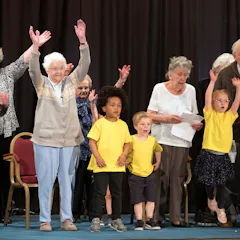
There were games, sports, and improved moods and mobility.
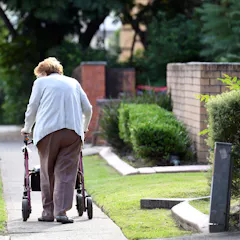
While retirement villages aren’t regulated like an insurance company, their contracts are essentially insurance policies. This puts the risk on retirees.
Top contributors
-

Adjunct Senior Lecturer, Applied Ethics and CyberSecurity, Griffith University
-
Senior Lecturer, Department of Applied Finance and Actuarial Studies, Macquarie University
-
Professor in Gerontology and End of Life Care, University of Bath
-
Lecturer in Physiotherapy, University of Birmingham
-
Research Project Manager, School of Rehabilitation Therapy, Queen's University, Ontario
-
Adjunct Professor of Architecture and Urban Design, Queensland University of Technology
-
Associate Professor, School of Rehabilitation Therapy, Queen's University, Ontario
-
Senior Analyst, ICES, Queen's University, Ontario
-
Reader in Education with Psychology and Centre for Death and Society, University of Bath
-
Professor of Healthy Ageing, Australian Catholic University
-
Associate Professor, School of Rehabilitation Therapy, Queen's University, Ontario
-
Lecturer, School of Architecture and Built Environment, Deakin University
-
Professor in Urban Geography, Macquarie University
-
Lecturer in Property Economics, University of Technology Sydney