

There’s nothing unusual about quantitative easing. Our biggest mistake would be to be to wait.
Articles on Reserve Bank
Displaying 81 - 100 of 111 articles

Geoff Crisp speaks with Michelle Grattan about the week in politics.
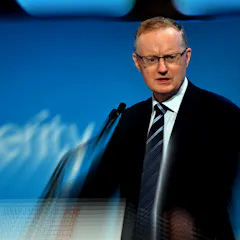
The Reserve Bank cut interest rates on Tuesday because we weren’t spending or pushing up prices at the rate it wanted. On Wednesday we might find things are worse than it thought.

Combined, APRA and the Reserve Bank are about to give households on $150,000 up to $120,000 more borrowing power.

Expect two more interest rate cuts, but they mightn’t be enough.

The Reserve Bank has adjusted rates in previous election campaigns, but it needs to have a very, very, good reason.
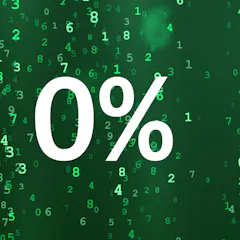
Inflation has barely been within the Governor Philip Lowe’s target band his entire time in office. Zero inflation means he should cut now, before the election.
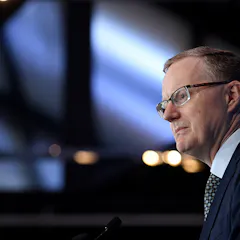
Rates might need to be cut urgently, and because things are good. Governor Lowe has signalled he won’t wait.

The Reserve Bank’s inflation target seems out of date in a world of ultra low inflation. So why is Governor Lowe persisting with it?
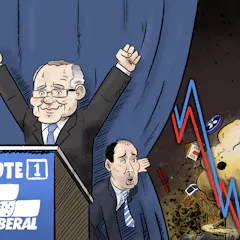
The Conversation has assembled a forecasting team of 19 academic economists from 12 universities across six states. Together, they assign a 25% probability to a recession within two years.

Prices are off, but from unprecedented highs. It could be a one-time adjustment.
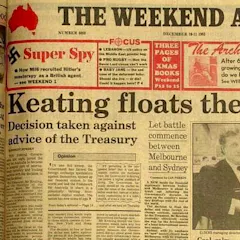
Floating the dollar 35 years ago was a leap into the unknown. Here’s how it has served us well.
It is thought that it doesn’t help much to cut official interest rates toward or beyond zero, and maybe it doesn’t, but new research suggests the answer has a lot to do with the housing market.

The mere possibility of online competition is restraining prices offline.

Environmental and health groups have called for the creation of a non-political federal agency with the power to rule on pollution levels - much like the Reserve Bank does for interest rates.

This week’s strong growth in full-time employment shows a robust labour market. This only deepens the puzzle of why inflation is so low at the same time.

For a whole lot of workers in Australia, cutting a better pay deal is very hard.

Millie, aged 5, wants to know where money comes from. We asked an economist to explain.
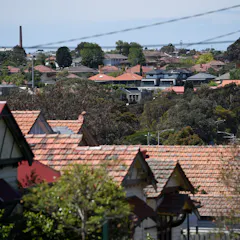
When you look at the data (in three charts) on mortgage stress, the systemic risk of people not being able to repay their home loans appears small.
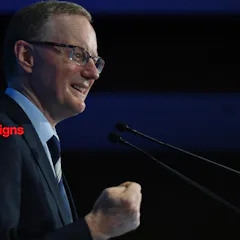
It is a puzzle as to why businesses are reasonably confident but not willing to invest.
Top contributors
-

Professorial Fellow, University of Canberra
-
Scientia Professor of Economics, UNSW
-
Visiting Fellow, Crawford School of Public Policy, Australian National University
-
Senior lecturer, Canberra School of Government, University of Canberra
-
Associate Professor, School of Economics, University of Sydney
-
Lecturer in Economics, Monash University
-
Industry Professor, University of Technology Sydney
-
Program Director, Trade and Investment, United States Studies Centre, University of Sydney
-
Vice Chancellor's Fellow at Victoria University and Adjunct Professor of Economics, Victoria University
-
Professor, School of Economics, The University of Queensland
-
Emeritus Professor of Economics (Griffith University) and Teaching Associate (University of Queensland), Griffith University
-
Associate Professor, Research School of Economics, and Research Associate, Centre for Applied Macroeconomic Analysis, Australian National University
-
Professor of Finance, RMIT University
-
Program Director, Housing and Economic Security, Grattan Institute
-
Professor of Economics, The University of Melbourne