
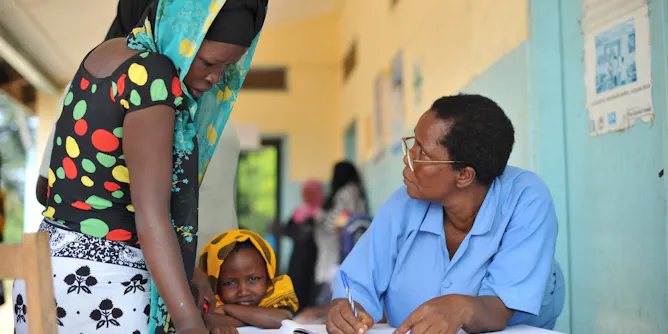
Tanzania was an early, ardent believer in family planning. Now it joins a growing number of developing nations that see potential advantage in having a huge and growing workforce.
Articles on Reproductive rights
Displaying 121 - 140 of 155 articles
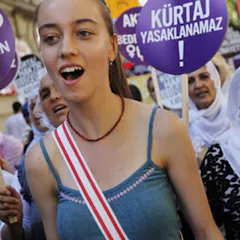
Abortion appears to be illegal and clandestine in large parts of the Muslim world. Yet, women continue to challenge the status quo and archaic laws through their daily practices and activism.

Over the past 45 years, women have married later, attained higher education and joined the workforce in record numbers. Could it all be turned back?

In a historic move, the national parliament has legalised procedures up to 14 weeks.
A lawyer reports from Ireland days ahead of this vital vote.

Before the pill, contraceptive options were extremely limited and generally required the cooperation of the male partner. Almost 60 years later, the pill remains the mainstay of contraception.

A new bill that would legalize abortion in Argentina has spurred surprise debate on the gender pay gap, parental leave and political representation. Will Argentinean women finally get their due?

There are sound ethical reasons behind Canada’s decision to ban payment to surrogate mothers and sperm and egg donors in 2004. A new push to remove the restrictions ignores the risks.
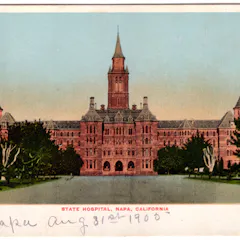
About 20,000 Californians were once sterilized under state eugenics laws. New research shows Latinos were disproportionately targeted. Is there any opportunity today to address these wrongs?

BBC’s Call the Midwife is a celebration of working class women’s labour. In its frank, but sweet, discussion of childbirth, it has much in common with fairy tales.
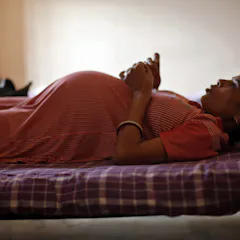
Surrogate mothers in developing countries are being shuffled across borders to evade a crackdown on the industry. This emerging gray market puts women at risk.
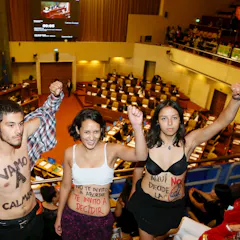
Seventy-five percent of all abortions in Latin America are illicit. In Honduras, Nicaragua and El Salvador, where abortion is totally illegal, the bans correlate with a generalized failure of the rule of law.

Voting on this issue is a matter of conscience, so the MP’s view that women shouldn’t be allowed to terminate pregnancies, even when they’ve been raped, is very relevant to the rest of society.
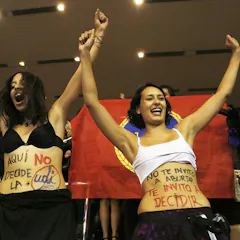
After a fierce debate, one of the most restrictive reproductive laws in the world has been eased.
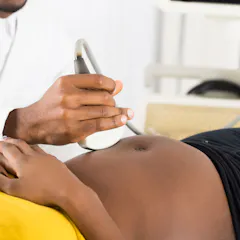
Free maternal services introduced in Kenya in 2013 had the immediate impact of increasing access. But it exposed a divide in which the richest 20% of women were the biggest beneficiaries.

About 60% of children in South Africa under 10 years don’t live with their biological fathers. But research sheds light on those who despite the pressures remain involved in their children’s lives.

Troupes of women in flowing red capes are turning up all over the US to remind us that reproductive rights are under threat.
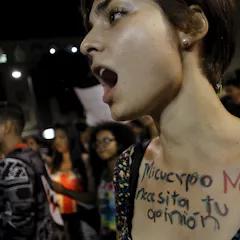
The case of a 12-year-old Costa Rican girl, who was raped by her father and denied an abortion, is dividing a nation that prides itself on its human rights record.
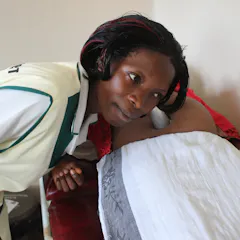
Midwives should provide continuous support during labour and birth and they should respect women’s choices when it is within safe practice to do so.

Zika is not gender neutral: women’s rights are at stake.
Top contributors
-

Professor of Law, George Washington University
-
Professor of Law, University of Virginia
-
Senior Lecturer in US History, College of Human Sciences and Culture, Flinders University
-
Senior Lecturer in Sociology, Aston University
-
Professor of Bioethics and Humanities, School of Medicine, University of Washington
-
Senior Lecturer in Politics, University of Liverpool
-
Professor of Sociology and Women's Studies, University of Florida
-
Sciences Po
-
Assistant Professor of Sociology, University of Colorado Boulder
-
Professor of Political Science, University of Guelph
-
Professor of Obstetrics and Gynaecology, James Cook University
-
Professor of American Civics, University of Tennessee
-
Professor of Social Welfare, Stony Brook University (The State University of New York)
-
Professor of Health Law and Professor of Law, Boston University
-
Senior Lecturer, UNSW