
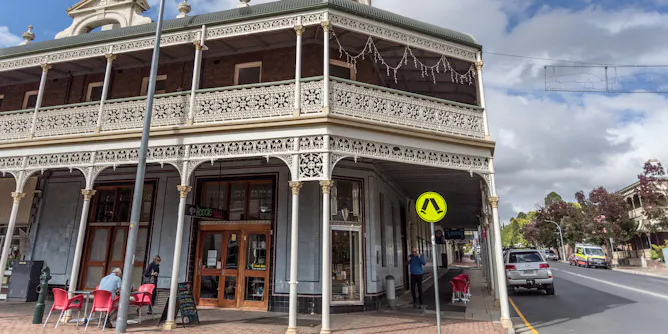
Over time, Armidale locals had more positive attitudes towards refugees and the regional settlement program.
Articles on Regional Australia
Displaying 21 - 40 of 96 articles

The main driver of homelessness in Australia is housing costs – post-COVID rents, house prices and interest rates are all much higher. To house everyone, the housing system needs a major overhaul.

The shift to remote work has led to a population boom for towns close to Australia’s major cities. That boom threatens to change what makes those towns so appealing.
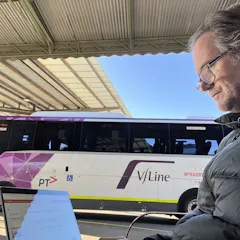
Can we now work from anywhere with an internet connection? We interviewed workers who left the city but held onto their jobs to see how they fared. One year on, some had no regrets. Others moved back.
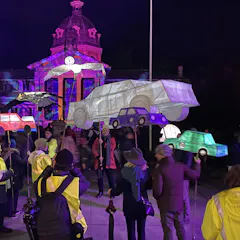
For many Australians, Bathurst is defined by car races. But as Fast Cars & Dirty Beats demonstrates, the town is much more complex and multicultural.

Look beyond the fanfare about large infrastructure projects like Hells Gate and what we are left with is a largely business-as-usual budget for regional Australia

Interviewees spoke of an expectation, starting in childhood, that when you grow up, you need to go to “the big smoke”.
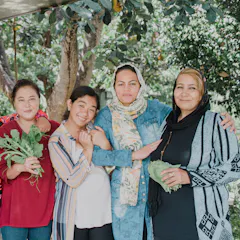
Across three exhibitions in NSW and Queensland, we studied how creating and sharing art can build community connections.
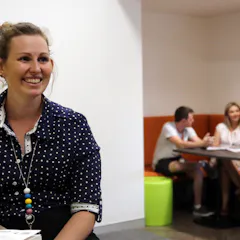
Community-run centres in regional and remote Australia are having positive impacts on students who were historically under-represented at university and at high risk of dropping out.
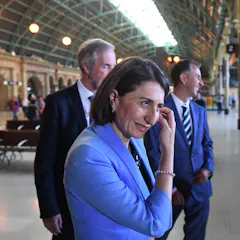
Regional NSW, home to a third of the state’s population, is still waiting for the promise of faster train travel to be delivered. Other states improved their regional services years ago.

The majority of country press audiences prefer to read their local paper in print than online. In fact, many said they would stop reading their papers if they went digital only.

The transition to 100% renewable energy will require a lot of land – mostly in regional Australia. This presents big challenges, and opportunities, for the farming sector.
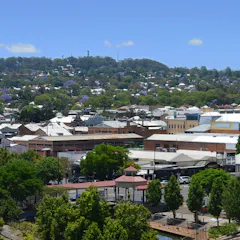
The pandemic has driven Australian workers and their employers to embrace the option of working remotely. And that has opened people’s eyes to the possibilities of living in regional Australia.

Rural patients’ self-reliance means they often wait until it’s too late to visit hospital, while the closing of state borders has restricted the movement of some fly-in fly-out health workers.
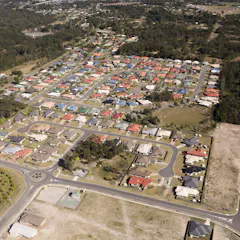
Australia lacks a coherent national approach to planning where settlement and growth happens. It’s time to take stock of our cities and regions and work together to improve outcomes across the nation.
All universities face job losses. But the impacts of these job losses are greatest for regional communities.

According to the Australian Newsroom Mapping Project, there have been 200 contractions of news operations since March. But ‘news deserts’ were a growing problem long before coronavirus.

Small newspapers across Australia are closing or going digital-only in the economic fall-out from the coronavirus pandemic. This is what we need to do to save them.

Migrants who’ve settled in regional Australia find jobs, get on with the locals and feel safe. So the government wants to know how to encourage more migrants to move there.

A greater focus on the well-established migrant populations and second-generation youth is crucial when planning for the social and economic well-being of rural and regional areas.
Top contributors
-

Associate Professor, University of Canberra, Stockholm Environment Institute
-
Director, The Cairns Institute, James Cook University
-
Senior Lecturer in English Literature, Charles Sturt University
-
Professor (Communication), Deakin University
-
Lisa Waller is a Friend of The Conversation.
Professor of Digital Communication, RMIT University
-
Deputy CEO, Regional Australia Institute
-
Executive Dean, UniSA Business, Adelaide University
-
Postdoctoral Research Fellow, Sustainable Urban Precincts Project, RMIT University
-
Lecturer in Entrepreneurship, Innovation and Organisational Design, RMIT University
-
Professor of Media and Communication and Co-Director, Digital Ethnography Research Centre, RMIT University
-
Professor of Social Economics, UTS Business School, University of Technology Sydney
-
Honorary Professor of Demography, Macquarie University
-
Associate Director, Government Relations, Australian Catholic University
-
Associate Professor and Clinical Psychologist, Charles Sturt University
-
Director, Gilbert + Tobin Centre of Public Law, UNSW