
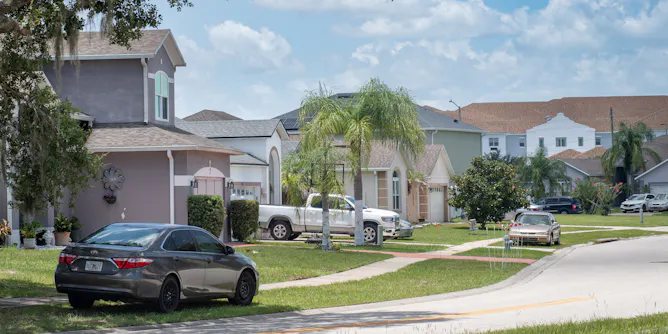
HOA policies don’t always reflect the wishes of the homeowners whose interests they are meant to represent – and they aren’t legally required to.
Articles on Redlining
Displaying all articles

From who gets to vote to how people travel and where taxpayer dollars are funneled, politicians and urban planners wield maps to control public imagination.
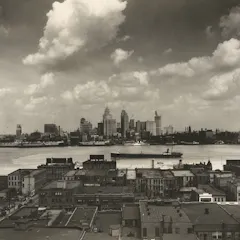
In the early 20th century, Detroit’s Black medical professionals created a network of health care institutions in response to racial discrimination and exclusion.

Looking back on New Orleans 20 years after Hurricane Katrina is a reminder that while such hazards may be natural, the death and destruction is largely human-made.
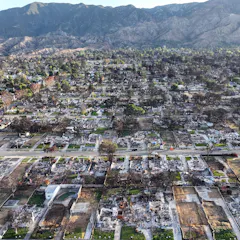
Discrimination has made it harder for Black people in the Los Angeles area to buy and keep their homes. Did it also make them more fire-prone when Altadena burned?
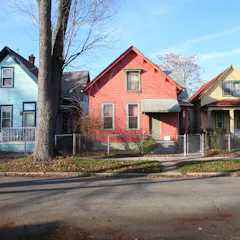
Historical housing discrimination in Detroit persists today and causes disparities in health outcomes. Policies are making a difference, but more needs to be done.
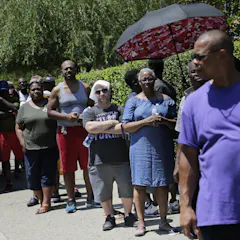
Practices such as redlining left marginalized groups in more disaster-prone areas with poorer quality infrastructure − and more likely to experience prolonged power outages.
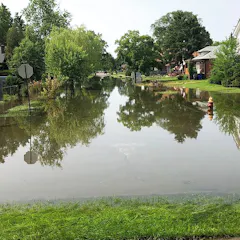
Mapping where water once flowed is important for managing flood risk today in Detroit and elsewhere.

Chronic stress from living with systemic racism and gun violence can lead to increased symptoms of PTSD and depression as well as elevated cortisol levels.
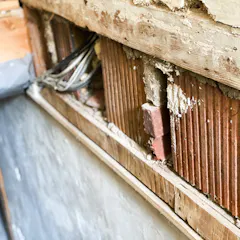
Routine maintenance is necessary for every homeowner. But for Black women, that burden is complicated by decades of redlining and the impacts of climate change.

Americans tend to think of diversity in demographic terms, but it has a qualitative element to it that reflects a fundamental battle between segregation and integration.

Two urban policy experts explain why taking down highways that have isolated low-income and minority neighborhoods for decades is an important part of the pending infrastructure bill.
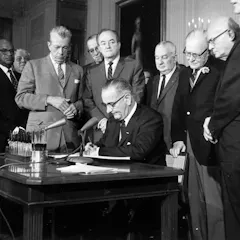
A scholar of race and racism explains what critical race theory is – and how many people get it wrong.

New research shows homes in white areas have appreciated $200,000 more since 1980 than similar homes in nonwhite areas – a result of both old racist housing policies and modern real estate practices.
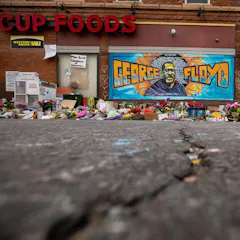
Despite its progressive image, Minneapolis is one of the most segregated cities in the United States. That is by design not accident, argues an urban planning scholar.
Top contributors
-

Professor of Urban and Environmental Policy and Planning, Tufts University
-
Ph.D. Student Researcher in Environmental Health, Columbia University Mailman School of Public Health
-
Associate Professor of Public Policy, University of Maryland, Baltimore County
-
Assistant Professor of Sociology, Tulane University
-
Associate Professor in Sociology, African American Studies, Urban and Regional Planning and Social Work, University of Illinois Urbana-Champaign
-
Assistant Professor of Curriculum Studies, University of Kansas
-
Assistant Professor of Sociology, University of North Carolina at Chapel Hill
-
Research Area Specialist, University of Michigan
-
Research Associate, University of Michigan
-
Assistant Professor of Philosophy, Affiliate, Institute for Intelligent Systems, University of Memphis
-
Assistant Professor of Sociology, University of Pittsburgh
-
Professor of Public Policy and Urban Affairs, Northeastern University
-
Associate Professor of Environmental and Occupational Health Sciences, University of Washington
-
Associate Professor in Public Health, University of Michigan
-
Professor of Pediatrics, Wayne State University