
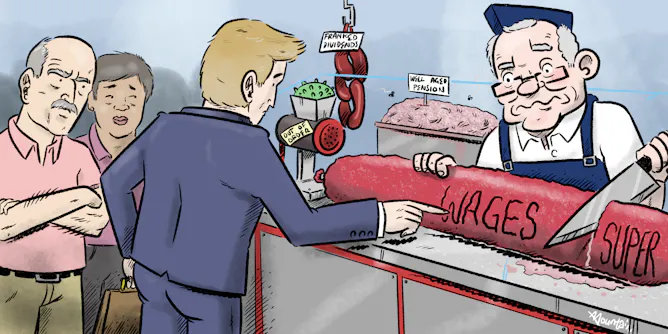
Only 13 of the 44 economists surveyed want them to proceed as planned.
Articles on Recession
Displaying 101 - 120 of 197 articles

Its central scenario is the worst recession in 70 years. Its worst case scenario has the effects lingering for a decade.

In the event of a new pandemic or a second wave of COVID-19, lives can be saved while also stabilizing business. It’s not an either/or decision.
Young people’s prospects are worse than those of workers aged over 35, and worse than those of young people prior to 2008.
Putting a dollar value on human lives to compare the costs and benefits of stay-at-home orders can have unintended consequences. These researchers found a different way.
The mental health of young women is far more sensitive to unemployment than the mental health of young men.
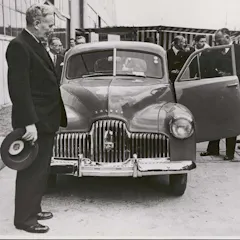
There is a case to be made for a new Commonwealth agency to lead the recovery effort, built on the model of the Department of Post-War Reconstruction after the second world war.
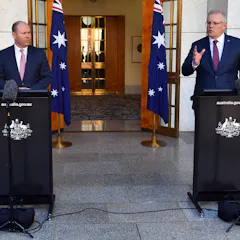
While much attention was on the US this week, there was also an official acknowledgment that Australia is in recession, and a controversial HomeBuilder program to boost the economy.
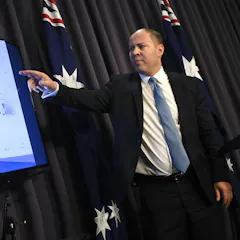
Incomes climbed as we snapped our wallets shut in the March quarter. The June quarter will be much, much worse.
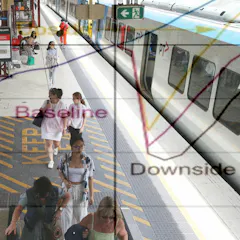
Far too much hangs on whether Australia is “technically” in a recession. It might be skewing the design of our coronavirus support measures.

This service sector recession can’t be fought with infrastructure programs. Tour guides are ill-suited to building high-speed trains.

A loose patchwork of measures and systems has left millions at risk of slipping through the cracks as the pandemic’s economic downturn hits.
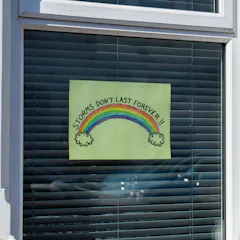
If there is one lesson from history, it is that the economy will pick up again.

There are already disturbing reports of racism against Asian Australians. History shows this will get worse in a recession, unless our political leaders step in.
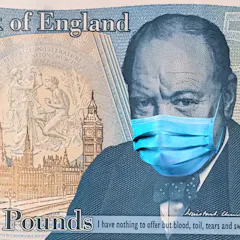
The UK must look now to a package of long-term measures that includes investment in industry and public services, increased unemployment benefits and universal basic income.

The response to COVID-19 should become a learning opportunity on how to develop more illness-proof economies.
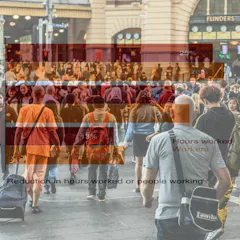
Grattan institute estimates suggest that up to 26% of the workforce – 3.4 million Australians – are likely be thrown out of work as a direct result of the shutdown.
Alongside an impending global financial crisis akin to the Great Depression, Apple has announced its newest smartphone.

COVID-19 has brought about unprecedented unemployment and financial insecurity, but it’s not the first time people have faced challenges fulfilling some of their most basic needs.
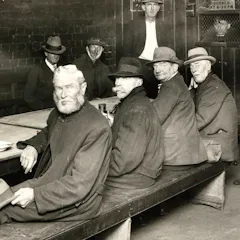
The IMF is forecasting an Australian downturn that will dwarf every one since the Great Depression.
Top contributors
-

Visiting Fellow, Crawford School of Public Policy, Australian National University
-
Professorial Fellow, University of Canberra
-
Senior Lecturer in Economics, The Open University
-
Associate Professor of Finance, Mississippi State University
-
Associate Professor of Business, Boston University
-
Program Director, Housing and Economic Security, Grattan Institute
-
Senior Lecturer in Economics, University of Sydney
-
Honorary Research Fellow, City Political Economy Research Centre, City St George's, University of London
-
Senior lecturer, Canberra School of Government, University of Canberra
-
Lecturer in Economics, Monash University
-
School of Social Sciences, Monash University
-
Associate Professor of Economics, West Virginia University
-
Associate Professor of Economics, Pace University
-
Professor of Finance and Business Economics, University of Southern California
-
Professor & Greenbaum/Ferguson/NJAR Endowed Chair in Real Estate Policy, Monmouth University