

Home languages can help children learn English and become stronger readers.
Articles on Reading comprehension
Displaying all articles

‘Typoglycemia’ is often shared online as a quirky insight into how our brains work. But this viral claim is only part of the story.

Study finds a gap between policy and textbook that skews literacy test results.

Whether reading a book or listening to a podcast, the goal is the same: understanding. But these activities support comprehension in different ways.
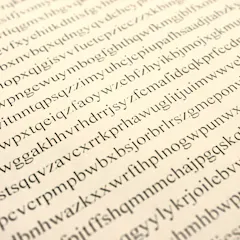
Laws may use complex syntax to indicate their special status, in much the same way magic spells use rhyme or archaic words.
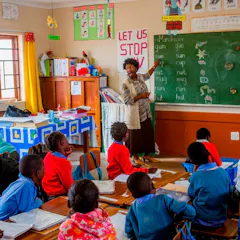
The teachers did not often adapt their practices to suit their specific cultural and linguistic contexts.

Despite their scarcity, science fiction books are highly sought after by elementary school students.
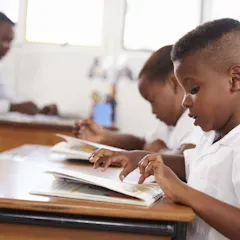
Reading fluency and expanding vocabulary are the bridge from decoding to comprehension. Weaknesses in any of these building blocks will limit a child’s ability to read for meaning.
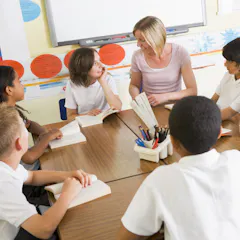
A whole-school approach to literacy is far more effective for students, but few Australian schools have practical plans for building literacy across all subject areas.

The claims made by the creators of the app – which highlights parts of words to supposedly enhance users’ reading abilities – are dubious.

To understand what we suspect, so far, about the way in which some people with autism may see the world, we need to examine how we use the bank of experiences we have stored in memory.
In 1980, 60 percent of 12th graders said they read a book, newspaper or magazine every day for pleasure. By 2016, only 16 percent did.

The latest What Kids Are Reading report finds that secondary school students aren’t challenging themselves – and it could limit their choices later in life.

The problem in learners’ reading performance lies in how reading is taught in most South African schools. Learners are not taught to understand the written word and make sense of it for themselves.

Digital textbooks might be less cumbersome. But a new series of studies finds that reading from screens can hamper our ability to process and retain information.

Four tips for teaching reading.

Around a fifth of children aged five to 16 will experience reading difficulties. Schools need clear guidelines on how to choose the best literacy programs for their students.
Top contributors
-

Professor, Faculty of Education and Arts, Australian Catholic University
-
Researcher in TESOL & Literacy, University of Notre Dame Australia
-
Assistant Clinical Professor of Human Development, University of Maryland
-
Professor of Psychology, University of Maryland
-
Director, Centre for Higher and Adult Education, Stellenbosch University
-
Professor of Psychology, San Diego State University
-
Assistant Professor of Teaching, Leadership, and Professional Practice, University of North Dakota
-
Senior researcher at Research on Socio-Economic Policy, Stellenbosch University
-
Professor at Southern Africa Labour and Development Research Unit, University of Cape Town
-
PhD student, Stellenbosch University
-
Associate Professor Educational Technologies, Rhodes University
-
Lecturer in Computational Cognitive Science, The University of Melbourne
-
Associate professor, University of Delaware
-
Lecturer: Student Academic Development, Rhodes University
-
Senior Research Fellow of Linguistics, University of Colorado Boulder; Griffith University; University of New England