

There’s been quite a bit of speculation over whether Australia has a property market bubble - where house prices are over-inflated compared to a benchmark - and when it might burst. According to housing…
Articles on RBA
Displaying 201 - 220 of 248 articles
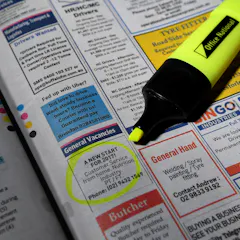
Wages are sluggish, underemployment seems stubbornly high, and there is a continued push to part-time rather than full-time employment.
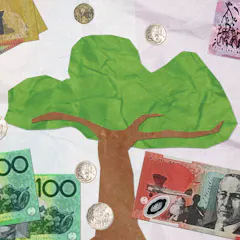
Millie, aged 5, wants to know where money comes from. We asked an economist to explain.
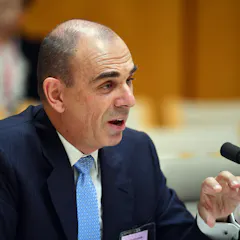
Negative gearing plus inadequate supply plus low wage growth equals financial distress.
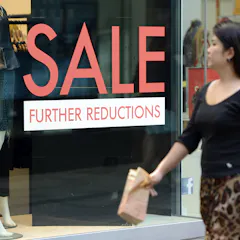
Australia’s economic indicators are showing worrying signs, with business confidence falling in the face of continued low interest rates.

Business Briefing: what Australia can learn from a Polish economist
The Conversation20.1 MB (download)
Visiting Professor Andrzej Rzonca from the Warsaw School of Economics is in Australia to talk about growth, the European Union, Brexit and much more.
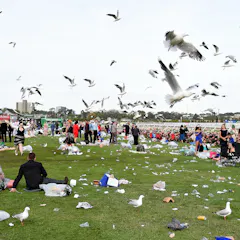
Inflation has been stubbornly low in Australia, and the RBA remains concerned about a high Australian dollar.
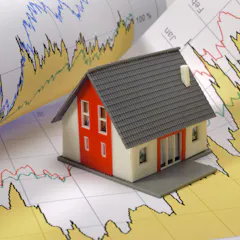
Business Briefing: rate tracker mortgages
The Conversation16.3 MB (download)
Rate tracker mortgages could provide some certainty for customers and increase trust in the banking sector.

The competition in Australia’s contactless payment industry is heating up as Apple Pay sets up in Australia. However some banks claim the company is making the system less competitive.
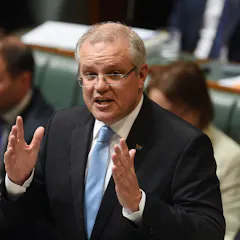
While Australia faces its greatest economic challenges in a generation, we are still waiting for the greatest economic reformers in a generation to arrive.
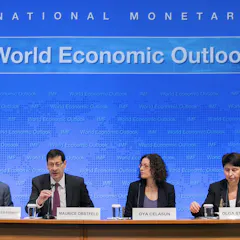
Interest rates remain unchanged in Australia this week, reflecting an economic holding pattern around the world, as the US presidential election carries on.
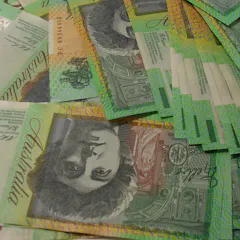
In the battle against slow economic growth, perhaps the government and Reserve Bank should try doing nothing and let the economy restore itself.
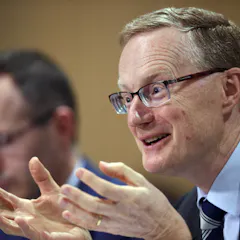
The odds are the Fed will raise rates once and the RBA will cut once before the end of the year.

The RBA leaves rates on hold, Australia gets a GDP growth spurt from pre-election spending, and the IMF lays the groundwork for a lowering of global growth expectations.

If the RBA includes commercial credit cards in new caps on interchange fees, small to medium enterprises might not be able to use them as a source of finance.
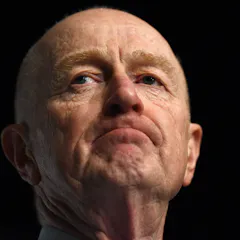
Glenn Stevens’ legacy shows how to maintain the independence of the Reserve Bank in crisis as well as the limits of monetary policy.

The US economy is improving off the back of jobs figures while in Australia, the government is being warned by the Reserve Bank to step up its game.
Economists are divided on whether the latest interest rate cut to 1.5% was needed, as the RBA tries to boost inflation and growth.
All economic data is pointing to disappointing global growth.
It’s not as easy as increasing quantitative easing when it comes to what central banks can do to address the current global uncertainty.
Top contributors
-

Visiting Fellow, Crawford School of Public Policy, Australian National University
-
Scientia Professor of Economics, UNSW
-
Professorial Fellow, University of Canberra
-
Lecturer in Economics, Monash University
-
Senior lecturer, Canberra School of Government, University of Canberra
-
Associate Professor, School of Economics, University of Sydney
-
Associate Professor, Research School of Economics, and Research Associate, Centre for Applied Macroeconomic Analysis, Australian National University
-
Emeritus Professor of Finance, The University of Melbourne
-
Adjunct Professor, Swinburne University of Technology
-
Industry Professor, University of Technology Sydney
-
Emeritus Professor of Economics (Griffith University) and Teaching Associate (University of Queensland), Griffith University
-
Visiting Fellow, Macquarie University Applied Finance Centre, Macquarie University
-
Honorary Associate Professor in the School of History, Research School of Social Sciences, Australian National University
-
Program Director, Trade and Investment, United States Studies Centre, University of Sydney
-
Dean of Business School, University of Southern Queensland