

It’s still too early to say who attacked Channel Nine, disrupting its live broadcasts over the weekend. But fingers have been pointed at Russian state actors using a tactic nicknamed ‘wiperware’.
Articles on Ransomware
Displaying 41 - 60 of 84 articles

Ransomware is quietly developing into one of the most disruptive – and lucrative – forms of cybercrime.
America’s public schools often lack the adequate security to protect their students’ most sensitive data from being linked on the web.
Cyberattacks on Australian healthcare facilities are on the rise.

A ransomware attack on election-related government computers in a Georgia county raises the specter of more disruptions for Election Day voting and vote tabulation.

As colleges and universities strive to protect their campuses from COVID-19, they must also pay attention to cyberattacks that target sensitive data, a cybersecurity expert warns.

A recent ransomware attack on the UK electricity system shows this pandemic is also about computer viruses.

With so many people working from home on vulnerable networks and set-ups, cybersecurity is a growing concern.

Much of the world is moving online in response to the coronavirus pandemic. Society’s newly increased dependence on the internet is bringing the need for good cyber policy into sharp relief.

Police experience in crisis and hostage negotiation could come in handy when dealing with cybercriminals who have, effectively, kidnapped data.

Measures that can be taken include good cyber hygiene and legal action.

The wool industry was paralysed for several days after hackers held to ransom the IT system that governs almost all wool sales in Australia and New Zealand. More attacks are a case of if, not when.
A recent leakware attack targeting Johannesburg was the second of its kind ever recorded. Hackers demanded A$52,663 worth of bitcoins, in return for not releasing senstivie civilian information.
Cyber-criminals are targeting city authorities because they often pay out – but there are other ways to protect public data and services.

Ransomware has crippled governments and companies around the world, encrypting data and demanding payment for the decryption key – though that’s no guarantee of recovering the information.
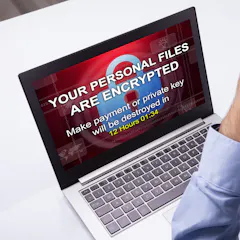
The latest malware is designed especially to make small companies pay through the nose for their data.

Medical practices have special requirements under the Privacy Act, but the security and privacy systems some providers currently have in place may be inadequate.
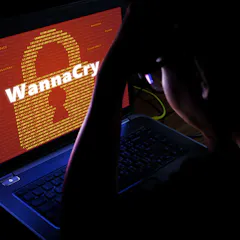
It turns out you can’t ensure cyber-security in the world’s fifth-largest employer if there’s no one in charge of making it happen.

Like legitimate e-commerce, ransomware e-crime is increasing in scale, value and sophistication.

As cryptocurrency systems improve, they will better protect criminals’ identities and even allow people to offer anonymous rewards for crimes they want committed.
Top contributors
-

Professor of Cyber Security Practice, Edith Cowan University
-
Professor of Criminology, University of Leeds
-
Professor of Management, University of North Carolina – Greensboro
-
Professor of Business Law and Ethics, Indiana University
-
Lawyer, Curtin University
-
Senior Lecturer in Networking, The Open University
-
Adjunct Senior Lecturer, Applied Ethics and CyberSecurity, Griffith University
-
Teaching Professor of Computer Science and Electrical Engineering, and Associate Director, UMBC Cybersecurity Institute, University of Maryland, Baltimore County
-
Research Affiliate at the Ostrom Workshop for Cybersecurity and Internet Governance, Indiana University
-
Head, The Cyber Academy, Edinburgh Napier University
-
Lecturer in Software Engineering, Monash University
-
Professor, Management Information Systems, Simon Fraser University
-
Associate Director, Initiative For Cryptocurrencies and Contracts (IC3); Assistant Prof. of Electrical Engineering, Technion - Israel Institute of Technology
-
Lecturer in Intelligence and Security, Edith Cowan University
-
School of Science, Edith Cowan University