
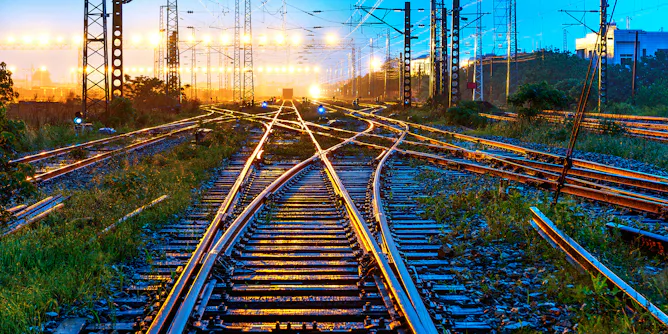
The UK rail industry struggles to create tracks that can cope with both high and low temperatures.
Articles on Rail
Displaying 21 - 40 of 100 articles
Increased use of freight trains can ease the HGV driver crisis and improve the air quality, research shows.
Contrary to the government’s promises of prosperity, Kenya’s mega-railway is heading down the wrong track of development.

Oil spills, cracked buildings and pollution. Just some of the environmental effects of Kenya’s massive railway project.
Governments must ensure that transport infrastructure is developed with the ability to cope with current and future climatic shifts.

Banning short-haul flights should be just the first step on the path to greener transport systems.
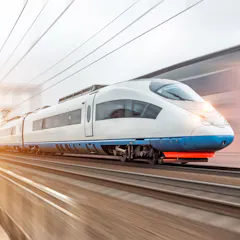
Hyperloop might still be a dream but new technologies promise to make trains faster and safer.
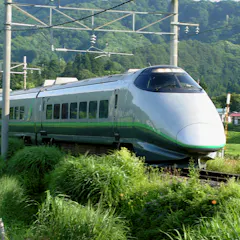
A high-speed rail network in Australia would create many benefits by reshaping cities and regional communities along its route.
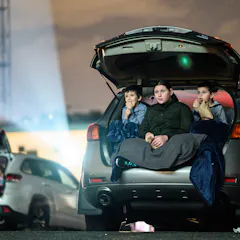
The pandemic has forced many people to shift from public transport to car travel. But is this likely to be permanent?

Once again, the state looks intent on pressing ahead with a huge road project without releasing a business case. Among the many concerns is the failure to look at lower-emission alternatives.
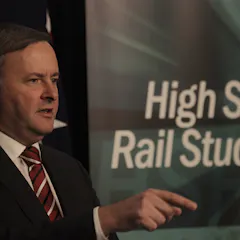
The federal opposition’s idea for a bullet train from Melbourne to Brisbane is not a good use of a generation’s worth of infrastructure spending. It won’t even work as an economic stimulus.
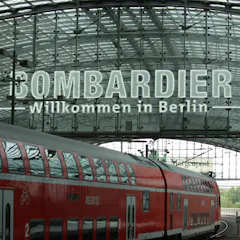
Building infrastructure takes time. To develop sustainable transportation, Canada needs to invest in high-quality infrastructure that will enable us to make environmentally friendly travel choices.
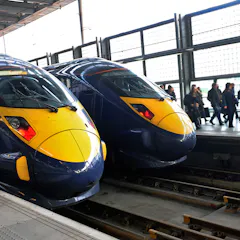
All modes of high-speed travel come with a cost to the environment.
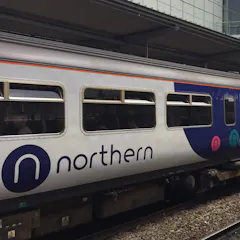
The privatisation of the UK’s railways has been fraught with problems but it can’t get any worse for Northern’s passengers.

Electric trains use seven times less carbon dioxide than cars. With careful planning, railways could drastically cut emissions from a sector that now accounts for a quarter of the carbon in our air.
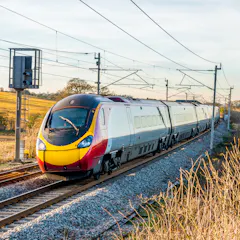
The future of zero-carbon transport starts today. First stop, Britain’s railways.
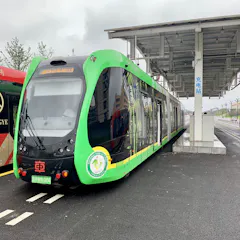
Installing light rail is costly, as Sydney has found, but it’s the gold standard for public transport along road corridors. What trackless trams can do is rapidly expand such services at low cost.
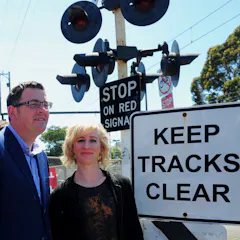
Value capture depends on infrastructure increasing the value of affected areas in the first place. Victoria’s level crossing removal project shows the impact on property values can be significant.
How far would you go to limit your carbon footprint?
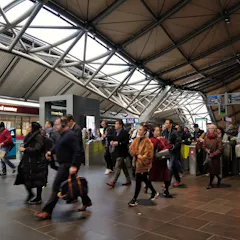
While governments focus on how to ease congestion and make affordable housing more accessible for workers in our biggest cities, fast rail could be a mixed blessing for regional cities.
Top contributors
-

Professor of Sustainability, Curtin University
-
Honorary Principal Fellow, University of Wollongong
-
Transport and Cities Program Director, Grattan Institute
-
Senior Lecturer in Accounting, University of Essex
-
Senior Lecturer in Urbanism, University of Sydney
-
Marie Curie Fellow, University of Amsterdam
-
Visiting Research Fellow, Intelligent Mobility, Manchester Metropolitan University
-
Professor in Transport Planning, University of Westminster
-
Emeritus professor in transport and logistics, University of Huddersfield
-
Researcher in Transport Policy and Governance, UCL
-
Professor of Operations Management, Manchester Metropolitan University
-
Associate, Grattan Institute
-
Research Professor, University of Leeds
-
Professor of Transport Geography, University of Plymouth
-
Tenured Scientist, Consejo Superior de Investigaciones Científicas (CSIC)