
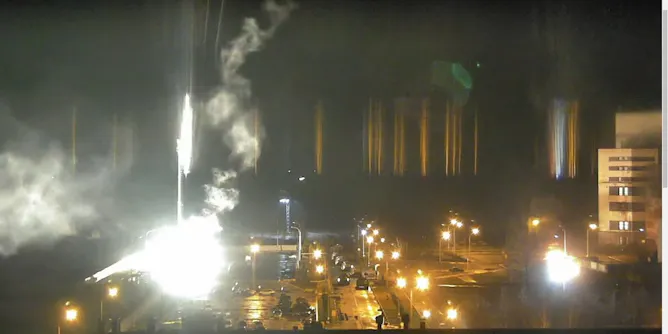
Trouble may arise if the operating reactor is shut down, with risks ranging from a used fuel meltdown to a reactor core explosion.
Articles on Radioactivity
Displaying 21 - 40 of 49 articles
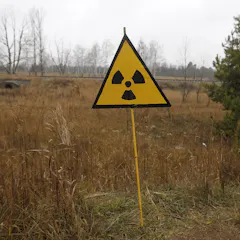
With Russian troops rolling through the Chernobyl exclusion zone in Ukraine, a biologist who studies wildlife in the area describes the risks of disturbing this radioactive landscape.
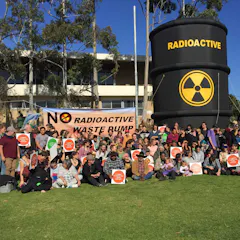
Radioactive waste from nuclear medicine facilities will be trucked to and buried near the South Australian town of Kimba. But this decision still faces a range of hurdles.
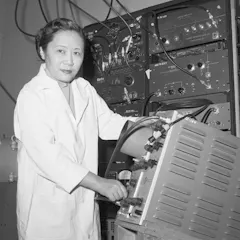
Chinese American physicist Wu worked on the Manhattan Project and performed groundbreaking experiments throughout her long career.

The element was discovered in the fallout of a thermonuclear blast.
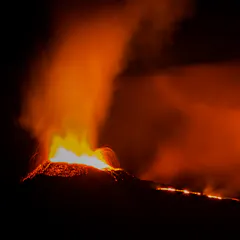
The study of neutrinos produced within the Earth’s interior provides a better understanding of the radioactivity of our planet.
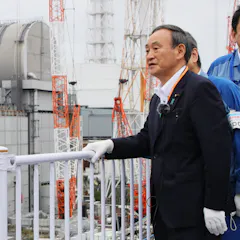
Japan’s plan is a terrible idea, but so is our government’s plan to send nuclear waste to South Australia temporarily.
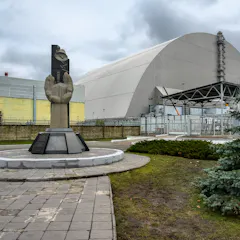
Documentary or drama? The HBO/Sky series is gripping watching, but sometimes facts make way for artistic licence.

The HBO series ‘Chernobyl’ has reignited interest among tourists to visit Pripyat, but growing up in the disaster’s shadow has made us wary.
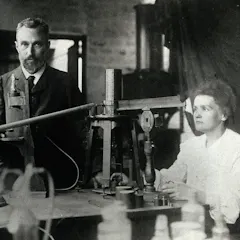
With its strange bluish glow and cancer-killing qualities, meet the wundermetal that became one of the great cautionary tales of modern times.
Alongside their famous dangers, radioactive materials have many beneficial uses. With as many more predicted as have already been discovered, nuclear physicists are searching for more isotopes.
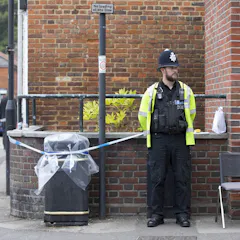
Former Russian spies Alexander Litvinenko and Sergei Skripal were both poisoned – one polonium, the other by Novichok. Now that there’s been another nerve agent case, what’s the difference?
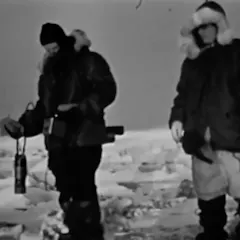
In what came to be known as the Thule incident, an American bomber crashed in Greenland, spreading radioactive wreckage across 3 square miles of a frozen fjord. Denmark was not happy.
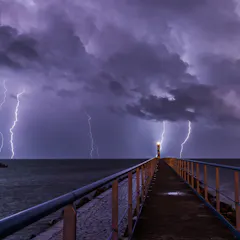
Scientists have finally been able to prove that thunder and lightning drive nuclear reactions.
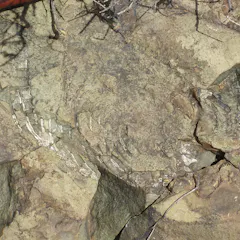
Good science isn’t rooted in chance. It’s based on people with expertise being in the right place at the right time, equipped with enough knowledge to know what they’re looking at.
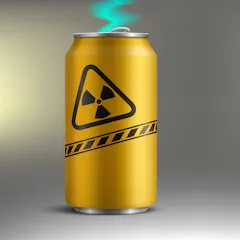
Back in the early 1900s, if you felt a bit sluggish you could reach for a beverage enhanced with radioactive elements to really add some pep to your step. It wouldn’t be a healthy choice, though.

On September 27, 1956, an atomic mushroom cloud rose above the Maralinga plain - the first of seven British bomb tests. Why was Australia so keen to put UK military interests ahead of its own people?
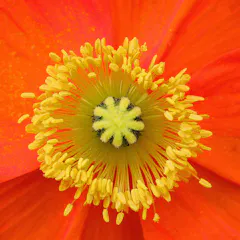
The relentless pursuit of showy flowers for garden display – as seen at Chelsea Flower Show – has seen some odd uses of radiation and chemicals .

The meltdown at the Chernobyl Nuclear Power Plant in 1986 exposed 572 million people to radiation. No other nuclear accident holds a candle to that level of public health impact.
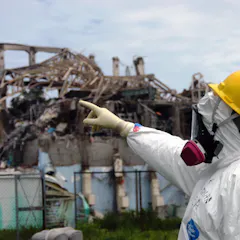
Estimating health impacts after a nuclear accident is more complicated than you might think.
Top contributors
-

Professor of Nuclear Physics, Michigan State University
-
Professor of Environmental Science, University of Portsmouth
-
Timothy J. Jorgensen is a Friend of The Conversation.
Director of the Health Physics and Radiation Protection Graduate Program and Professor of Radiation Medicine, Georgetown University
-
CBRN defence scientist, Charles Darwin University
-
Associate Professor of Chemistry, Michigan State University
-
Assistant Professor of History, Mississippi State University
-
Associate Professor in History of Modern Science and Technology, University of Cambridge
-
Research Fellow in nuclear waste disposal, University of Sheffield
-
Radioecologist (NERC-CEH), UK Centre for Ecology & Hydrology
-
Senior Lecturer in Biological and Environmental Sciences, University of Stirling
-
Senior Lecturer, Faculty of Law, Monash University
-
Senior Lecturer in Chemistry, University of Birmingham
-
Professor of Biological Sciences, University of South Carolina
-
Honorary Principal Fellow, School of Population and Global Health, The University of Melbourne
-
Professor, Centre for Research into Topical Drug Delivery and Toxicology, University of Hertfordshire