
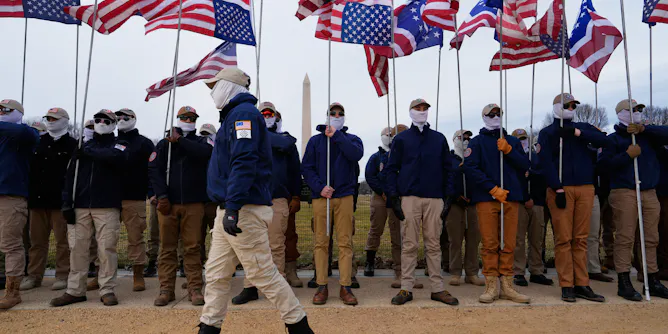
Nearly 1 in 7 white men under 30 in the US support white nationalism, and partisanship alone doesn’t explain who’s drawn to it.
Articles on Radicalization
Displaying all articles

Countering violent extremism requires substantial investment from all levels of government, dismantling the state’s racialized assumptions of criminality and recognizing that gendered violence is systemic.

When a young person becomes radicalized, people often point the finger at “the family.” But in reality, the burden falls primarily on mothers.

The mass shooting at an Islamic centre in San Diego is the latest in a self-replicating network of far-right violence in which each attack is designed to inspire the next.

Active Clubs combine fitness and white nationalism, transforming the body into a tool for radicalization and normalizing far right ideology as part of everyday life.
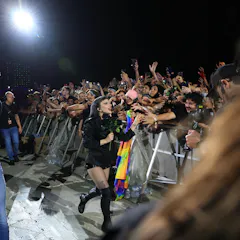
Instead of promoting diversity, many social networks and other popular digital platforms function as machines for the production and circulation of hate.
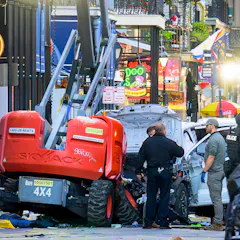
The suspect in a truck assault that left at least 15 dead had previously pledged loyalty to the Islamic State group, authorities say.

Conspiracy theories aren’t based so much on objective facts, but rather through often loosely connected bits of information. That makes them potent sources of misinformation.

Communication about conflict is the fundamental starting point for future action. In modeling non-violent communication, university leaders can proactively counter potential extremism.

To turn back the tides of radicalization and hate, Canada needs investments in our democratic culture, improvements in policing and support for grassroots efforts.

The so-called freedom convoy has torn off the protective tissue on what it means to “be a Canadian” to expose an ugly truth.
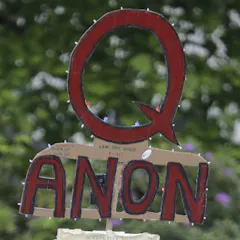
Social media isn’t simply awash in conspiracy theories and extremism. It contains pathways designed to lead people to ever more extreme material.

Disturbing online posts and written messages were purportedly left by Ethan Crumbley in the days running up to deadly school shooting.

Vaccine hesitancy has been a subject of intense study in the field of scientific communication. Anti-vaxxers’ recent radicalization needs to be looked at.

Extremists are playing on people’s health fears to normalise their views.
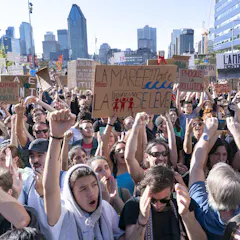
Thousands of people turned out for the march for climate on Sept. 27 but new questions have arisen about the form these protests will take in the future.

A majority of the over 24 mosques spread over Palu were damaged in the tsunami. Two of them survived, though one of them is gradually sinking.

Sayfullo Saipov, the suspect in the Manhattan bike path attack, wasn’t a devout Muslim. He cursed and came late to prayers. A terrorism expert explains why such a man may want to be a martyr.
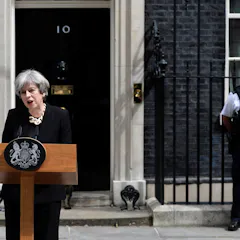
Cracking down on extremism online won’t solve the problem of extremist violence, will inevitably censor speech that’s important to protect and risks harming political dissidents and democracy itself.
Top contributors
-

Adjunct Professor, Natural Resource Institute (NRI), University of Manitoba
-
Chercheur postdoctoral, Université du Québec à Montréal (UQAM)
-
Docteur en Science politique, Sciences Po; Université du Québec en Outaouais (UQO)
-
Associate Professor of Anthropology, University of Richmond
-
Professor of Modern Middle Eastern History, University of California, Los Angeles
-
Professor of Communication and Middle East Studies, Georgia State University
-
Professor of Computer Science, Clarkson University
-
PhD Candidate, Department of War Studies, King's College London
-
Co-Lead, Strengthening Canadian Democracy Initiative, SFU Morris J. Wosk Centre for Dialogue, Simon Fraser University
-
Professor of Criminal Justice, Georgia State University
-
Associate Professor, School of Professional Communication, Toronto Metropolitan University
-
Professeure titulaire - spécialiste des mouvements sociaux et de l'action collective, Université de Montréal
-
Adjunct professor, Organizational Psychology, Adler University
-
Research Fellow in Counterterrorism, George Washington University
-
Professor titular, Instituto Brasileiro de Informação em Ciência e Tecnologia (Ibict)