

A bold government would have delivered stages one, two and three of the tax cuts at once. Boldness is what we need.
Articles on Quantitative easing (QE)
Displaying 41 - 60 of 86 articles

There’s nothing unusual about quantitative easing. Our biggest mistake would be to be to wait.

We’ve two options of keeping ourselves out of recession, neither of them easy. The government will have to abandon its determination to get the budget into surplus.

No longer do the world economic figures contradict the former US Treasury Secretary’s theory.

Important research questions can almost always be answered better with a combination of methods – where both quantitive and qualitative data play a role.

President Trump has been attacking the Fed’s current policy of slowly raising interest rates. A former central bank official explains why that’s so troubling.

The new coalition’s spending plans will ramp up Italy’s annual budget by over €100 billion a year.

A new report suggests the board of the Reserve Bank of Australia should income a “representative of the poor”. This is a proposal worthy of consideration.

The Federal Reserve lifted rates for the second time this year and expects to do so once more, suggesting it’s fairly confident the economic recovery will continue. Is it overconfident?

Dealing with the UK’s chronic lack of investment is as important as getting the Brexit negotiations right – and much more important than balancing the books.
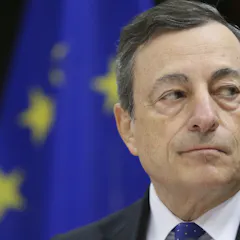
Quantitative easing cannot single-handedly save Europe.
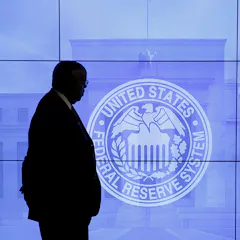
Just like apes, humans fear the unknown, and that’s why there’s so much uncertainty this week as markets brace for an interest-rate decision by the Federal Reserve.

The 2008 financial crisis exposed major gaps in central banks’ operations. New features like quantitative easing have since emerged.
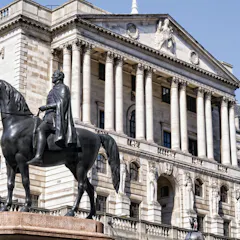
The Bank of England has cut interest rates to a historic low of 0.25% and is injecting further rounds of quantitative easing.

Monetarist economist Milton Friedman first coined the phrase ‘helicopter money’ in the 1960s.

The G7’s limited membership of like-minded countries gives it significant power to bring about meaningful economic growth.

It’s becoming a matter of ‘when’ rather than ‘if’ the first central bank takes the plunge and introduces quantitative easing for the people.
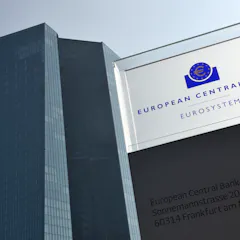
The ECB has introduced a slate of bold measures to counter low growth and the threat of deflation.

Scrapping €500 notes would inconvenience money launderers; it would also help the European Central Bank to make interest rates more negative.
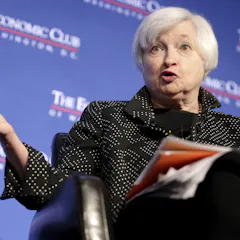
Monetary policy since the financial crisis has flooded the market with cheap capital. A rate rise will reverse this and put developing economies at risk.
Top contributors
-

Lecturer in Economics, Monash University
-
Scientia Professor of Economics, UNSW
-
Senior Lecturer in Economics | Freelance Consultant, Sheffield Hallam University
-
Senior Lecturer in Economics, The Open University
-
Assistant Professor of Economics, Clark University
-
Visiting Fellow, Crawford School of Public Policy, Australian National University
-
Program Director, Trade and Investment, United States Studies Centre, University of Sydney
-
Visiting Faculty in Economics, Emory University
-
Professor, Finance, UTS Business School, University of Technology Sydney
-
Professor of Economics, University of Glasgow
-
Professor of Finance and Fred T. Tattersall Excellence in Finance Research Chair, West Virginia University
-
Principal and Vice Chancellor, University of Glasgow
-
Professor of Banking and Economics, University of Winchester
-
Senior Teaching Fellow in Economics, Lancaster University
-
Professor of Finance, University of Liverpool