

Ross Garnaut’s new book Reset argues for much bolder approach to employment, debt, interest rates and basic income than is widely envisaged.
Articles on Quantitative easing (QE)
Displaying 21 - 40 of 86 articles

UK banks have been given six months to prepare for rates going below zero.

If the Reserve Bank had acted as it usually does, the cash rate would have dipped briefly negative in August.

QE has been used for more than a decade since the global financial crisis, but the impact has not been as governments had hoped.

The global economy is currently experiencing its severest contraction since the 1930s. While capitalism will survive, its fundamental structure can change at critical historical junctures.
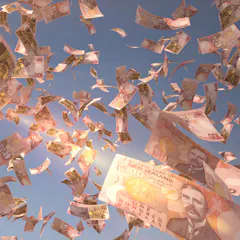
Massive borrowing to fund NZ’s economic recovery due to COVID-19 cannot be written off without the risk of worsening the crisis it was designed to meet.
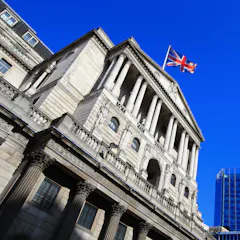
The bank has so far shied away from negative rates but it is running out of other firepower.

Creating lots of new money is supposed to produce runaway inflation. The longer that it doesn’t happen, the more this branch of economics appears to have a point.

There is no magic money tree in economics – whatever money is spent must be paid back later.
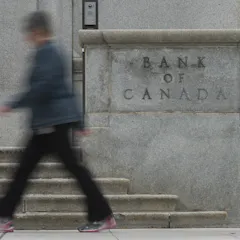
It’s time for the Bank of Canada to do more to help provincial governments deal with the financial fallout of the coronavirus pandemic.
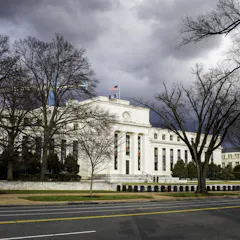
Like Congress with its $2 trillion bailout, the Fed is engaged in an unprecedented effort to save the US economy and financial system from collapse.
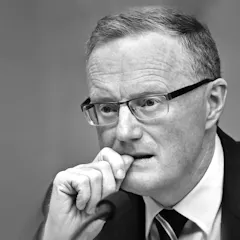
Reserve Bank Governor Philip Lowe has laid out a road map for measures to drive a range of other interest rates down, now that its cash rate has hit effective zero.

Markets normally rally when central banks throw trillions of dollars at a problem. But not this time.
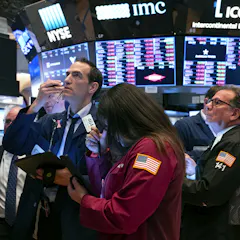
The Fed slashed interest rates to near zero but, just as in 2008, it will require unprecedented action to calm panicky markets.

Will the all-time lowest rate in the world of -0.75% be enough for these alpine explorers?

How many people realise that the central banks’ great programme for reviving the global economy involves hand-picking which companies and sectors to help out?
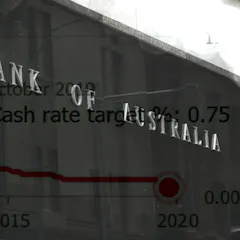
In a speech broadcast live on the Reserve Bank website, the governor explained how quantitative easing would work. He won’t try it until the cash rate hits 0.25%.

MARTIN stands for “Macroeconomic Relationships for Targeting Inflation”. The bank’s new computer model says there’s much it can do to boost the economy after its cash rate hits zero.
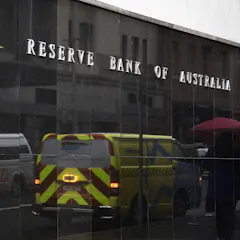
The Reserve Bank of Australia says it’s prepared to ease monetary policy further if needed to stimulate the economy. But is the policy working when interests rates are so low?

The Reserve Bank’s best case scenario is that its forecasts are wrong.
Top contributors
-

Lecturer in Economics, Monash University
-
Scientia Professor of Economics, UNSW
-
Senior Lecturer in Economics | Freelance Consultant, Sheffield Hallam University
-
Senior Lecturer in Economics, The Open University
-
Assistant Professor of Economics, Clark University
-
Visiting Fellow, Crawford School of Public Policy, Australian National University
-
Program Director, Trade and Investment, United States Studies Centre, University of Sydney
-
Visiting Faculty in Economics, Emory University
-
Professor, Finance, UTS Business School, University of Technology Sydney
-
Professor of Economics, University of Glasgow
-
Professor of Finance and Fred T. Tattersall Excellence in Finance Research Chair, West Virginia University
-
Principal and Vice Chancellor, University of Glasgow
-
Professor of Banking and Economics, University of Winchester
-
Senior Teaching Fellow in Economics, Lancaster University
-
Professor of Finance, University of Liverpool