

The concept of Universal Credit reveals something wider about the UK’s current political fixation on debt.
Articles on Public services
Displaying 21 - 40 of 49 articles

New research shows how the charity sector has been sidelined in the Transforming Rehabilitation programme.

The former Police and Crime Commissioner for Essex argues that more resources can help, but any available funds need to be spent by the right agencies in the right way.

Governments have started to see automation as the key to brighter urban futures. But what will this look like?

Years after their trials, he got in touch with the victims he thought he had helped. They described feeling ‘dumped’ by the system.
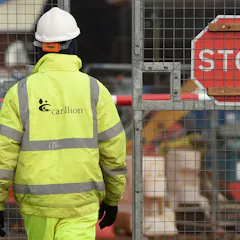
Problems at government contractor Capita and the collapse of Carillion are part of the same story of outsourcing gone wrong.
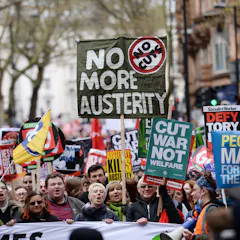
New research on the future of the welfare state found people lack confidence in the whole system of government, rather than individual politicians.

The evidence shows that PFI is always more costly relative to its publicly funded alternative – and by as much as 40% in some cases.

How to tidy up a right royal mess.

The neediest suburbs get a much poorer deal in Sydney than in Melbourne. A new study provides a suburb-by-suburb breakdown of state investment, including what facilities and services have been funded.

Border control no longer stops at the border.

When it comes to public services, it’s not just a question of demand, but also one of supply.

The increasing global focus on essential services and public space as a key combination for successful city-making is relevant to fast-growing Australian cities too.

Acts of arson by Kenyan high school students have been characterised as ‘mindless hooliganism’. But research shows that students are actually engaging in purposeful, reasoned political action.

Immigration has been wrongly blamed for the growing pressure on Britain’s public services.

Some charities get millions and have a large number of assets, but they’re also doing more too.
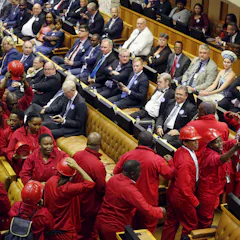
South Africans spend billions of rands paying for services that should be provided by government, thus making the tax burden considerably higher than what appears in official tax data.

Many of us are happy for governments to increase spending on public services, but we don’t like the idea of higher taxes. There are some good reasons for this.

Public services delivered by blockchain? Taxes paid in bitcoin? Not so far fetched, a UK government report says.

After years of cuts, some communities are hiring their own bobbies. That has serious implications for everyone else.
Top contributors
-

Communication and Relations Manager, PUSKAPA
-
Director, PUSKAPA
-
social scientist | human geographer, The University of Melbourne
-
Lecturer, UNSW
-
Senior Lecturer in Human Geography, Northumbria University, Newcastle
-
Professor of Public Law and Socio Legal Studies, University of Essex
-
Professor of Law, University Research Champion for Risk, Evidence, and Decision-Making, University of York
-
Research Fellow at the Centre for Voluntary Sector Leadership, The Open University
-
Assistant Professor in Politics and Public Administration, University of Canberra
-
Anthony Nutt Senior Research Fellow in the Centre for Voluntary Sector Leadership, The Open University
-
Professor of Social Policy, University of Kent
-
Senior Lecturer in Digital Law, King's College London
-
Principal Research Fellow, Sheffield Hallam University
-
Professor of Economics and Political Economy, University of Leeds
-
Director of the Centre for Research on Migration, Refugees and Belonging (CMRB), University of East London