
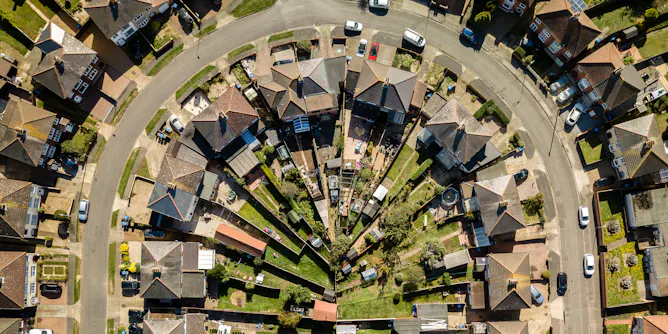
House prices have been stronger than most had expected at the start of the pandemic, but can they continue rising?
Articles on Property
Displaying 41 - 60 of 107 articles

Once paid, tax becomes the property of the government. Pretending otherwise undermines the basic principles of the social contract.
When thinking about better uses for temporarily vacant buildings caused by the pandemic, Australia can learn much from the UK.

At a time when so many are struggling, cutting stamp duty and helping the well off might seem like a strange move.
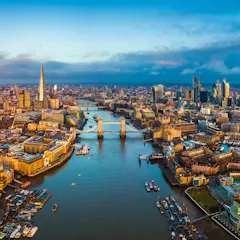
London is an alpha city – home to 100 billionaires. But does wealth bring social costs?
Policies to tackle climate change will make it more expensive not to act.

A new study examined how growing numbers of single women in one of the world’s most expensive cities are contributing to its gentrification.
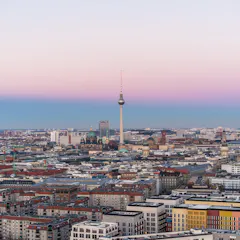
Socialisation of housing would see profits from rent put back into the maintenance and modernisation of the buildings.

New research suggests crypto-currencies aren’t technically property in common law jurisdictions.
The conventional case for swapping stamp duty for land tax will boost the economy has weak underpinnings.

A recent ruling in an Ontario court fails to consider law governing the use of embryos.
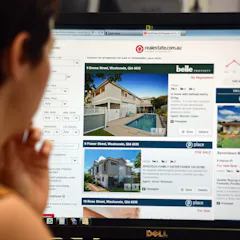
Co-ownership of real estate through digital platforms can be a risky and potentially costly business.

While sovereign governments need to develop coherent frameworks to regulate cryptocurrency, permanent solutions will be found through international co-operation.
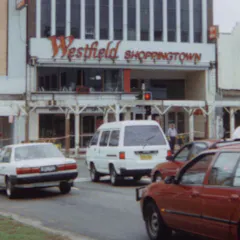
The fact that Westfield’s founders are moving out of physical store development to invest in innovative retail technology shows what’s to come in Australian retail.
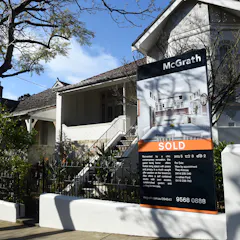
The way land titles are issued, bought and sold will soon be very different, thanks to privatisation and technology.
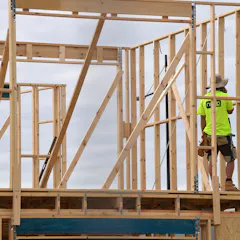
The threat of a loss of jobs in the the industries that support construction reveals the problem in relying on building to sustain the economy.
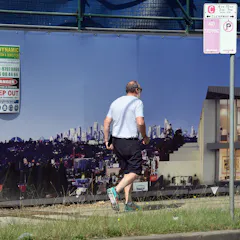
Individual households in Australia, on average, own 83% of all investment dwellings rented to private tenants or resold. They are people who usually have another main source of income.
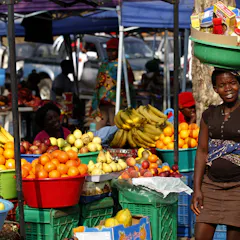
Most African cities are expensive, informal and non-industrial. This has produced unique socioeconomic and environmental risks that must be carefully considered in policy development.

To create property systems that are as dynamic as the landscapes we occupy, we might need to start thinking about ourselves as belonging to and answerable to the land, not the other way around.

Water moves into Australian homes during severe tropical storms like Cyclone Debbie. But no definitive housing codes, standards or guidelines exist to stem the flow of unwanted storm water.
Top contributors
-

PhD Candidate, Swinburne University of Technology
-
Senior Lecturer in Finance, University of Sydney
-
Professor and Research Chair in Inclusive Societies, University of Sheffield
-
Professorial Research Fellow, Institute for Culture and Society, Western Sydney University
-
Associate Professor of Geospatial Engineering, UNSW
-
Emeritus Professor, Urban Planning and Policy, University of Sydney
-
Senior Lecturer in Economics, University of Sydney
-
Associate professor in urbanism, University of Sydney
-
Associate Professor, Geography and Urban Studies, Western Sydney University
-
Professor of History and Politics, School of Humanities and Social Inquiry, University of Wollongong
-
Chief Engineer, Cyclone Testing Station, James Cook University
-
Senior Lecturer in City Planning, UNSW
-
Associate Professor in Urban and Regional Planning, University of Sydney
-
Visiting Researcher in International Political Economy, University of the Witwatersrand
-
Associate Professor of Property, Western Sydney University