
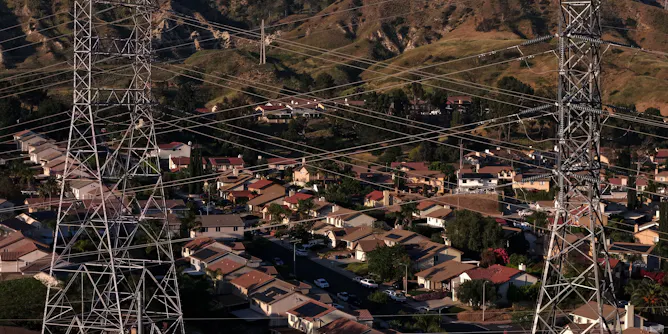
Courts have long let utilities seize private property to build transmission lines. Does that hold if the power flows to a single data center?
Articles on Property law
Displaying 1 - 20 of 28 articles

If data ownership is not clearly established, it could stifle innovation and investment.

Space isn’t lawless, but the agreements governing it don’t cover everything nations will have to grapple with as they develop their space programs.

What are ‘squatters’ rights’ and do they apply in Australia? They do, but using them will likely prove difficult.
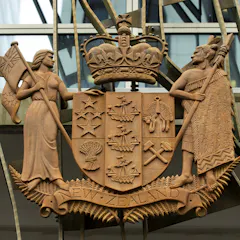
Court decisions based on a judge’s discretion rather than the letter of the law are increasingly common. But this risks undermining some basic liberties.
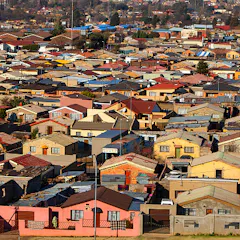
The transfer of township rental houses to inhabitants did not necessarily give families greater security. “Family houses” were frequently acquired by individuals.
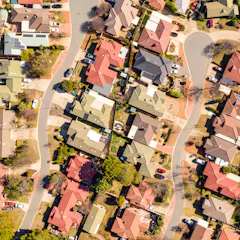
The Greens and housing support groups want rent rises frozen but this might actually reduce the availability of suitable housing stock.
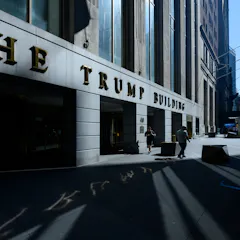
What is real estate actually worth? It depends a lot on who you ask and what method they use to work it out.

Both Macron and Madonna have expressed concerns about genetic privacy. As DNA collection and sequencing becomes increasingly commonplace, what may seem paranoid may instead be prescient.

NFTs are hailed as the foundation of the metaverse economy because they allow you to purchase unique digital assets, from art to real estate. But legally, you might not own what you think you do.
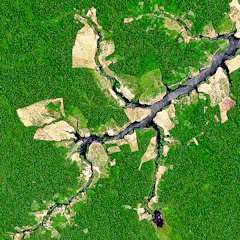
Land grabs spearheaded by wealthy interests are accelerating deforestation, and Brazil’s National Congress is working to legitimize them.

Pipeline companies have run roughshod over several regions where they’re building, racking up safety and environmental violations. Many residents feel trapped, with no control over their property.
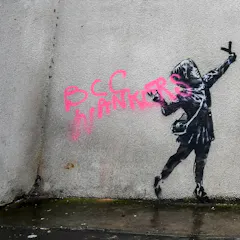
The defacing of a new Banksy mural in Bristol has raised some interesting legal questions.

Socialisation of housing would see profits from rent put back into the maintenance and modernisation of the buildings.

New research suggests crypto-currencies aren’t technically property in common law jurisdictions.

It’s still mostly a case of ‘buyer beware’ when it comes to finding out about a property. But many buyers feel they should be told if, for example, it was the scene of a violent murder.

Without secure records of property ownership, many poor people around the world have trouble improving their economic situations. Several countries are already trying blockchain-based land registries.

To buy without owning, to pay rent on something that’s yours – the origins of leasehold ownership look increasingly out of place today.

To create property systems that are as dynamic as the landscapes we occupy, we might need to start thinking about ourselves as belonging to and answerable to the land, not the other way around.

Sir Robert Richard Torrens – the man behind Australia’s ‘Torrens system’ of land-title registration – was an economic liberal who might have approved of privatising title registries.
Top contributors
-

Professor in Law, Macquarie University
-
Casual academic, La Trobe University
-
Professorial Research Fellow, Institute for Culture and Society, Western Sydney University
-
Associate Professor, School of the Built Environment, University of Technology Sydney
-
Emeritus Professor, University of Sydney
-
Professor of Management, University of North Carolina – Greensboro
-
Director, Tas Law Reform Institue / Associate Professor, University of Tasmania, University of Tasmania
-
Strathclyde Chancellor's Fellow, Law, University of Strathclyde
-
Adjunct Professor, Curtin Law School and Curtin Business School, Curtin University
-
Senior Lecturer in Finance, University of Sydney
-
Lecturer in Law, Lancaster University
-
Senior Lecturer, University of Sydney
-
Associate Professor of Geospatial Engineering, UNSW
-
Research associate, Queen Mary University of London
-
Senior Lecturer in Property Law, Lancaster University