

Africa is facing an annual financing gap for water infrastructure of around $45bn to meet the needs of its citizens. Where is the money going to come from?
Articles on Privatisation
Displaying 81 - 100 of 153 articles

The report’s stated goal is to make the social housing system work better. It does not present as a manifesto for an entirely marketised and deregulated framework driven by the profit motive.
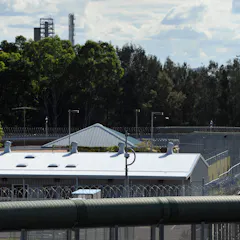
Recent developments in the US suggest it might be time for Australia to rethink its reliance on private prisons.
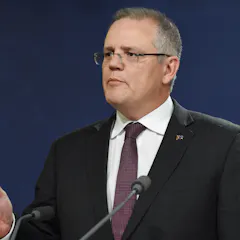
Scott Morrison has rejected Chinese bids for the 99-year lease of 50.4% of Ausgrid, the NSW electricity distribution system, for security reasons.

The presumption in government is that privatisation is always desirable, but many failures have led consumers to think differently.

Worldwide real estate makes up 60% of the value of all global assets. But it’s being concentrated into the hands of a wealthy few.
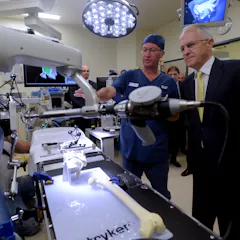
The Turnbull government must reconcile the political sensitivity of Medicare and the need for fiscal discipline.

The Land Registry is a valuable asset – so why not keep it in state hands, for the public good?
The greater threats to our national public health system lie in the increasing role of consumer co-payments and the power of vested interests that stifle policy innovation in health.

Brexiters on the Left fear that a UK vote to Remain would permanently put the railways in private hands. Here’s our Fact Check verdict.
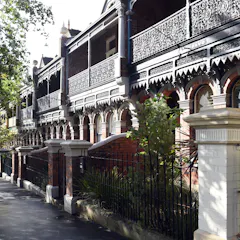
Privatisation has its advantages. But Australia’s title offices may not necessarily be the right government businesses to be privatised.

Open public spaces are good for mind and body – we shouldn’t have to pay to use them.
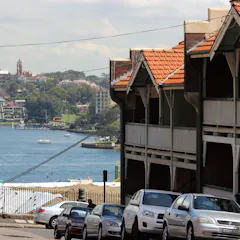
The NSW government agenda would deny the ‘right to the city’, that network of diverse communities, practices and places which give rise to the convivial and inclusive potential of cities.
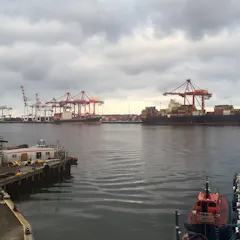
The Barnett government’s plans to sell ports, including the last capital city port slated for privatisation, appear to have been torpedoed by the WA Nationals’ change of heart.
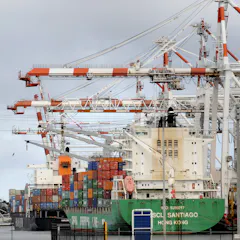
State governments are now seeking to maximise the price of privatised assets by adding sale terms that restrict competition for the future private owners. That amounts to a hidden tax on consumers.

The UK spent much of the late 20th century voting to sell off public services – but now support is growing for a renationalisation programme.

The recent red door asylum seeker housing scandal has highlighted the cracks in the system.

Sale of Channel 4 will risk the broadcaster’s ability to produce cutting edge, innovative films and television programmes.
State-owned companies are not generally needed to provide goods. Rather, they are needed to provide the foundation for a well-functioning economy and a healthy, well-informed populace.

After years of cuts, some communities are hiring their own bobbies. That has serious implications for everyone else.
Top contributors
-

Lecturer, Public Sector Finance, University of Canberra
-
Professorial Fellow, University of Canberra
-
Professor, School of Economics, The University of Queensland
-
Senior Lecturer in Accounting, University of Essex
-
Researcher in Transport Policy and Governance, UCL
-
Professor, Discipline of Political Economy, University of Sydney
-
Maritime Logistics Expert, Centre for Supply Chain and Logistics (CSCL), Deakin University
-
Departmental Lecturer and Course Director MSc in Water Science, Policy and Management, University of Oxford
-
Senior Fellow in Energy and Climate Change, Grattan Institute
-
Professor of Politics, Te Kunenga ki Pūrehuroa – Massey University
-
Associate Professor of Geospatial Engineering, UNSW
-
Honorary lecturer, School of Social Sciences, UNSW
-
Emeritus Professor of Public Policy, RMIT University
-
Scientia Professor of Economics, UNSW
-
Professor of Organisational Behaviour, Bayes Business School, City St George's, University of London